
Sauces & Condiments
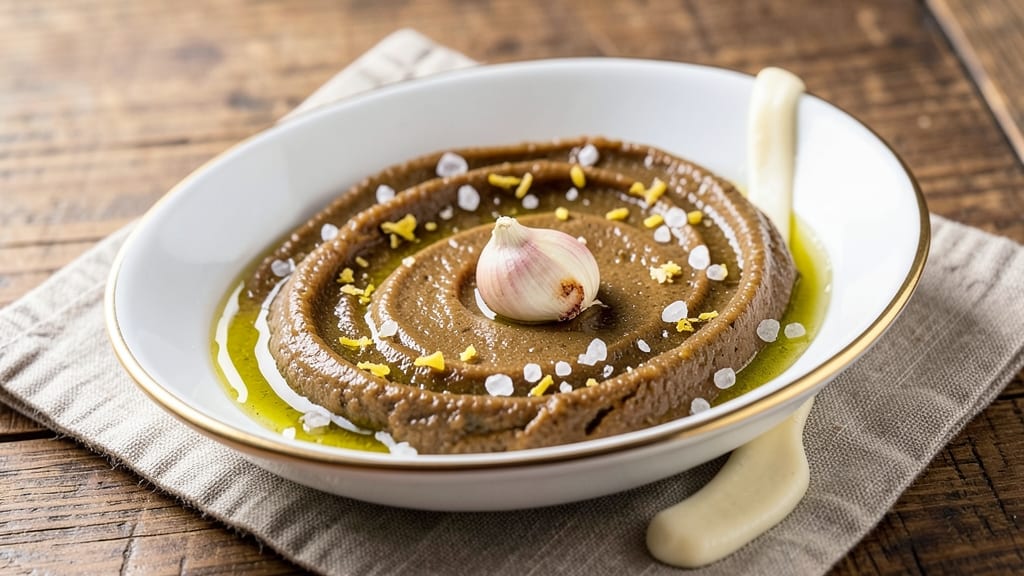
This anchovy butter recipe transforms simple ingredients into a bold, umami-rich spread that elevates everything from toast to seafood. The secret lies in balancing salty anchovies with creamy butter and aromatic garlic, creating a condiment that’s both savory and addictive.
I’ve perfected this blend over years of testing—it’s the kind of sauce that turns ordinary meals into restaurant-worthy experiences.
The beauty of this recipe is its versatility and simplicity. With just a handful of ingredients—anchovy filets, butter, garlic, and a touch of lemon—you’ll create a smooth, emulsified butter that spreads effortlessly. The key is patience: letting the flavors meld while blending ensures no graininess, just velvety richness.
Ready in under 10 minutes, this sauce is perfect for quick weeknight meals or gourmet gatherings.
What makes this anchovy butter truly special is its ability to transform dishes. Spread it on crusty bread for an instant appetizer, drizzle it over pasta for a salty depth, or use it as a finishing touch for grilled fish.
The umami punch from the anchovies pairs perfectly with the buttery richness, making every bite unforgettable. Once you try it, you’ll never reach for plain butter again.
Store leftovers in an airtight container in the fridge for up to 5 days, or freeze for longer shelf life. The flavor actually improves over time, deepening as the ingredients marry.
Whether you’re a home cook looking to impress or a seasoned chef seeking a shortcut, this recipe delivers professional results with minimal effort. Let’s get blending!
Ingredients for anchovy butter
Just eight ingredients craft this restaurant-worthy anchovy butter—where salty depth meets velvety richness.
| Ingredient | Amount | Notes |
|---|---|---|
| Anchovy Filets 🐟 | ¼ cup | High-quality, packed in oil |
| Unsalted Butter 🧈 | 1 cup | Cold, cubed for emulsification |
| Garlic Cloves 🧄 | 4 cloves | Fresh, minced for aromatic depth |
| Extra-Virgin Olive Oil 🫒 | 2 tbsp | For smooth texture and balance |
| Fresh Lemon Juice 🍋 | 1 tbsp | Brightens the umami richness |
| Diamond Crystal Kosher Salt 🧂 | ½ tsp | Adjusts seasoning to taste |
| Freshly Ground Black Pepper 🌶️ | ¼ tsp | Enhances umami complexity |
| Heavy Cream 🥛 | 2 tbsp | Optional for ultra-smooth texture |
The anchovy filets are non-negotiable for authentic umami—Whole Foods or specialty seafood markets carry the best, packed in oil. Avoid canned anchovies, as they often contain fillers that dull the flavor. For butter, use European-style unsalted (like Plugrá or Kerrygold) for higher fat content, which emulsifies better. The garlic should be freshly minced (not jarred) to avoid bitterness. If you're short on time, pre-minced garlic from a squeeze bottle works, but toast it lightly in a dry pan first to deepen its flavor. Lemon juice should be freshly squeezed—bottled juice lacks the bright acidity needed to cut through the richness.
No anchovies? High-quality fish sauce at half the amount (about 1 tsp) mimics the umami, though it won’t replicate the texture. Substituting butter with ghee adds a nutty depth, but the emulsification may be slightly less stable. For garlic, garlic powder at one-third the amount (about 1 tsp) works in a pinch, though it lacks the aromatic complexity. Heavy cream can be swapped for full-fat Greek yogurt (same quantity) for a tangier twist. If you’re avoiding dairy entirely, olive oil-based emulsions (using xanthan gum as a stabilizer) can mimic the spreadability, though the flavor profile shifts dramatically. Always taste as you blend—adjust salt and lemon to balance the umami.
This anchovy butter develops deeper flavor over time, so store it in a sealed glass jar in the fridge for up to 5 days. For longer storage, freeze in 1-tbsp portions—thaw at room temperature for 10 minutes before using. The texture may harden slightly when cold, but it softens instantly when spread or warmed. If graininess appears, simply re-blend with a splash of warm water (about 1 tsp) to restore smoothness. Portion into small containers for easy use on toast, pasta, or grilled seafood—every bite should feel like a gourmet touch without the effort.
Why You'll Love This Recipe
- Five-Ingredient Magic: I swear by this—just butter, anchovies, garlic, olive oil, and lemon. That’s it. No fancy gadgets, no last-minute grocery runs. Honestly, I keep a jar of anchovy butter in my fridge because it’s the kind of thing you make once and then forget you ever had to think about it.
- Umami Bomb: The moment those anchovies melt into the butter with garlic and a squeeze of lemon? It’s like a flavor explosion in your mouth. Salty, rich, bright—it’s the kind of taste that makes you pause mid-bite and think, “Wait, why don’t I do this more?” (Yes, even on a Tuesday night.)
- Spread It Everywhere: This isn’t just toast butter. Slather it on grilled bread, mix it into pasta, dollop it on roasted veggies, or even stir it into mayo for sandwiches. I’ll be real: I’ve used it as a dip for crusty bread when I’m lazy, and it still tasted like a revelation. Versatile doesn’t even cover it.
- Budget-Friendly Luxury: Anchovies are cheap, butter is cheap, and a few cloves of garlic won’t break the bank. You’re getting restaurant-quality flavor for pennies. Plus, it keeps for days in the fridge, so you’re not scrambling to use it up before it goes bad—just pull out what you need when you need it. My wallet and taste buds thank me.
Step-by-step instructions for anchovy butter
This method delivers a perfectly balanced, silky-smooth spread with intense umami flavor and bright acidity.
Prepare the Anchovy Filets
Drain the anchovy filets thoroughly, removing all oil from the packaging. I like to press them between paper towels to eliminate excess moisture, which prevents the butter from becoming greasy. Transfer the drained filets to a food processor fitted with the metal blade attachment. This ensures even processing and maximum flavor extraction.
Pulse the anchovies in short bursts until they form a fine paste, about 10-15 seconds total. You're looking for a smooth, uniform consistency that will blend seamlessly with the butter. Avoid over-processing, as this can create a bitter residue. The paste should resemble wet sandpaper in texture - this is your flavor foundation.
Process the Butter and Aromatics
Add the 1 cup of cold, cubed unsalted butter to the food processor along with the 4 cloves of minced garlic cloves. Process on medium speed until the mixture becomes creamy and lightens in color, about 1-2 minutes. The butter should transform from solid cubes into a smooth, pale compound with visible garlic flecks.
This step is crucial for emulsification. The cold butter cubes create air pockets that will give your finished spread a luxurious texture. If the mixture begins to warm excessively, pause the processor and let it cool for 30 seconds to maintain proper consistency. The ideal temperature should feel cool to the touch but not icy.
Incorporate Seasonings and Balance Flavors
Add the 2 tablespoons of extra-virgin olive oil, 1 tablespoon of fresh lemon juice, 0.5 teaspoon of diamond crystal kosher salt, and 0.25 teaspoon of freshly ground black pepper to the processor. Process again until fully combined, scraping down the sides as needed. The mixture should now have a vibrant golden hue with visible anchovy particles.
At this stage, taste the mixture and adjust seasoning if needed. The anchovies should provide deep umami flavor, while the lemon juice brightens the richness. The salt and pepper enhance complexity without overpowering. If using the 2 tablespoons of heavy cream, add it now and process for an additional 15 seconds to incorporate completely.
Achieve Perfect Texture
Transfer the anchovy butter to a small bowl and use a rubber spatula to press it through a fine-mesh sieve into a clean container. This final step removes any large particles and ensures an ultra-smooth texture. The finished product should be velvety with just visible specks of anchovy and garlic.
For best results, store the anchovy butter in an airtight container in the refrigerator for up to 2 weeks. When ready to use, let it sit at room temperature for 10-15 minutes until spreadable. The flavor will intensify as it comes to temperature, developing that perfect balance of salty, savory, and bright notes that make this spread irresistible on everything from toast to pasta.
Pro Tips For Making Anchovy Butter
- Mince the Garlic Fine: I used to crush whole cloves and wonder why my butter tasted uneven—turns out, you need that garlic almost paste-like for even distribution. Use the flat side of your knife to smash cloves first, then mince with precision. (Yes, it takes 30 seconds extra, but the flavor pays off.)
- Soak Anchovies First: Skip the soaking, and you’ll get a bitter, metallic punch. Toss the filets in 2 tablespoons of warm water or white wine for 5 minutes—just enough to mellow them out without diluting the flavor. Drain well before mixing.
- Warm Butter Slowly: Dumping cold butter into a hot pan? Big mistake. Soften the butter first by cutting it into small cubes and letting it sit at room temp for 10 minutes. This keeps your butter from seizing up and ensures a smooth, emulsified spread.
- Lemon Juice Last: Add that bright citrus punch after the anchovies and garlic have melded—otherwise, you’ll be chasing a sharp, unbalanced flavor. A splash (about 1 teaspoon) at the end brightens everything without overpowering. (Trust me, I’ve learned this the hard way.)
Essential equipment for this recipe
Food Processor Essentials
Your food processor is the workhorse of this recipe, so invest in a quality model with a powerful motor—I recommend the Cuisinart DLC-2A or Ninja BN601 for consistent performance. The metal blade attachment is critical for achieving that ultra-smooth texture without overheating the butter.
If you’re working with a smaller batch, a mini food processor like the Cuisinart Mini-Processor works perfectly. 🔥
Fine-Mesh Sieve
A fine-mesh sieve (like the OXO Good Grips) is non-negotiable for that restaurant-quality finish. This step removes any lingering anchovy bits, ensuring your spread is velvety and professional-looking. I keep one dedicated to sauces and spreads to avoid cross-contamination with flour or other dry ingredients.
For a budget-friendly alternative, a small stainless steel strainer works in a pinch.
Rubber Spatula
Use a heat-resistant silicone spatula (I love the OXO Good Grips version) to scrape down the sides of the food processor and transfer the anchovy butter. The flexible edge helps dislodge every last bit of mixture, maximizing yield.
A stiff rubber spatula also works, but silicone is more durable and easier to clean. Avoid metal utensils—they can scratch the bowl and leave behind residue.
Air-Tight Storage Container
Store your finished anchovy butter in a glass jar with an airtight lid (like Le Parfait jars) to preserve freshness and prevent oxidation. Glass is non-reactive and won’t absorb flavors like plastic.
For portion control, divide into small ramekins or silicone molds—these are perfect for single servings and make reheating a breeze. Label with the date to track freshness.
Optional: Immersion Blender
If you prefer blending by hand, an immersion blender (like the Ninja QI1101) works well for small batches. Simply blend the anchovies and butter directly in a bowl, then strain through a sieve.
This method is great for those without a food processor, though it requires more elbow grease. For best results, chill the bowl beforehand to keep the butter cool during blending. 💡
Nutrition facts
Frequently asked questions
Why does my anchovy butter turn grainy after blending?
Graininess happens when the butter melts too much during processing or if excess moisture remains from the anchovies. To fix it, chill the mixture for 10 minutes in the fridge, then re-blend with 1 teaspoon of cold water—this helps re-emulsify the butter. Always use cold, cubed butter and press anchovies dry to prevent this issue.
Can I make this without a food processor?
For a hand-blended version, mix finely chopped anchovies with softened butter in a bowl, then mash with a fork until smooth. Add olive oil gradually to help emulsify. For ultra-smooth results, press the mixture through a fine-mesh sieve. The texture won’t be quite as velvety, but it’ll still taste amazing on toast or pasta.
How do I adjust the flavor if anchovies are too salty?
Start by reducing the anchovies to 0.2 cup—this cuts saltiness while keeping umami. Balance with extra lemon juice (1.5 tbsp) or a pinch of sugar (just 1/8 tsp). If using canned anchovies, rinse them first to remove excess brine. Taste as you blend—adjust gradually to avoid overcompensating.
What’s the best way to use this spread beyond toast?
This anchovy butter shines on grilled seafood (like shrimp or scallops), as a pasta sauce base, or mixed into mayo for sandwiches. Drizzle it over roasted vegetables or fold into mashed potatoes for a salty depth. For a gourmet touch, spread it on warm baguette slices with a sprinkle of flaky salt and chili flakes.
Will this recipe work with salted butter?
Not ideal—salted butter will make your spread overly salty. If you must use it, reduce the added salt to 1/4 tsp and taste frequently. For best results, stick with unsalted butter to control seasoning precisely. The texture difference is minimal, but flavor balance is everything in this recipe.