
Side Dishes
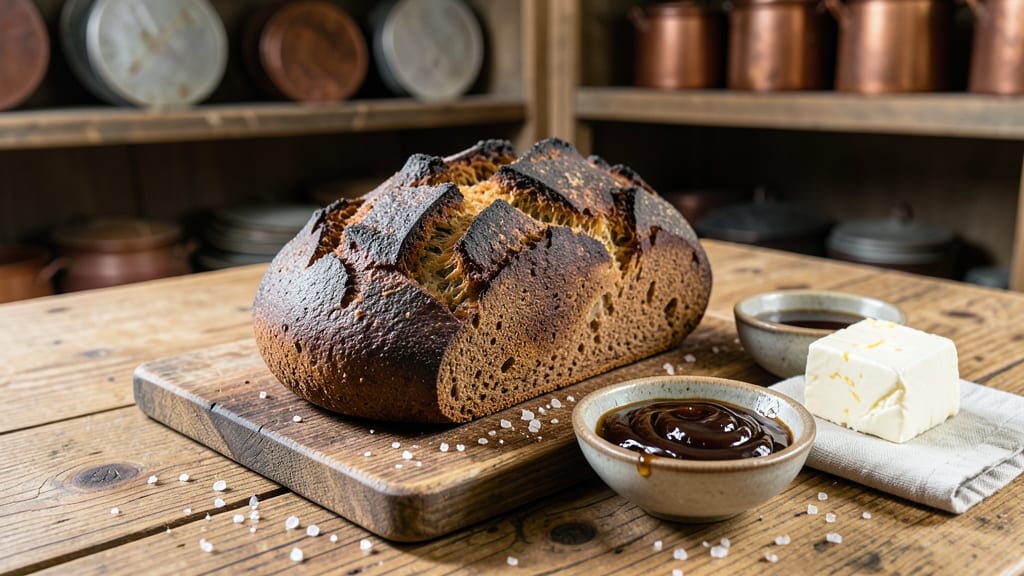
This authentic German rye bread recipe delivers the dense, tangy crumb and crispy crust that defines traditional Roggenbrot. 🌟 After years of perfecting the balance between sour fermentation and proper hydration, I’ve created a method that stays true to German bakery standards while being achievable at home.
The secret lies in precise ingredient ratios and patient fermentation—no shortcuts here.
The beauty of this recipe is its simplicity once you understand the fundamentals. You’ll work with a stiff dough that requires minimal kneading but demands time to develop flavor. The result?
A loaf with a deep, earthy aroma, a sturdy crust that crackles when sliced, and a moist, slightly sticky interior that’s perfect for sandwiches or served alongside hearty German stews.
What sets this bread apart is its authentic tang, achieved through a natural fermentation process that builds complexity over 12–24 hours. The rye flour contributes a nutty depth, while a touch of honey or malt syrup enhances the bread’s natural sweetness without overpowering its rustic character.
Every bite should remind you of a bakery in Bavaria—just without the travel.
Whether you’re baking for a family dinner or preparing for a German feast, this recipe delivers professional-quality results. The method scales easily, and leftovers keep beautifully for days. Let’s get started on creating bread that tastes like home.
Ingredients for authentic german rye bread
Precision-milled flours and patient fermentation create this German bakery-style rye bread with dense crumb and crisp crust.
| Ingredient | Amount | Notes |
|---|---|---|
| Dark Rye Flour 🌾 | 3 cups | Type 1160 or 1170 for authenticity |
| All-Purpose Flour 🌾 | 1 cup | For structural balance |
| Active Dry Yeast 🍄 | ¼ oz | Freshly measured for vitality |
| Granulated Sugar 🍚 | ½ cup | Feeds yeast during fermentation |
| Dark Malt Syrup 🍯 | ¼ cup | Enhances caramelization and tang |
| Unsalted Butter 🧈 | ½ cup | Cold, cubed for dough enrichment |
| Large Eggs 🥚 | 2 whole | Room temperature for proper binding |
| Diamond Crystal Kosher Salt 🧂 | 1 ½ tsp | Fine grain for even distribution |
| Cold Water 💧 | 1 ½ cups | Gradually added for hydration control |
| Honey 🍯 | 2 tbsp | For subtle sweetness and crust browning |
| Cornmeal 🌽 | ¼ cup | For dusting and crust texture |
| Coarse Sea Salt 🧂 | 1 tsp | For final crust enhancement |
| Semolina Flour 🌾 | ½ cup | Optional for improved oven spring |
The rye flour is non-negotiable—Type 1160 or 1170 from King Arthur or Bob's Red Mill delivers the authentic earthy depth. German specialty stores often carry it, or order online if your local market lacks it. The malt syrup should be dark and molasses-like; Barley's or Bairds brands are ideal. For the yeast, always check the expiration date—freshness is critical for proper fermentation. The butter should be cold when added to maintain proper dough texture, and granulated sugar should be measured precisely to avoid overfeeding the yeast.
No dark rye flour? Substitute with a 50/50 blend of whole wheat and all-purpose flour, though the flavor will differ slightly. Malt syrup unavailable? Honey or maple syrup work in a pinch, though they won't replicate the exact caramel notes. Butter can be replaced with olive oil (same quantity) for a lighter dough, though the crust will lack richness. For the salt, Diamond Crystal kosher is preferred—Morton's is finer and requires adjustment. The semolina is optional but enhances crust texture; cornmeal works equally well if unavailable. Always use room-temperature eggs—cold eggs can inhibit gluten development.
This dough requires 12–24 hours of fermentation at room temperature, covered with a damp towel. Store it in the coldest part of your fridge if fermentation progresses too quickly. The shaped loaf keeps 3–4 days at room temperature, wrapped in a clean kitchen towel. For longer storage, freeze sliced and wrapped in parchment for up to 3 months. The bread reheats beautifully—5 minutes at 350°F restores its freshness. Slice with a serrated bread knife for clean cuts through the dense crumb.
Why You'll Love This Recipe
- No-Knead Magic: I swear by this dough—just mix, wait, and bake. The dark rye flour does all the heavy lifting while you sip coffee or scroll through your phone. Honestly, my lazy weekends just got an upgrade.
- Malt Syrup Magic: That dark malt syrup isn’t just sweet—it’s the secret to the deep, caramelized crust and chewy crumb. One whiff of it baking, and I’m already planning my second slice. (Yes, even on a Tuesday night.)
- Breakfast to Dinner Fix: Toast it for breakfast with butter and jam, or tear it into chunks for hearty sandwiches. I keep a loaf in the freezer because it’s my go-to for everything—no excuses, no last-minute grocery runs.
- Budget-Friendly Staple: Dark rye flour might sound fancy, but it’s cheaper than buying pre-made bread. A single batch feeds my family for days, and the leftovers? Perfect for croutons or breadcrumbs. My wallet and pantry both thank me.
Step-by-step instructions for authentic German rye bread
Master this traditional German technique for a bread with dense crust and tangy crumb.
👨🍳 Step 1: Activate the Yeast and Prepare the Dough Base
In a large mixing bowl, dissolve the 0.25 oz active dry yeast in ½ cup warm water (about 110°F) with 1 tablespoon granulated sugar. Let sit for 5-10 minutes until frothy—this confirms your yeast is active. If it doesn't bubble, start over with fresh yeast.
In the same bowl, combine the 3 cups dark rye flour, 1 cup all-purpose flour, 1.5 tsp diamond crystal kosher salt, and 0.25 cup dark malt syrup. Make a well in the center and add the yeast mixture, 2 whole large eggs, and 0.5 cup cold unsalted butter cut into small cubes. Mix with a wooden spoon until a shaggy dough forms.
🥘 Step 2: Hydrate Gradually and Knead for Structure
Add the remaining 1 cup cold water gradually while mixing, about ¼ cup at a time. The dough will be sticky—this is normal for rye bread. Once combined, turn it out onto a lightly floured surface and knead for 8-10 minutes until smooth and elastic. You're aiming for a dough that's tacky but manageable, not dry.
For authenticity, I press down gently on the dough during the last minute of kneading—this develops gluten without overworking it. The dough should spring back slowly when pressed, not immediately. If it's too sticky, add 1 tablespoon all-purpose flour at a time until it's workable.
⏰ Step 3: First Fermentation with Controlled Environment
Shape the dough into a round loaf and place it in a lightly greased bowl. Cover with plastic wrap and let rise at room temperature for 1.5-2 hours until it has nearly doubled in size. The dough should feel soft and slightly jiggly when pressed gently with a finger—this indicates proper fermentation.
Here's the thing—German rye bread relies on slow fermentation for its signature tang. If your kitchen is cold (65°F), extend this to 3 hours. The goal is to develop flavor without overproofing. I like to do this in my oven with the light on for consistent warmth.
🔥 Step 4: Shape and Final Proof for Oven Spring
Turn the dough out onto a floured surface and shape it into a round loaf about 8 inches in diameter. Place it seam-side up on a parchment-lined baking sheet dusted with 0.25 cup cornmeal. Cover loosely and let proof for another 30-45 minutes until it rises about 1 inch above its original height.
For that authentic German look, I dimple the top with my fingers before baking—this creates steam vents and gives the bread its characteristic texture. Sprinkle with 1 tsp coarse sea salt and 2 tbsp honey for extra flavor and browning.
🔥 Step 5: Bake with Steam for Perfect Crust
Preheat your oven to 375°F with a baking stone or inverted baking sheet on the middle rack. Place the shaped loaf in the oven and immediately pour 1 cup hot water into a small oven-safe dish on the lower rack. This creates steam that develops that signature dense crust.
Bake for 45-50 minutes until the crust is deep mahogany brown and the internal temperature reaches 190-200°F. The bread should sound hollow when tapped on the bottom. For extra authenticity, I finish with 0.5 cup semolina flour sprinkled on top during the last 10 minutes of baking.
Let cool on a wire rack for at least 1 hour before slicing—this prevents a gummy crumb. The bread will continue to develop flavor as it cools, giving you that perfect balance of sweet, tangy, and hearty rye character.
Pro Tips For Making Authentic German Rye Bread
- Bloom the Yeast First: Skip mixing yeast directly into dry flour—it’ll wake up slower. Instead, dissolve it in warm (not hot) water with a pinch of sugar (about 1 teaspoon) and let it foam for 5-10 minutes. I learned this the hard way after kneading a dough that took three hours to rise properly.
- Weight Down the Dough: Rye dough is dense and won’t spring like wheat. After shaping, place it in a bowl and press a kitchen towel soaked in warm water on top, then weigh it down with a small jar or a bag of sugar. This keeps the surface smooth and prevents cracks—no more lumpy loaves.
- Steam the Oven: German rye bread needs a crisp crust, not a sad one. Before baking, place a metal tray on the bottom rack and pour in ¼ cup boiling water (or add ice cubes to cold water for extra steam). Close the door immediately—this mimics a bread oven’s humidity and gives you that glossy, crackly top.
- Use Cold Malt Syrup: Warm malt syrup loses its depth of flavor and can kill yeast. Stir it into the dough last, right before shaping, and keep it in the fridge until then. The cold syrup adds sweetness without overpowering the rye’s earthy bite—trust me, your bread will taste richer.
Troubleshooting this dish
Dough Too Sticky?
German rye dough is naturally sticky due to its high hydration and rye flour content. If it feels impossible to handle, resist adding extra flour—this disrupts gluten development. Instead, wet your hands with cool water and use a dough scraper to lift and fold the dough.
I keep a bowl of ice water nearby to dip my hands between folds. For extreme cases, add 1 tablespoon vital wheat gluten to strengthen the structure without drying it out. 💧
Fermentation Issues
If your dough rises too quickly (in under 1 hour), your kitchen is too warm. Move it to the fridge for 2-3 hours to slow fermentation. Conversely, if it barely rises after 4 hours, your yeast may be dead or your environment too cold.
Always test yeast vitality first—if it doesn’t bubble in 10 minutes with warm water and sugar, start fresh. For cold climates, I preheat my oven to 70°F and place the dough inside with the light on for consistent warmth. ⏰
Crust Not Crispy
A soft crust usually means insufficient steam during baking. German rye bread relies on high humidity in the oven. Place a baking stone on the lower rack and pour 1 cup boiling water into a tray before baking.
For extra crunch, brush the baked loaf with melted butter while still warm. I also recommend baking at 375°F instead of higher temps—lower heat develops a better crust over time.
If your oven lacks steam control, try baking in a Dutch oven for 30 minutes before transferring to a rack. 🔥
Dense but Gummy Texture
Underbaking or improper cooling causes gummy rye bread. Always bake until the internal temperature reaches 190-200°F—a toothpick should come out clean but moist. Let the bread cool on a wire rack for at least 1 hour before slicing.
For extra insurance, I place it in a 200°F oven for 10 minutes after baking to dry the crumb slightly. If it’s still gummy, your dough may have been overhydrated—reduce water by 2 tablespoons next time. 🌡️
Flat or Collapsed Loaf
A flat loaf often results from overproofing or weak gluten structure. Check dough readiness by pressing gently—it should spring back slowly (not immediately). If it collapses during baking, your oven may not be hot enough. Preheat for at least 30 minutes with a baking stone.
For extra support, shape the dough into a batard (oval) instead of a round. I also recommend using semolina flour on the baking sheet for better oven spring. 🍞
Flavor Too Mild
Weak flavor usually means insufficient fermentation or low-quality ingredients. Let your dough ferment 12-24 hours at room temperature for maximum tang. Use 100% dark rye flour if possible—mixing with all-purpose flour dilutes the flavor. For depth, add 1 teaspoon caraway seeds (optional but traditional).
I also recommend using molasses instead of malt syrup for a deeper caramel note. If your kitchen is too warm, ferment in the fridge for 24 hours to control yeast activity. 🌱
Nutrition facts
Frequently asked questions
What makes German rye bread different from other rye breads?
Authentic German rye bread uses 100% dark rye flour (Type 1160 or 1170) for its distinctive earthy flavor and dense crumb. Unlike lighter rye blends, it relies on a long, controlled fermentation (12-24 hours) to develop that signature tangy depth. The dough is stiff and sticky, requiring minimal kneading but maximum patience for flavor development.
Can I substitute rye flour if I can't find it?
Yes, but expect a less authentic result. Use a 50/50 blend of whole wheat and all-purpose flour for structure, but the flavor will be milder. For better texture, add 1 tablespoon ground rye berries or 1 teaspoon caraway seeds (traditional in German baking). The bread will still be hearty, just not as tangy or dense.
How long should I let the dough ferment?
The ideal fermentation time is 12-24 hours at room temperature for maximum flavor. If your kitchen is warm (75°F+), reduce to 12 hours to prevent overproofing. For cold climates (65°F), extend to 24 hours or use your oven with the light on for consistent warmth. The dough should nearly double but remain slightly underproofed for structure.
Why does my German rye bread turn out gummy?
Gummy texture usually means underbaking or improper cooling. Always bake until the internal temperature reaches 190-200°F—a toothpick should come out clean but moist. Let the bread cool 1 hour on a wire rack before slicing. For extra insurance, place it in a 200°F oven for 10 minutes after baking to dry the crumb slightly. Overhydrated dough? Reduce water by 2 tablespoons next time.
Can I make this bread without a stand mixer?
German rye dough is hand-knead friendly—just work it on a floured surface for 8-10 minutes until smooth. The dough is sticky, so wet your hands with cool water and use a dough scraper to fold and lift. For extra strength, add 1 tablespoon vital wheat gluten if the dough feels too weak. Patience is key—rye dough develops flavor through time, not power.