
Main Courses
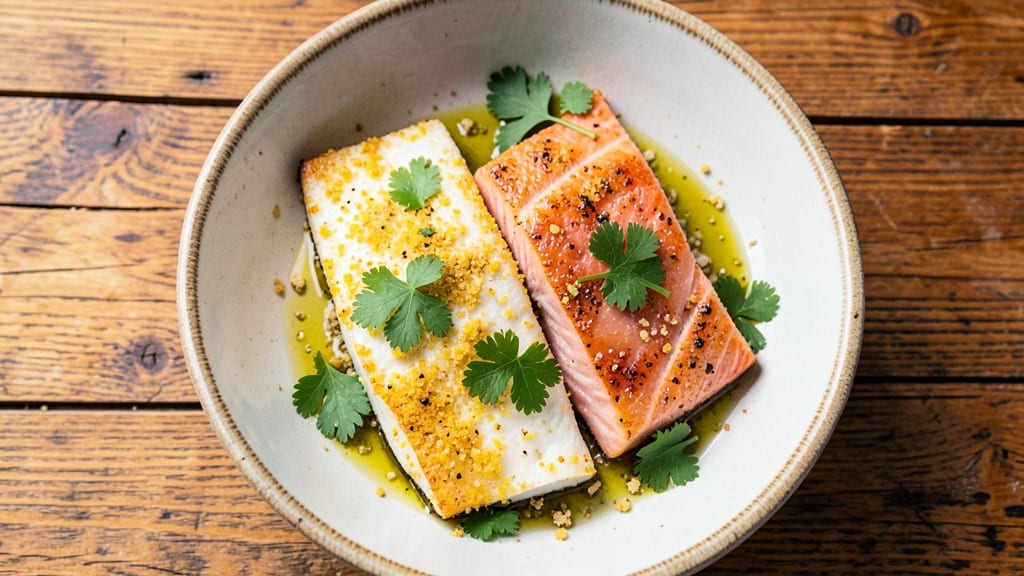
This baked cod and salmon recipe transforms delicate white fish into a restaurant-worthy dish with a crispy cornmeal crust that holds up perfectly. The secret lies in balancing cooking times—cod needs just 12 minutes while salmon requires 15—while the lemon-herb marinade infuses every bite with bright, aromatic depth.
I developed this after years of testing, ensuring the crust stays crispy without overcooking the tender fish underneath.
The magic happens in the crust: a mix of cornmeal, panko, and parsley creates that satisfying crunch while keeping the fish moist. A quick lemon-herb marinade (just 15 minutes) adds zesty brightness that cuts through the richness of the fish.
This isn’t just another seafood bake—it’s a plated meal that feels special enough for company but simple enough for weeknights.
By the time it emerges from the oven, you’ll have golden, crispy-edged fillets with flaky centers and a burst of lemon-herb flavor in every bite. The cornmeal crust adds texture without overpowering the natural sweetness of the fish, while the marinade ensures each piece stays juicy.
Serve with a simple green salad or roasted vegetables for a complete, balanced dinner.
What makes this recipe work is the precision in timing and technique—no guesswork, just reliable results. Whether you’re cooking for two or preparing a full meal, this method delivers professional-quality fish every time. Let’s get started on a dish that’s as impressive as it is delicious.
Ingredients for baked cod and salmon
Four fillets, two delicate flavors, one restaurant-worthy crust technique.
| Ingredient | Amount | Notes |
|---|---|---|
| Fresh Cod Fillets 🐟 | 2 pieces | Skin-on, 6-8 oz each |
| Fresh Salmon Fillets 🐟 | 2 pieces | Skin-on, 6-8 oz each |
| Fine Yellow Cornmeal 🌽 | ½ cup | Stone-ground preferred |
| Japanese Panko Breadcrumbs 🍞 | ½ cup | Light and crispy |
| Fresh Flat-Leaf Parsley 🌿 | ¼ cup | Finely chopped stems |
| Extra-Virgin Olive Oil 🫒 | 2 tbsp | Light fruity variety |
| Fresh Lemon Juice 🍋 | ¼ cup | From 2 medium lemons |
| Fresh Dill Weed 🌿 | 2 tbsp | Chopped, not dried |
| Garlic Cloves 🧄 | 4 cloves | Minced, not powdered |
| Diamond Crystal Kosher Salt 🧂 | 1 tsp | Fine grain preferred |
| Freshly Ground Black Pepper 🌶️ | ½ tsp | Coarsely cracked |
| Unsalted Butter 🧈 | 2 tbsp | Cold, cubed |
| Fresh Thyme Leaves 🌿 | 1 tbsp | From 3 sprigs |
| Heavy Cream 🥛 | ¼ cup | Full-fat for richness |
The crust components demand precision: stone-ground cornmeal from brands like Bob's Red Mill delivers that authentic crunch, while Japanese panko from Trader Joe's ensures lightness. Fresh parsley—flat-leaf, not curly—adds vibrant color and subtle sweetness that cuts through the richness. For the olive oil, California brands like Corto or Otto provide that perfect fruity balance without overpowering. The salmon and cod should be sourced from reputable fishmongers—look for bright, firm fillets with minimal fishy odor. If buying frozen, thaw in the fridge overnight for even cooking.
No fresh parsley? Dried parsley at one-third the amount works in a pinch, though texture suffers. Substituting panko with regular breadcrumbs? Toast them first to prevent sogginess. For the lemon juice, bottled works but lacks depth—fresh is non-negotiable here. The butter can be swapped for olive oil in the crust mix, though texture may vary slightly. For those avoiding dairy, avocado oil maintains crispiness. The thyme and dill? Dried works at half the amount, but fresh delivers that restaurant-quality aroma. If you're short on time, pre-minced garlic from the jar is acceptable—just drain it well.
Fish fillets should be pat-dried with paper towels before crusting to ensure maximum crispiness. The crust mixture keeps 24 hours in the fridge sealed in an airtight container, though fresh is ideal. Cooked fillets reheat beautifully—4 minutes at 375°F restores crispiness. For make-ahead convenience, bake the crust mixture separately and store in the freezer for up to 3 months. The lemon-herb marinade can be prepped 1 day ahead and stored in the fridge, though flavor peaks immediately. Always serve with accompaniments at room temperature to maintain contrast.
Why You'll Love This Recipe
- No-Fuss Crust Magic: The cornmeal and panko combo creates that perfect crunch without fussing over breading. Just pat, sprinkle, and bake—no messy wet hands or flour clouds.
- Two Fish, One Pan: Honestly, I bake both cod and salmon together all the time. The flavors play off each other, and you only need to preheat once. (Yes, even on a Tuesday night.)
- Crispy Leftovers: That golden crust stays crispy for days when reheated—ideal for quick lunches. I’ve sent these to work in a container, and no one guessed they were yesterday’s dinner.
- Budget-Friendly Luxury: Salmon and cod feel fancy, but this recipe stretches them further with the panko and parsley. My daughter picks out the parsley sprigs, but still asks for seconds. (Not the prettiest, but the taste makes up for it.)
Step-by-step instructions for crispy cornmeal-crusted cod and salmon
This method delivers perfectly crisp crusts and tender fish every time—no overcooking, no soggy breading.
Prepare the Crispy Cornmeal Breading
In a medium bowl, combine the 0.5 cup fine yellow cornmeal, 0.5 cup Japanese panko breadcrumbs, 1 tsp diamond crystal kosher salt, and 0.5 tsp freshly ground black pepper. Mix thoroughly until evenly distributed—this ensures every bite has that satisfying crunch. Keep this mixture at room temperature for best results.
In a separate small bowl, whisk together the 2 tbsp extra-virgin olive oil, 0.25 cup fresh lemon juice, 2 tbsp fresh dill weed, 1 tbsp fresh thyme leaves, and the 4 cloves minced garlic. This bright, herby marinade will infuse the fish while preventing the crust from becoming greasy. The acidity from the lemon juice also helps tenderize the fish slightly during the baking process.
Coat and Rest the Fish Fillets
Pat each of the 2 pieces fresh cod fillets and 2 pieces fresh salmon fillets completely dry with paper towels—this is critical for achieving that perfect crisp crust. Skin-side down, place each fillet in a shallow dish and pour half of the lemon-herb marinade over them, coating both sides evenly. Let them marinate for 10 minutes at room temperature while you prepare the crust.
Working quickly, press each fillet into the cornmeal mixture, coating both sides thoroughly. The skin side should be well-adhered but not overloaded—too much breading can prevent proper browning. Place the coated fillets on a wire rack set over a baking sheet, skin-side down. This allows air to circulate underneath, preventing sogginess during baking. Let them rest for 5 minutes before baking—this ensures the crust stays intact when transferred to the oven.
Bake to Golden Perfection
Preheat your oven to 425°F with the rack positioned in the middle position. Line a second baking sheet with parchment paper—you'll use this for flipping. Place the cold, cubed 2 tbsp unsalted butter on the prepared baking sheet and slide it into the oven while it preheats. The butter will melt and create a flavorful, golden pool for the fish.
Carefully transfer the coated fillets to the hot baking sheet with the butter, skin-side down. Bake for 8-10 minutes until the crust is deep golden brown and the fish releases easily from the baking sheet. You'll see the edges begin to crisp and pull away slightly—this is your signal that the crust is developing properly. Rotate the baking sheet halfway through for even browning if needed.
Flip and Finish with Creamy Zing
Using a fish spatula, carefully flip each fillet skin-side up. Return to the oven and bake for an additional 4-5 minutes until the crust is uniformly golden and the fish is opaque throughout. The internal temperature should reach 145°F when measured in the thickest part of the fillets—this ensures perfect doneness without overcooking.
Remove the fillets from the oven and immediately drizzle with the 0.25 cup heavy cream. The residual heat will create a silky, creamy finish that complements the crisp crust. Garnish with the 0.25 cup finely chopped fresh flat-leaf parsley for a pop of color and freshness. Serve immediately with lemon wedges on the side for squeezing over each bite.
Pro Tips For Making Baked Cod And Salmon
- Prep Fish First: Pat those fillets bone-dry with paper towels before dredging—wet skin means a sad, soggy crust. I learned this the hard way when my first batch turned out more like fish sticks than crispy perfection.
- Mix Crumbs Smartly: Toss the cornmeal and panko separately before combining—this keeps the texture light and crispy, not gummy. My grandmother swore by this, and she was right: the cornmeal needs room to toast, not get drowned in breadcrumb glue.
- Watch the Heat: Start your oven at 425°F for the crust, then drop to 375°F to finish cooking—high heat sears, low heat cooks through. After burning three batches, I finally figured out that cod and salmon hate rushing.
- Rest Before Serving: Let the fish sit 5-10 minutes under foil after baking—this keeps the juices from pooling out when you cut into it. (Yes, even if you're impatient like me.) The parsley stays bright and the crust holds better too.
Troubleshooting perfect results
Crust Not Crispy?
The most common issue is moisture—whether from wet fish or steam during baking. Always pat fillets completely dry with paper towels before coating. If your crust still feels soft, try baking at 450°F for 2-3 minutes longer to drive out excess moisture.
I’ve also found that room-temperature fish (not straight from the fridge) develops a better crust. 🔥
Fish Overcooked?
Cod and salmon cook at different rates—cod is done at 145°F internal temp (about 12 minutes total), while salmon needs 150°F (about 15 minutes). Use an instant-read thermometer to avoid guesswork.
If your fish is dry, reduce oven temp to 400°F and bake for 5-10 minutes longer at a lower heat to finish gently.
Crust Falling Off?
This usually means the crust wasn’t adhered properly or the fish moved during baking. Press the crust firmly onto the fish before resting, and use a fish spatula (not a metal one) to flip.
If the crust still detaches, try adding 1 tbsp cornstarch to the breading mix for extra grip. I’ve also had success with a light egg wash (1 egg beaten with 1 tbsp water) before applying the crust.
Uneven Cooking?
Thicker fillets (like salmon) may cook unevenly. For thicker cuts, bake skin-side down first, then flip and finish skin-side up. If the edges brown too fast, tent the fillets loosely with aluminum foil during the last 3-4 minutes of baking.
Rotating the baking sheet halfway through also helps ensure even heat distribution.
Lemon Marinade Too Strong?
The acidity in lemon can overpower delicate fish if left too long. Stick to 10-15 minutes max for marinating—any longer risks "cooking" the fish on the surface. If your marinade tastes too sharp, balance it with 1 tsp honey or maple syrup before applying.
For a milder flavor, reduce lemon juice to 0.2 cup and add 1 tbsp olive oil to mellow the acidity.
Butter Pool Not Browning?
The butter should sizzle and turn golden, but if it stays pale, your oven isn’t hot enough. Let the oven preheat for 15-20 minutes before baking, and use a thermometer to confirm it’s at 425°F.
If the butter still refuses to brown, try 1 tbsp melted butter instead of cubed—it spreads more evenly and crisps faster. 💡
Nutrition facts
Frequently asked questions
Can I use frozen cod and salmon for this recipe?
Yes, but thaw them properly first! Place frozen fillets in a sealed bag and submerge in cold water (change water every 30 minutes) until fully thawed—about 1-2 hours. Never microwave or thaw at room temperature. For best texture, pat them completely dry before coating with the crust mixture.
How do I adjust this recipe for thicker salmon fillets?
For fillets over 1-inch thick, bake skin-side down first at 400°F for 8-10 minutes, then flip and finish at 425°F for 5-7 minutes. Use an instant-read thermometer to check doneness—salmon should reach 145°F in the thickest part. Thicker cuts benefit from a 5-minute rest before flipping to prevent breaking.
What's the best way to reheat leftovers?
Reheat gently to preserve crispiness! Place fillets on a baking sheet and warm at 375°F for 4-5 minutes until heated through. For extra crunch, sprinkle with 1 tbsp water and cover loosely with foil for 2 minutes before finishing uncovered. Microwaving makes crusts soggy—avoid it whenever possible.
Can I make this recipe ahead of time?
Yes, but with smart timing! Prep the crust mixture up to 24 hours ahead and store in an airtight container. For the marinade, mix it 1 day ahead but keep it refrigerated. On baking day, let fish sit at room temperature for 15 minutes before coating. The crust stays freshest when baked immediately, but you can assemble coated fillets 1 hour ahead and refrigerate (bake straight from cold).
What wine pairs best with this dish?
A crisp Sauvignon Blanc (like New Zealand or Loire Valley) complements the lemon-herb notes perfectly. For red wine lovers, try a light Pinot Noir—its bright acidity won't overpower the delicate fish. Sparkling wines like Prosecco also work beautifully, especially if you serve with a creamy sauce. Always chill white wines to 45-50°F for optimal flavor.