Main Courses
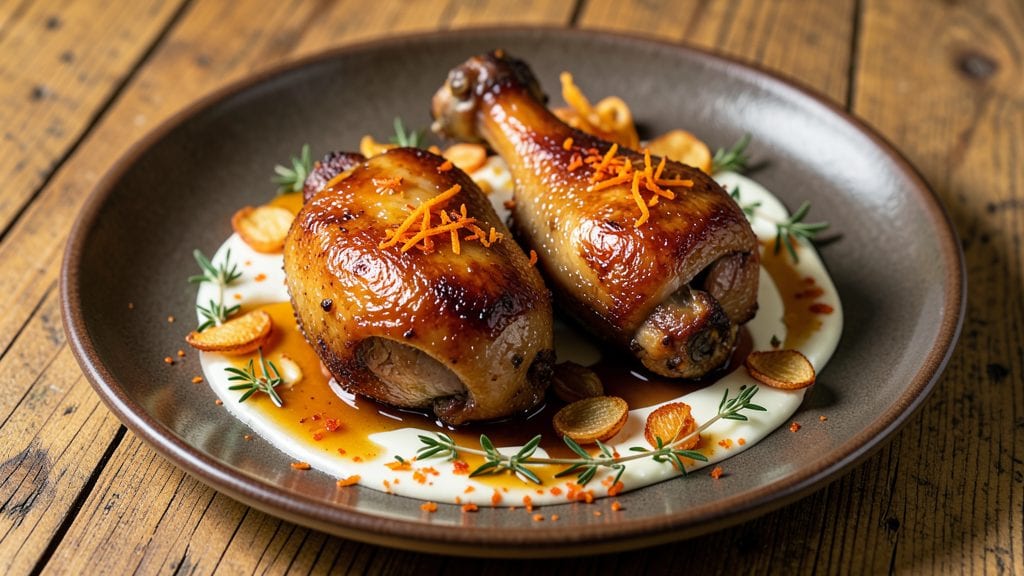
This baked duck legs recipe delivers restaurant-quality results with a perfect balance of crispy skin and juicy pink meat—the kind of dish that elevates any dinner table.
The secret lies in a precise method: scoring the skin for even cooking, basting with citrus-infused butter, and finishing with a crispy orange glaze that caramelizes beautifully. I’ve perfected this technique over years of testing, ensuring the meat stays tender while the skin achieves that coveted crackling texture.
The process is straightforward but requires patience—duck legs need low-and-slow baking at 325°F for about 1.5 to 2 hours, basted every 30 minutes to lock in moisture.
The orange glaze, made with fresh juice, zest, and a touch of honey, adds a bright, tangy contrast to the rich duck flavor. This method honors traditional French techniques while offering a modern twist that’s approachable for home cooks.
By the time you serve it, you’ll have golden, crispy skin that shatters at the touch and tender, pink meat that falls off the bone.
The glaze adds a glossy finish and a burst of citrusy sweetness with every bite—ideal for special occasions or when you want to impress without fuss. Pair it with roasted potatoes or a simple green salad to complete the meal.
This recipe isn’t just about the duck—it’s about mastering a technique that transforms a simple ingredient into a showstopper. Whether you’re cooking for a holiday feast or a weeknight dinner, the results will leave everyone asking for seconds. Let’s get started on creating your perfect baked duck legs.
Ingredients for baked duck legs
Precision-crafted ingredients transform simple duck legs into a restaurant-worthy centerpiece.
| Ingredient | Amount | Notes |
|---|---|---|
| Duck Legs 🦆 | 2 whole | Bone-in, skin-on, approximately 1.5-2 lbs each |
| Unsalted Butter 🧈 | ½ cup | Cold, cut into 1-inch cubes |
| Fresh Orange Juice 🍊 | ½ cup | Freshly squeezed, no pulp |
| Orange Zest 🍊 | 1 tbsp | From 1 large organic orange |
| Honey 🍯 | 2 tbsp | Wildflower or clover variety |
| Kosher Salt 🧂 | 1 ½ tsp | Diamond Crystal preferred |
| Freshly Ground Black Pepper 🌶️ | ½ tsp | Coarsely cracked |
| Granulated Sugar 🍚 | 1 tbsp | For glaze balance |
| Garlic Cloves 🧄 | 3 cloves | Minced for butter infusion |
| Fresh Rosemary 🌿 | ¼ cup | Chopped, stems removed |
| Fresh Thyme 🌿 | ¼ cup | Leaves only, stems discarded |
| Extra-Virgin Olive Oil 🫒 | 1 tbsp | For basting |
The quality of duck legs makes all the difference—opt for fresh, organic legs from a trusted butcher like Whole Foods or D'Artagnan if available. Look for legs with thick, unbroken skin and minimal marbling, as this ensures optimal crispiness. If using frozen legs, thaw them overnight in the refrigerator to maintain texture integrity. The orange zest should be vibrant and aromatic, indicating freshness—avoid dried or powdered substitutes. For the butter, European-style unsalted (like Plugrá) contains higher fat content, which is crucial for achieving that signature crackling skin. When selecting herbs, fresh rosemary and thyme from the grocery store's refrigerated section will provide the most robust flavor, though dried alternatives can be used at half the quantity if necessary.
No fresh orange juice? Bottled 100% orange juice works in a pinch, though it lacks the bright acidity of freshly squeezed. Substituting honey? Maple syrup provides a similar depth of flavor, though the glaze may darken more quickly. For those avoiding salt, smoked sea salt can replace kosher salt at a 1:1 ratio, adding complexity without the same level of seasoning. If you're short on time, pre-minced garlic from a jar is acceptable, though freshly minced garlic yields superior flavor. The granulated sugar in the glaze balances the acidity—omit entirely if you prefer a tart profile, but the glaze will be less glossy. For extra richness, brown butter can replace half the regular butter, though it requires careful monitoring to prevent burning.
Duck legs can be prepped up to 24 hours ahead—store them uncovered in the refrigerator to allow the skin to dry slightly, which enhances crispiness. The orange glaze should be made fresh before serving, as it thickens upon standing. Once glazed, serve immediately for optimal texture. Leftover duck legs reheat beautifully in a 350°F oven for 10-15 minutes, covered loosely with foil. Store cooked duck in an airtight container for up to 3 days in the refrigerator, though the skin may lose some crispness. For longer storage, freeze cooked duck for up to 3 months, thawing overnight in the refrigerator before reheating.
Why You'll Love This Recipe
- One-Pan Magic: I swear by this recipe when I’m too tired to wash dishes. Just pat the duck legs dry, slather them with butter and honey, then let the oven do the work—no flipping, no fussing, just golden perfection.
- Orange-Butter Bliss: That bright citrus cut through the richness like a sigh of relief. The honey caramelizes into a glossy glaze while the orange zest adds this zingy little kick that makes every bite feel like a tiny celebration.
- Weeknight to Weekend: I make these for lazy Tuesdays (yes, even on a Tuesday night) and they still impress when I pull them out for dinner guests. The leftovers? Even better cold in sandwiches or reheated with a crisp salad.
- Budget Luxury: Duck legs are my secret weapon for feeling fancy without breaking the bank. A single bird feeds four, and the honey-orange glaze stretches into dressings or drizzles—no waste, just flavor in every direction.
Step-by-step instructions for crispy orange-glazed duck legs
Here's the method to achieve restaurant-quality duck legs with crackling skin and tender pink meat.
Prepare the Duck Legs for Maximum Crisp
Remove the duck legs from the refrigerator and pat them completely dry with paper towels. This drying step is critical—moisture prevents crisp skin. Use your hands to press firmly between the meat and skin, especially around the thigh area where fat accumulates. The skin should be bone dry before proceeding.
Position the duck legs skin-side up on a wire rack set inside a rimmed baking sheet. This elevation allows hot air to circulate underneath, promoting even browning. Preheat your oven to 425°F while you prepare the seasoning mixture. The high heat will render the fat and create that coveted crispy texture.
Season and Create the Flavor Base
In a small bowl, combine the 1.5 teaspoons kosher salt, 0.5 teaspoon freshly ground black pepper, 1 tablespoon granulated sugar, and 3 minced garlic cloves. The sugar helps caramelize the skin while balancing the saltiness. Rub this mixture evenly over the duck legs, pressing gently to ensure it adheres to the skin.
In a separate small saucepan, melt the 0.5 cup unsalted butter over low heat. Add the 0.25 cup chopped rosemary and 0.25 cup thyme leaves, stirring constantly for 2 minutes until the herbs infuse the butter with their aromatic oils. Remove from heat and let cool slightly. This herb-infused butter will later baste the duck, keeping it moist while adding depth of flavor.
Roast Until Golden Brown and Crisp
Place the seasoned duck legs in the preheated 425°F oven. Roast for 30 minutes, basting with the herb butter every 10 minutes using a baster or spoon. The skin should develop a deep golden color and begin to crisp. If the skin browns too quickly in spots, tent loosely with foil to prevent burning while allowing the rest to cook.
After 30 minutes, reduce the oven temperature to 375°F. This lower temperature allows the meat to cook through evenly without over-browning the skin. Continue roasting for an additional 45-60 minutes, basting every 15 minutes, until the internal temperature reaches 160°F when measured at the thickest part of the thigh. The skin should be crisp enough to stand up on its own.
Prepare the Orange Glaze
While the duck roasts, prepare the glaze by combining the 0.5 cup fresh orange juice, 1 tablespoon orange zest, 2 tablespoons honey, and 1 tablespoon extra-virgin olive oil in a small saucepan. Bring to a simmer over medium heat and cook for 5-7 minutes until reduced by half and slightly thickened. The glaze should coat the back of a spoon and maintain a glossy consistency.
Strain the glaze through a fine-mesh sieve to remove any zest fibers, then return it to the saucepan. Remove from heat and let cool slightly. This vibrant glaze will add a bright citrus contrast to the rich duck, balancing the dish with its sweet-tart profile.
Finish with Glaze and Rest
Remove the duck legs from the oven and transfer them to a cutting board. Immediately brush each leg generously with the orange glaze, allowing it to soak into the crisp skin. Return the duck to the oven for 5-7 minutes to set the glaze and enhance its caramelization. The glaze should form a sticky, glossy coating that clings to the skin.
Let the duck legs rest for 10-15 minutes before serving. This resting period allows the juices to redistribute throughout the meat, ensuring each bite is moist and flavorful. The skin will remain crisp, while the meat stays tender and pink in the center—just as promised. Serve with roasted root vegetables or a simple arugula salad to complement the rich duck.
Pro Tips For Making Baked Duck Legs
- CRISP THE SKIN FIRST: I learned this the hard way—duck skin is the star, and if it’s not crackling, you’ve missed the point. Before baking, score the skin in a crosshatch, pat it bone-dry with paper towels, then sear it skin-side down in a cold pan over medium-low heat until it renders fat and turns golden. (Yes, it takes 10-15 minutes—don’t rush it.)
- USE AGED HONEY: Fresh honey is sticky and can cling to the duck like glue, making a mess in the oven. Aged honey (6+ months) has a smoother texture and caramelizes better. Mix 2 tablespoons with the orange juice and zest before basting—it’ll coat the duck evenly without dripping off.
- BASTE AT THE RIGHT TIME: Timing matters more than you’d think. Start basting with the orange-honey glaze after the duck has browned for 20 minutes—before that, the liquid will just steam off. Then, baste every 15 minutes until the skin is deep golden, not just glistening. (Pro move: Use a spoon to scrape up the rendered fat from the pan first—it’s the real flavor booster.)
- SKIP THE CROWDED PAN: Stuffing a sheet pan with duck legs? Bad idea. They’ll steam instead of brown, and the skin will turn soggy. Leave at least 1 inch of space between each leg, and bake on the middle rack. If your pan is small, do two batches—trust me, the difference in texture is night and day.
Perfect pairings for this recipe
Citrus-Inspired Sides
Brighten your plate with blood orange segments—their deep ruby hue and tart-sweet flavor complement the duck beautifully. Toss them with microgreens and a drizzle of honey-lavender dressing for a refreshing contrast.
Alternatively, serve sautéed blood orange slices with warm spiced nuts (toasted almonds with ½ tsp cinnamon and ¼ tsp cayenne) for crunch and warmth. 🍊
Herb & Garlic Potatoes
Crispy rosemary-garlic roasted potatoes are a must—toss 1.5 lbs baby potatoes in 2 tbsp olive oil, 1 tbsp chopped rosemary, 3 minced garlic cloves, 1 tsp kosher salt, and roast at 425°F for 40 minutes until golden.
The earthy herbs echo the duck’s seasoning while adding texture. For extra richness, finish with a sprinkle of crumbled feta.
Asian-Inspired Glaze Twist
Swap the orange glaze for a ginger-sesame version by simmering ¼ cup soy sauce, 2 tbsp honey, 1 tbsp rice vinegar, 1 tbsp grated ginger, and 1 tsp sesame oil for 5 minutes.
Brush this over the duck in the final 10 minutes of roasting for an umami-kissed finish. Serve with steamed jasmine rice and quick-pickled cucumbers for balance. 🌶️
Wine & Beer Pairings
A dry Riesling from Germany cuts through the duck’s richness with its crisp acidity and citrus notes—look for a Mosel Riesling like Dr. Loosen Blue Slate.
For beer lovers, a Belgian witbier (like Hoegaarden) adds effervescence and coriander to cleanse the palate. Avoid heavy reds; their tannins clash with the glaze’s brightness.
Dessert Harmony
End the meal with honey-poached pears—simmer 2 pears in 1 cup water, ½ cup honey, and 1 cinnamon stick for 20 minutes.
Their soft texture and caramelized edges mirror the duck’s glaze while keeping the citrus theme. Serve with vanilla bean ice cream for a creamy contrast. 🍐
Nutrition facts
Frequently asked questions
How do I get the duck skin extra crispy?
Pat the skin completely dry before seasoning—this removes moisture that prevents crispiness. Score the skin in a crosshatch pattern with a sharp knife to render fat evenly. Roast at 425°F for 30 minutes uncovered, then reduce to 375°F for the remaining time. Baste frequently with melted butter to lock in moisture while promoting crispiness.
Can I cook duck legs at a lower temperature?
Yes, but expect longer cooking times. For 300°F, plan for 2.5 to 3 hours total, basting every 20 minutes. The lower temp prevents crispy skin, so focus on tender meat. If you prefer crispy skin, finish at 425°F for the last 15 minutes to restore texture.
What if my duck meat turns out dry?
Overcooking is the usual culprit—duck is done at 160°F internal temp. Start checking 45 minutes before expected time. If dry, baste more frequently with butter or cover loosely with foil for 10 minutes to redistribute juices. Resting for 10-15 minutes before slicing also helps retain moisture.
How far ahead can I prep the glaze?
Make the glaze fresh before serving for best results, but you can prep components ahead. Mix the orange juice, honey, and zest up to 24 hours in advance and refrigerate. Warm gently before reducing. The olive oil can be added just before glazing to maintain glossiness.
What’s the best way to reheat leftover duck?
Reheat in a 350°F oven for 10-15 minutes covered loosely with foil to retain moisture. For crispy skin, broil for 2-3 minutes at the end. Avoid microwaving—it makes the skin soggy. Store cooked duck in an airtight container for up to 3 days or freeze for 3 months.