
Salads
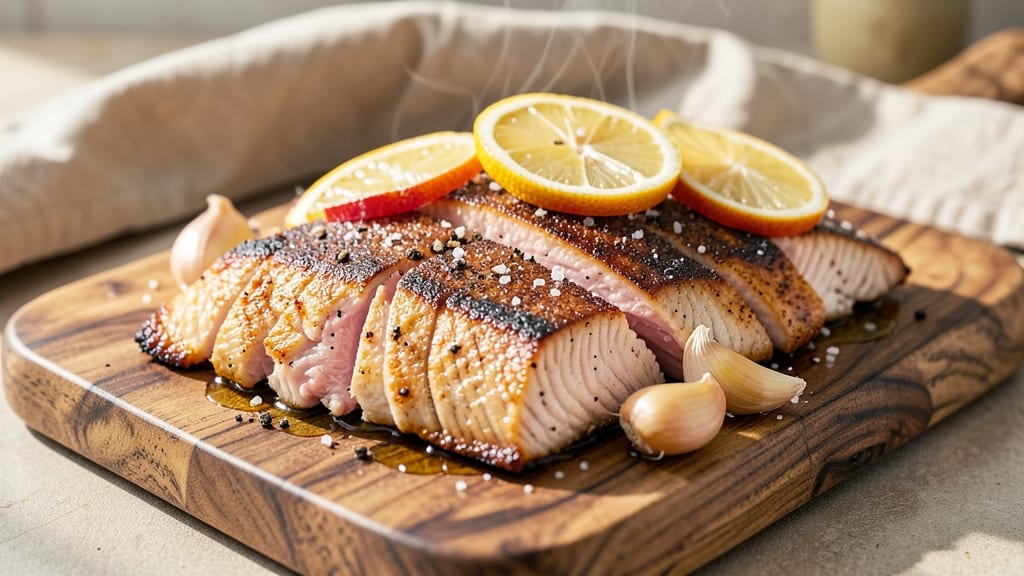
Baking tuna belly transforms it into crispy skin and silky pink perfection—a dish that balances delicate texture with rich oceanic flavor. This technique preserves the fish's natural sweetness while creating a golden crust that shatters with every bite.
I developed this method after years of experimenting with high-heat baking to achieve restaurant-quality results at home.
The secret lies in precise preparation: patting the belly dry, scoring lightly for even cooking, and baking at 425°F for just 8-10 minutes. The fish must cook quickly to maintain its tenderness while developing that coveted crispness. A light citrus marinade enhances the natural flavor without overpowering it.
When plated, the result is a golden, crackling skin encasing tender, flaky pink flesh that melts in your mouth. The aroma alone—bright, clean, and slightly briny—makes this dish unforgettable. Serve with a squeeze of lemon, steamed rice, or a side of miso soup to complement its delicate profile.
Perfect for special occasions or weeknight dinners, this recipe delivers restaurant-quality results with minimal effort. The key is timing and temperature—master these, and you'll have a dish that impresses every time.
Ingredients for baked tuna belly
Eleven ingredients transform delicate tuna belly into crispy-skinned perfection with restaurant-quality precision.
| Ingredient | Amount | Notes |
|---|---|---|
| Fresh Tuna Belly 🐟 | 1 ½ lb | Sushi-grade, skin-on preferred |
| Extra-Virgin Olive Oil 🫒 | 1 tbsp | Light drizzle for crispiness |
| Lemon Juice 🍋 | 2 tbsp | Freshly squeezed, bright flavor |
| Garlic Cloves 🧄 | 2 cloves | Minced, aromatic depth |
| Diamond Crystal Kosher Salt 🧂 | 1 tsp | Fine grain for even seasoning |
| Ground Black Pepper 🌶️ | ½ tsp | Freshly cracked, subtle heat |
| Unsalted Butter 🧈 | 1 tbsp | Melted, for basting |
| Fresh Parsley 🌿 | ¼ cup | Chopped, vibrant garnish |
| Sake 🍶 | 2 tbsp | Subtle umami enhancement |
| Mirin 🍶 | 1 tbsp | Sweet-savory balance |
| White Rice 🍚 | 1 cup | Uncooked, steamed side |
| Lemon Zest 🍋 | 1 tsp | Bright citrus aroma |
The tuna belly is non-negotiable for this dish—sushi-grade quality is essential to avoid any fishy aftertaste. Look for vibrant pink flesh with minimal bruising at specialty seafood markets or well-stocked grocery stores like Whole Foods or Trader Joe's. The skin should be intact and glistening. If you can't find it fresh, high-quality frozen tuna belly (thawed overnight in the fridge) works in a pinch, though texture may differ slightly. The fish should arrive at room temperature for even cooking, so plan to let it sit for 20-30 minutes before baking. For best results, purchase from a reputable seafood purveyor—ask for their recommendations on the freshest cuts.
No sake or mirin? Dry white wine and a touch of honey create a similar balance, though the umami depth will be slightly reduced. The lemon juice can be substituted with lime juice for a tartier profile, though lemon's brightness complements the fish better. If you're using pre-minced garlic, toast it first in olive oil to deepen its flavor. The butter is crucial for basting—unsalted ensures you control the seasoning. For the parsley, Italian flat-leaf adds more flavor than curly, but either works. If you're serving this for a crowd, consider doubling the rice and preparing the tuna belly in batches to maintain crispiness. The lemon zest can be omitted if you prefer, but it adds a professional restaurant touch that elevates the dish.
This dish is best served immediately after baking to preserve its crispy skin and silky texture. Store any leftovers in an airtight container with a paper towel pressed against the skin to absorb moisture, and refrigerate for up to 2 days. Reheat gently in a 350°F oven for 5-7 minutes to restore crispiness. The rice can be made ahead and reheated separately. For a freezer-friendly option, bake the tuna belly, let it cool completely, then wrap it tightly in plastic wrap and freeze for up to 1 month. Thaw overnight in the fridge before reheating. The citrus marinade components can be prepped 1 day ahead and stored in the fridge, but add the zest fresh for optimal aroma.
Why You'll Love This Recipe
- No-Fuss Prep: I swear by this recipe because it’s literally three ingredients plus salt—just pat the tuna belly dry, drizzle it with olive oil, and let the oven do the work. No chopping, no marinating, no stress.
- Crispy-Creamy Magic: That first bite? The outside gets perfectly golden and crisp while the inside stays tender—just like a fancy sushi restaurant, but with half the effort. The lemon brightens every bite, and the garlic? It’s the secret weapon.
- Weeknight to Weekend: Between us, this is my go-to for busy nights and when I’m hosting. Serve it with rice for a quick weeknight meal, or slice it over toast with a squeeze of lemon for a fancy appetizer. It works everywhere.
- Leftovers That Don’t Suck: Honestly, I always make extra because the flavor only gets better the next day. Cold slices in a salad? Yes. Wrapped in nori for onigiri? Absolutely. It’s the kind of dish that turns into something else without trying.
Step-by-step instructions for crispy baked tuna belly
Master this technique and you'll achieve restaurant-quality tuna belly with flawless crispy skin and silky pink perfection.
Prepare the Tuna Belly for Maximum Crispiness
Pat the 1.5 lb fresh tuna belly completely dry using paper towels—this is absolutely critical for crispy skin. Remove any remaining pin bones with tweezers, being careful not to puncture the delicate skin. Place the tuna belly skin-side down on a cutting board and use a sharp chef's knife to make shallow cuts in a diamond pattern across the flesh, about ¼-inch deep. This creates channels that allow the marinade to penetrate deeply while maintaining structural integrity.
In a small bowl, whisk together the 2 tbsp lemon juice, 2 tbsp sake, 1 tbsp mirin, and 1 tsp lemon zest. This marinade should be pale yellow with a bright citrus aroma. Brush this mixture generously over both sides of the tuna belly, making sure to saturate the flesh completely. Let it marinate at room temperature for 15 minutes—this brief infusion ensures the tuna absorbs enough acidity to prevent overcooking while maintaining its delicate texture.
Create the Perfect Baking Environment
Preheat your oven to 425°F with the rack positioned in the lower third. Place a wire rack on a rimmed baking sheet and line it with parchment paper. Arrange the tuna belly skin-side up on the rack, leaving space around the edges for proper air circulation. This setup guarantees even heat distribution and prevents steam buildup that could soften the skin.
Drizzle the 1 tbsp extra-virgin olive oil evenly over the tuna belly, focusing on the skin. Sprinkle with the 1 tsp diamond crystal kosher salt and 0.5 tsp ground black pepper, pressing gently to adhere. The salt will draw out moisture from the surface, creating an ideal crust. Place the baking sheet on the middle rack and immediately begin baking for 8 minutes—this initial high-heat phase is what transforms the skin from supple to perfectly crisp.
Baste and Finish for Optimal Texture
After 8 minutes, remove the baking sheet from the oven and carefully flip the tuna belly skin-side down using a fish spatula. Melt the 1 tbsp unsalted butter in a small saucepan over low heat until it just begins to foam, then immediately baste the flesh side of the tuna with the melted butter using a pastry brush. Return the tuna to the oven for an additional 6 minutes, basting once more after 3 minutes with any remaining butter.
The tuna is perfectly cooked when the skin is deep golden brown with visible crispness and the flesh reaches an internal temperature of 125°F at its thickest point. The flesh should still appear slightly translucent with a delicate pink hue—overcooking will turn it opaque and rubbery. Remove immediately and transfer to a cutting board, skin-side up, to rest for 5 minutes before serving.
Prepare the Garnish and Serve Immediately
While the tuna rests, finely chop the 0.25 cup fresh parsley and mince the 2 cloves garlic cloves. In a small bowl, combine these with 1 teaspoon of the reserved marinade. This bright green garnish adds visual contrast and freshness to the rich tuna.
Slice the tuna belly into ½-inch thick pieces against the grain, keeping the skin intact. Arrange on a platter with the skin-side up, spooning any accumulated pan juices around the slices. Garnish immediately with the parsley-garlic mixture. Serve with the steamed 1 cup white rice on the side—each bite should deliver perfect contrast between the crispy skin and silky pink flesh.
Pro Tips For Making Baked Tuna Belly
- Score the Skin: Use the back of a knife to make shallow cuts (about 1/4-inch apart) across the thickest part of the tuna belly’s skin before baking—this prevents curling and helps the skin render into crispy, golden fat pockets. I learned this the hard way after watching my first batch roll into a sad, greasy log.
- Salt the Garlic: Toss your minced garlic cloves in a pinch of kosher salt before adding them to the olive oil—this draws out moisture and ensures they crisp up instead of turning to mush. Sounds weird, but it works: your garlic will actually add texture, not just flavor.
- Bake Skin-Side Down: Place the tuna belly skin-side down on the baking sheet for the first 10 minutes, even if it looks uneven. The fat needs time to render and crisp without steaming the flesh underneath. After that, flip it—your future self will thank you.
- Finish with Lemon Zest: Skip the full lemon juice until the very end and instead sprinkle the baking dish with dried lemon zest before the last 5 minutes of baking. The heat caramelizes the oils in the zest, giving the tuna a bright, aromatic crust without making it soggy. (Yes, even if you’re impatient like me.)
Regional styles of baked tuna belly
Japanese Teppanyaki Style
In Japan, tuna belly is often prepared using the teppanyaki technique, where it's seared over a griddle with minimal seasoning to preserve its natural sweetness. For this adaptation, I use a cast-iron skillet preheated to 400°F and cook the tuna belly skin-side down for 3-4 minutes until deeply golden.
The key is to keep the flesh side untouched until the skin is perfectly crisp. Serve with a side of shoyu (soy sauce) and grated daikon radish for a traditional touch. 🍶
French Beurre Blanc
French cuisine elevates tuna belly by pairing it with beurre blanc sauce, a rich emulsion of butter and white wine vinegar.
After baking the tuna as directed, I whisk ½ cup butter, 3 tbsp white wine, and 1 tbsp shallots in a saucepan over low heat until emulsified. Drizzle this velvety sauce over the tuna and garnish with chervil and capers for a sophisticated presentation.
This technique highlights the tuna's delicate flavor while adding a luxurious touch.
Hawaiian Poke-Inspired
For a tropical twist, I marinate the tuna belly in a poke-inspired sauce made with 2 tbsp soy sauce, 1 tbsp sesame oil, 1 tbsp honey, and ½ tsp grated ginger.
After baking, I slice the tuna belly into ½-inch cubes and toss it with diced mango, avocado, and crushed macadamia nuts. This fusion dish brings together the crispy texture of baked tuna with the vibrant flavors of Hawaiian cuisine. 🌺
Spanish Sofrito
Spanish cuisine transforms tuna belly by incorporating sofrito, a flavorful blend of tomatoes, onions, and garlic. After baking the tuna, I simmer 1 cup sofrito with 1 tbsp smoked paprika and ½ cup white wine until thickened.
Serve the tuna over a bed of arroz blanco and spoon the sofrito sauce generously on top. This adaptation adds a smoky, savory depth that pairs beautifully with the tuna's natural sweetness.
Mediterranean Lemon-Garlic
In Mediterranean regions, tuna belly is often baked with a focus on bright, citrusy flavors. I enhance the marinade with 1 tbsp olive oil, 1 minced garlic clove, and 1 tsp dried oregano.
After baking, I serve the tuna with a side of roasted Mediterranean vegetables like zucchini, bell peppers, and cherry tomatoes. A sprinkle of feta cheese adds a salty contrast that complements the crispy skin perfectly. 🍋
Korean Gochujang Glaze
For a bold and spicy variation, I brush the tuna belly with a gochujang glaze made from 2 tbsp gochujang, 1 tbsp honey, and 1 tbsp rice vinegar before baking. The glaze caramelizes beautifully, creating a sweet and spicy crust.
Serve with steamed jasmine rice and a side of kimchi to balance the heat. This Korean-inspired twist adds a fiery kick that contrasts the tuna's delicate flavor. 🌶️
Nutrition facts
Frequently asked questions
Why is tuna belly skin so important in this recipe?
The skin is the star of this dish—it provides the crispy texture that contrasts perfectly with the silky pink flesh. When baked properly, the skin becomes golden and shatteringly crisp, while the flesh remains tender. Skipping the skin means missing the dish's signature texture and flavor complexity.
Can I substitute another type of tuna for the belly?
Tuna belly is ideal because of its delicate flavor and firm texture, but you can use tuna steak or yellowfin tuna loin in a pinch. However, the skin won't be as crispy, and the texture will differ slightly. For best results, stick with belly—it's designed for this technique!
How do I know when the tuna is fully cooked?
The tuna is done when the skin is deep golden brown and the flesh reaches an internal temperature of 125°F at its thickest point. Overcooking turns the flesh opaque and rubbery, so use a meat thermometer for precision. The flesh should still appear translucent with a delicate pink hue.
What if my tuna belly skin isn't crispy?
If the skin isn't crispy, it likely didn't dry enough before baking or wasn't cooked long enough. Pat it very dry next time and bake for 1-2 extra minutes at 425°F. For extra crispiness, broil for 30 seconds at the end (watch closely to avoid burning).
Can I make this recipe ahead of time?
Freshness is key—serve immediately for the best texture. If needed, bake the tuna, let it cool completely, then wrap tightly in plastic and refrigerate for up to 2 days. Reheat in a 350°F oven for 5-7 minutes to restore crispiness. The rice can be made ahead and reheated separately.