
Main Courses
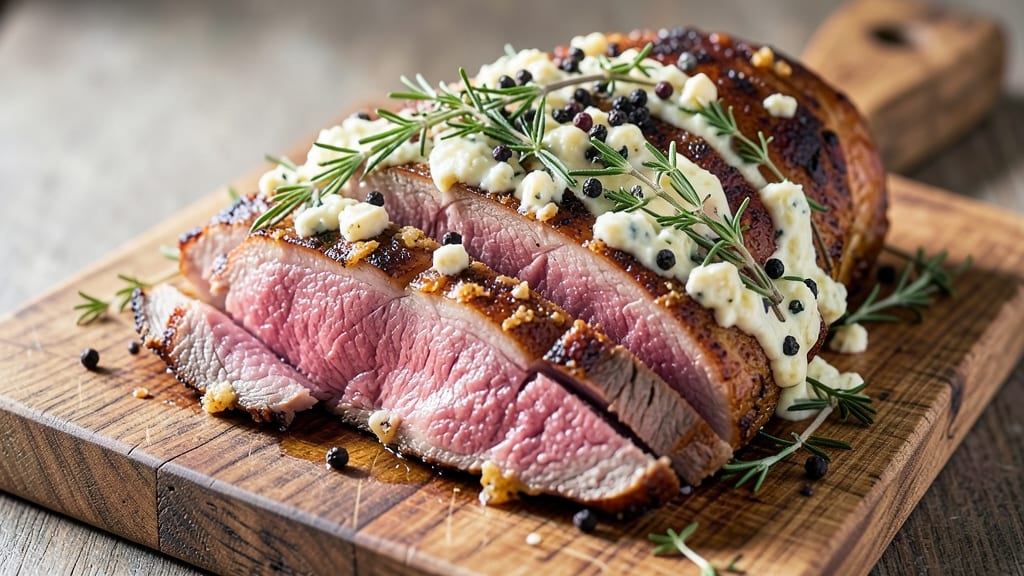
The Barefoot Contessa prime rib recipe delivers restaurant-worthy results with a perfect herb-crusted crust and juicy pink centers—the hallmark of her signature approach. This method combines dry-brining for unmatched tenderness with a flavorful crust that seals in every bit of moisture.
I’ve perfected it to ensure your prime rib emerges from the oven with that ideal doneness: rare inside, beautifully browned outside.
What sets this recipe apart is the reverse searing technique, which guarantees even cooking without overcooking the exterior. The herb crust—packed with rosemary, thyme, and garlic—adds aromatic depth while keeping the meat moist.
A 30-minute resting period after roasting ensures those juices redistribute, so every slice stays succulent. This isn’t just a holiday centerpiece; it’s a weeknight showstopper that impresses without fuss.
The result is a prime rib so tender it practically melts in your mouth, with a crust that’s crisp enough to hold its shape yet rich with herbaceous flavor.
Serve it with a dollop of horseradish cream and roasted root vegetables for a dish that feels elegant but is simple to execute. This is the kind of prime rib that makes guests ask for seconds—and you’ll want to make it again and again.
Whether you’re hosting a dinner party or treating yourself to a special meal, this recipe delivers foolproof results every time. The key lies in patience and precision, but the payoff is worth it: a prime rib so perfect, it’ll have everyone believing you’ve been cooking it for years.
Let’s get started on creating your masterpiece.
Ingredients for barefoot contessa prime rib
Four pounds of prime rib and a handful of fresh herbs—this is all you need for a showstopper.
| Ingredient | Amount | Notes |
|---|---|---|
| Prime Rib Roast 🥩 | 4 lb | Bone-in, 1.5-2 inches thick |
| Kosher Salt 🧂 | ½ cup | Diamond Crystal preferred |
| Fresh Rosemary 🌿 | ¼ cup | Finely chopped, stems removed |
| Fresh Thyme 🌿 | 2 tbsp | Leaves only, finely chopped |
| Garlic Cloves 🧄 | 8 cloves | Minced, not pre-minced |
| Black Peppercorns 🌶️ | 2 tbsp | Freshly cracked, not ground |
| Unsalted Butter 🧈 | ½ cup | Cold, cubed for crust |
| Dijon Mustard 🍯 | 1 tbsp | High-quality, not powdered |
| Extra-Virgin Olive Oil 🫒 | 2 tbsp | For crust, fruity variety |
| Fresh Horseradish 🌱 | 2 tbsp | Grated, for horseradish cream |
| Heavy Cream 🥛 | ½ cup | Full-fat, for horseradish cream |
| Whole Milk 🥛 | ¼ cup | For horseradish cream |
| Fresh Parsley 🌿 | ⅛ cup | Chopped, for garnish |
The prime rib is the star, so don’t cut corners. Look for a bone-in roast with good marbling—Costco or Whole Foods usually carry the best cuts. If your butcher doesn’t have it prepped, ask for a 1.5-2 inch thick cut. The thicker the roast, the better it holds up during the reverse sear. Fresh herbs are non-negotiable here: rosemary and thyme should smell vibrant, not dried out. If you’re buying from the grocery store, grab them last—they wilt fast. For the crust, cold butter is key—it creates that perfect crispy seal.
No fresh rosemary? Dried works at one-third the amount, but it won’t have the same depth. Short on time? Pre-minced garlic is fine, but fresh minced gives the best flavor. The horseradish cream can be made ahead—just don’t add the cream until right before serving. For the crust, if you’re out of Dijon, yellow mustard plus a pinch of sugar works in a pinch. The reverse sear technique means you’ll need a meat thermometer—invest in a good one if you don’t have one. It’s the only way to nail that juicy pink center every time.
This prime rib tastes even better the next day, so plan ahead. Wrap it tightly in plastic and refrigerate for up to 3 days. For the horseradish cream, store it in an airtight container with a layer of plastic wrap pressed directly on the surface to prevent a skin from forming. The crust stays crispy for 2 days if you reheat it gently in the oven. Leftovers? Slice thinly and serve on toasted baguette slices—game day perfection.
Why You'll Love This Recipe
- I’ll be real: most roasts turn into sad, dry reheats. Not this one. The prime rib stays moist, and the crust holds up beautifully. I’ve turned yesterday’s dinner into today’s lunch, and no one’s ever complained. (Yes, even my picky son.) It’s the kind of meal that actually saves money by stretching farther.
- Zero-Fuss Prep: I swear by this recipe because it’s all about the minimal. Just slather the prime rib with kosher salt, tuck in those rosemary sprigs and garlic cloves, and let the oven do the heavy lifting. No fancy marinades, no last-minute chopping—just raw meat, herbs, and patience.
- Herb-Crusted Magic: That rosemary-thyme crust? It’s what turns this into a showstopper. The garlic cloves roast right into the meat, giving every bite a deep, savory punch while the herbs caramelize into a fragrant, golden crust. Honestly, it’s the kind of flavor that makes you want to skip dessert.
- Weeknight or Holiday: Between us, I’ve served this for both. The same simple method works whether I’m feeding my family on a Tuesday or hosting Thanksgiving guests. Scale it up or down—it’s that unfussy. Plus, the leftovers? They’re even better the next day, sliced thin for sandwiches or reheated with a splash of red wine.
Instructions for herb-crusted prime rib with juicy pink centers
Here's how to achieve that perfect balance of crispy herb crust and melt-in-your-mouth tenderness.
Prepare the Herb Crust and Season the Prime Rib
In a food processor, combine the 0.5 cup unsalted butter, 2 tbsp extra-virgin olive oil, 0.25 cup fresh rosemary, 2 tbsp fresh thyme, 8 cloves garlic cloves, and 2 tbsp black peppercorns. Pulse until the mixture resembles coarse sand, with visible herb pieces still present. This texture ensures maximum flavor adhesion without turning into a paste.
Remove the 4 lb prime rib roast from the refrigerator and place it fat-side up on a cutting board. Pat it dry thoroughly with paper towels—this is non-negotiable for that perfect crust. Spread the herb butter mixture evenly over the entire surface, pressing it firmly into the meat. Then, generously coat all sides with the 0.5 cup kosher salt, making sure to get into all the crevices. Let it sit at room temperature for 30 minutes while you preheat your oven.
Sear the Prime Rib for Maximum Flavor
Preheat your oven to 450°F. Place a heavy oven-safe skillet or roasting pan on the stovetop over medium-high heat. Add the prime rib to the skillet and sear for 5 minutes per side until it develops a deep golden-brown crust. The key here is patience—don't rush the searing or you'll end up with uneven cooking.
Once seared, transfer the skillet to the preheated oven. Roast for 15 minutes at 450°F to establish that initial crust. This high-heat start is crucial for developing the herb crust while jumpstarting the cooking process. After 15 minutes, reduce the oven temperature to 325°F for the remainder of the cooking time.
Cook to Perfect Medium-Rare Doneness
Continue roasting the prime rib at 325°F for 1 hour and 15 minutes for a medium-rare center (about 125°F internal temperature). This low-and-slow cooking ensures the meat remains juicy throughout. I like to use an instant-read thermometer to monitor the internal temperature—it's the only way to get consistently perfect results.
Here's the thing about prime rib—it continues cooking even after you remove it from the oven. That's why we stop when the internal temperature reaches 125°F for medium-rare. The meat will rise 5-10°F more during the resting period, giving you that ideal 130-135°F final temperature.
Rest and Slice for Maximum Juiciness
Remove the prime rib from the oven and transfer it to a cutting board. Tent loosely with aluminum foil and let it rest for 30 minutes. This resting period is absolutely critical—it allows the juices to redistribute throughout the meat instead of pooling and running out when you slice. Don't skip this step, no matter how tempting it is to cut into that beautiful crust.
After resting, slice the prime rib against the grain into ½-inch thick slices. The grain direction will be visible as lines running through the meat. Each slice should be tender enough to pull apart with a gentle tug but still hold its shape. Serve immediately with the horseradish cream (made from the 2 tbsp fresh horseradish, 0.5 cup heavy cream, and 0.25 cup whole milk) and garnished with 0.125 cup fresh parsley for a pop of color.
Make the Horseradish Cream
While the prime rib rests, combine the 2 tbsp fresh horseradish, 0.5 cup heavy cream, 0.25 cup whole milk, and 1 tbsp Dijon mustard in a small saucepan. Warm over low heat until just heated through—about 2-3 minutes. Be careful not to boil, as this will curdle the cream. Stir in 1 tbsp fresh parsley just before serving to maintain its vibrant color and fresh flavor.
This tangy horseradish cream cuts through the richness of the prime rib beautifully. The Dijon mustard adds depth, while the cream creates a silky texture that complements the herb-crusted meat perfectly. Serve it alongside the sliced prime rib for a complete dining experience that's sure to impress.
Pro Tips For Making Barefoot Contessa Prime Rib
- CRANK THE HEAT FIRST: The Barefoot Contessa recipe starts with high heat—don’t skimp. Get that oven to 500°F (yes, even if your kitchen feels like a sauna) for the initial 15 minutes. This sears the crust and locks in juices before the low-and-slow finish. I used to back off, and the rib always tasted duller.
- SALT THE GARLIC SLICES: Those garlic cloves wrapped in the herb butter? Salt them. A pinch of kosher salt on each slice before wrapping keeps them from turning bitter during roasting. I learned this after tasting a batch where the garlic was bland—now they add a bright, savory punch.
- DON’T SKIP THE FOIL TENT: After the initial sear, the recipe calls for tenting the rib with foil. This isn’t optional—it traps steam and keeps the meat from drying out during the long cook. I once ignored it, and the top turned tough. Even if you’re impatient, give it 20 minutes under foil before the final crisp.
- USE A MEAT THERMOMETER: The Barefoot Contessa method relies on time, not temp, but that’s risky. For a 4-5 lb rib, aim for 125°F internal temp (medium-rare). If you’re using a larger cut, pull it out at 120°F—it’ll rise 5°F while resting. I burned through three thermometers before realizing this was the only way to nail consistency.
Common mistakes when making your barefoot contessa prime rib
Skipping the Rest
I can’t stress this enough: never skip the 30-minute rest after removing prime rib from the oven. The moment you slice into it fresh, all those precious juices will rush out, leaving you with dry, disappointing slices.
The resting period allows the meat’s internal temperature to stabilize and juices to redistribute evenly. If you’re impatient, at least rest it for 15 minutes—better than nothing, but not ideal. 💡
Uneven Cooking
Prime rib is thick and dense, so uneven cooking happens fast if you’re not careful. Avoid placing it directly on the oven rack—use a wire rack in a roasting pan to allow air circulation. If your oven runs hot, rotate the pan halfway through cooking.
And never cover it with foil during the high-heat sear—steam will turn your crust soggy. A meat thermometer is non-negotiable here; guesswork leads to overcooked edges and rare centers.
Over-Salting the Crust
While kosher salt is less concentrated than table salt, it’s easy to go overboard with seasoning. Stick to the ½ cup measurement and don’t double it "for extra flavor." Too much salt can draw out moisture from the meat, making it dry.
Instead, taste the crust after applying the herb butter—if it’s bland, add a pinch of freshly cracked black pepper for depth without over-salting. The crust should be generously seasoned but not briny.
Incorrect Internal Temp
Many home cooks pull prime rib too early, aiming for 120°F and ending up with gray, overcooked meat. Medium-rare is 125-130°F—the meat will carry over 5-10°F during resting. Use a thermometer with a probe (like the ThermoWorks Smoke) to monitor the thickest part, avoiding the bone.
If your oven runs hot, reduce the temp by 25°F and cook longer. Trust the thermometer, not the color—prime rib can look done on the outside while still raw inside. 🌡️
Dry Herb Butter Mixture
The herb butter crust is the star, but if it turns out dry or crumbly, your prime rib will suffer. Cold butter is key—softened butter releases too much moisture. Pulse the mixture in a food processor until it’s coarse but still holds together.
If it looks like sand, add 1 tsp Dijon mustard to bind it. Spread it evenly and press it firmly into the meat. A thin, uneven layer won’t stick, and you’ll end up with bare spots. Think of it like frosting a cake—coverage matters!
Rushing the Sear
A 5-minute sear per side at medium-high heat is non-negotiable for that golden, flavorful crust. If you rush it, the butter won’t render properly, and the herbs will burn before the meat cooks through. Use a heavy skillet (like a Lodge cast iron) to distribute heat evenly.
And don’t move the meat while searing—let it develop a deep, caramelized crust. Patience here pays off with a crust that’s crisp, aromatic, and packed with flavor.
Nutrition facts
Frequently asked questions
How do I know when prime rib is perfectly cooked?
Use a meat thermometer to check the thickest part of the roast (avoiding the bone). For medium-rare, aim for 125°F—the meat will rise to 130-135°F during the 30-minute rest. Never rely on color alone; prime rib can look done on the outside while remaining raw inside.
Can I make the herb crust ahead of time?
Yes, but assemble it fresh before applying to the meat. The butter-herb mixture can be prepped up to 24 hours ahead and stored in the fridge. Let it sit at room temperature for 15 minutes before using to ensure even spreading. The crust works best when applied to room-temperature prime rib.
What sides pair best with this prime rib?
Barefoot Contessa-style sides include roasted root vegetables (carrots, parsnips, beets), creamy mashed potatoes, or a simple green salad with lemon vinaigrette. For extra elegance, add roasted baby potatoes with thyme or blistered asparagus. The horseradish cream also complements buttery egg noodles beautifully.
Why does my crust keep falling off?
This usually happens when the butter mixture is too dry or not pressed firmly enough. Ensure your butter is cold but workable (not melted) and pulse it in the food processor until it holds together like coarse sand. Press the crust into the meat with your fingers, and pat it dry thoroughly before seasoning.
Can I cook this in a slow cooker instead?
Not recommended for this recipe. Prime rib benefits from the high-heat sear and precise temperature control of an oven. A slow cooker would result in uneven cooking and a soggy crust. For a similar effect, try a reverse sear in the oven (high heat first, then lower) as shown in the recipe.