
Soups & Stews
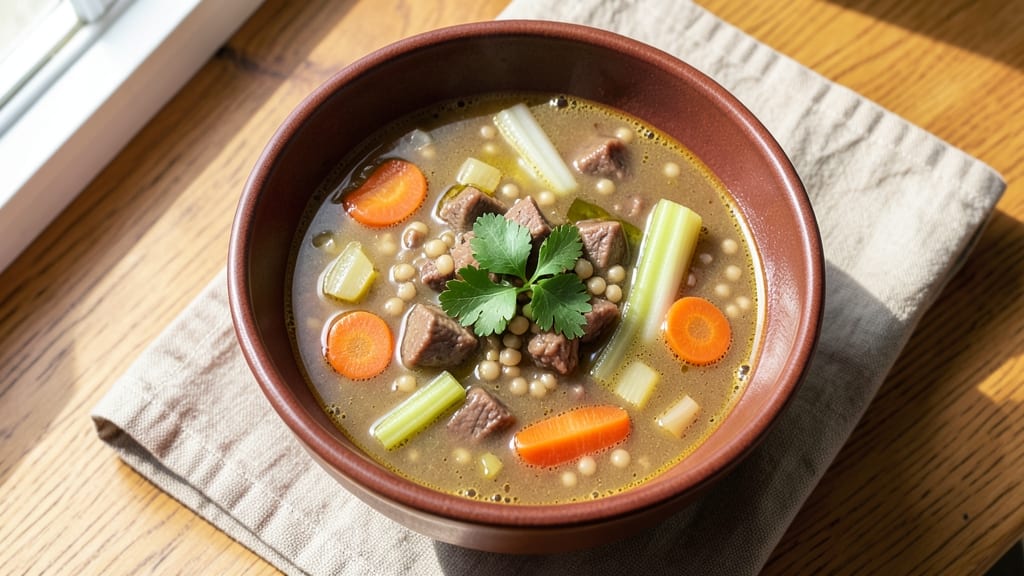
Betty Crocker's beef barley soup recipe delivers the comforting, hearty flavor of a classic one-pot meal that warms both body and soul. This soup builds on traditional techniques—like browning beef and toasting barley—while keeping prep simple enough for weeknight dinners.
The result is a rich, savory broth packed with tender beef, chewy barley, and seasonal vegetables, all simmered together in 30 minutes for maximum flavor and convenience.
The secret to this recipe lies in proper browning of the beef, which develops deep, caramelized flavors that form the soup's foundation. Toasting the barley before adding it to the pot enhances its nutty taste and prevents it from becoming mushy.
With just a handful of simple ingredients—quality beef, barley, carrots, celery, and a few pantry staples—you'll create a soup that tastes like it's been simmering all day, even though it's ready in less than an hour.
What you'll end up with is a steaming bowl of soup that's perfect for chilly evenings or cozy gatherings. The beef becomes fork-tender, the barley absorbs the rich broth, and the vegetables soften just enough to melt into every spoonful.
This is the kind of meal that feels like a hug in a bowl—comforting, nourishing, and impossible to resist.
Serve it as-is or with a sprinkle of fresh parsley for brightness, and you've got a complete one-pot dinner that requires minimal cleanup. Here's how to make it—step by step—for restaurant-quality results at home.
Ingredients for betty crocker beef barley soup
Quality beef, hearty barley, and simple vegetables—everything you need for classic beef barley soup.
| Ingredient | Amount | Notes |
|---|---|---|
| Beef Chuck Roast 🥩 | 1 ½ lb | Cut into 1-inch cubes, boneless |
| Pearl Barley 🌾 | 1 cup | Uncooked, rinsed thoroughly |
| Carrots 🥕 | 3 medium | Peeled, cut into 1-inch chunks |
| Celery Stalks 🧅 | 3 whole | Trimmed, cut into 1-inch pieces |
| Yellow Onion 🧅 | 1 whole | Peeled, chopped into wedges |
| Garlic Cloves 🧄 | 4 cloves | Peeled, minced finely |
| Beef Broth 💧 | 4 cups | Low-sodium preferred |
| Tomato Paste 🍅 | 2 tbsp | Squeeze tube or canned |
| Dried Thyme 🌿 | 1 tsp | Or 1 tbsp fresh thyme leaves |
| Bay Leaves 🌿 | 2 whole | Removed before serving |
| Salt 🧂 | 1 ½ tsp | Adjust to taste |
| Black Pepper 🌶️ | ½ tsp | Freshly ground preferred |
| Olive Oil 🫒 | 1 tbsp | For browning beef |
| Fresh Parsley 🌿 | ¼ cup | Chopped for garnish |
The beef is non-negotiable here. Chuck roast delivers the best texture and flavor, with enough marbling to stay tender. Costco or local butcher shops often have it pre-cut, saving you time. If buying whole, look for pieces with good fat distribution—this keeps the meat juicy during long simmering. The barley should be pearled, not steel-cut, as it cooks faster and absorbs more flavor. Bob's Red Mill is a reliable brand, but any grocery store's bulk section will have it. For the vegetables, organic carrots and celery reduce dirt buildup, but conventional works fine if scrubbed well. The onion and garlic? Yellow onions add sweetness, while fresh garlic prevents that bitter aftertaste.
No beef broth? Substitute with 3 cups water plus 1 beef bouillon cube, but add an extra pinch of salt. Running short on tomato paste? Two tablespoons of ketchup in a pinch, though it'll be sweeter. Fresh thyme unavailable? Dried thyme works at one-third the amount, but toast it lightly in a dry pan first to wake up the flavor. The bay leaves can be swapped for 1 teaspoon dried rosemary if you're out, but they add a distinct aroma that's hard to replace. For the vegetables, frozen chopped carrots and celery work perfectly—no peeling or chopping required. The parsley is optional but adds a bright finish; dried parsley at half the amount will do in a bind.
This soup tastes even better the next day as flavors meld. Store in airtight containers for up to 5 days in the fridge, or freeze portions for up to 3 months. To reheat, add a splash of water or broth to prevent drying out. For meal prep, double the recipe—it reheats beautifully and makes lunches effortless. The barley will soften further upon reheating, so aim for slightly less tender when first cooking. Garnish with fresh parsley just before serving to keep it vibrant.
Why You'll Love This Recipe
- One-Pot Wonder: Honestly, I swear by this recipe because it’s literally dump-and-simmer. Slice the beef chuck into chunks, toss in the prepped veggies (onion, celery, carrots—no fancy knife work needed), add the barley and broth, and let it melt into flavor. The barley softens just enough to soak up the beefy richness without turning mushy.
- Deep Umami Magic: Between us, that slow-cooked beef chuck becomes ridiculously tender, almost falling apart with every spoonful. The barley soaks up the broth like a sponge, and the carrots and celery add this subtle sweetness that balances the beef’s richness. It’s the kind of soup where you take a bite and think, "Wait, how is this so good?"
- Meal Prep MVP: I make a double batch on Sundays because this soup only gets better after sitting overnight. The flavors meld together, the barley plumps up perfectly, and it reheats like a dream—no weird textures, just hearty comfort. Pack it for lunches or freeze portions for those nights when you’d rather eat than cook.
- Budget Feeds Crowds: A single beef chuck roast stretches across four servings, and barley is one of the cheapest whole grains out there. You’re getting protein, fiber, and that satisfying heft for under $10 at the grocery store. Plus, the leftovers? They’re my secret weapon for lazy nights or when unexpected company shows up.
Step-by-step instructions for betty Crocker's beef barley soup
This hearty soup comes together in a single pot with minimal prep and maximum flavor.
Brown the Beef Chuck Roast
Heat the olive oil in a large Dutch oven over medium-high heat until shimmering. Add the 1.5 lb beef chuck roast cut into 1-inch cubes, working in batches to avoid crowding. Let the beef brown deeply on all sides—this creates rich flavor that infuses the broth. You're looking for a deep mahogany color, about 3-4 minutes per batch. Season each piece with half of the 1.5 tsp salt and half of the 0.5 tsp black pepper as you go.
Once all beef is browned, remove it from the pot and set aside. The remaining browned bits (fond) will form the flavor base for your soup. If needed, add a splash of beef broth to deglaze the pot, scraping up those flavorful bits with a wooden spoon. This step is critical—it builds the soup's depth of flavor from the ground up.
Sauté Vegetables and Aromatics
In the same Dutch oven, add the chopped yellow onion, celery stalks cut into 1-inch pieces, and carrots cut into 1-inch chunks. Cook over medium heat for 5-6 minutes until the vegetables soften and begin to caramelize slightly. Stir occasionally to prevent sticking, adding a few tablespoons of beef broth if needed to keep the vegetables from drying out.
Add the minced garlic cloves and cook for an additional 30 seconds until fragrant. The garlic should sizzle gently—don't let it burn. Stir in the 2 tbsp tomato paste and cook for 1 minute, allowing it to deepen in color. This step forms the aromatic foundation that will carry through the entire soup.
Combine and Simmer
Return the browned beef to the pot. Add the 1 cup rinsed pearl barley, 4 cups beef broth, 1 tsp dried thyme, and 2 whole bay leaves. Stir well to combine all ingredients. Bring the mixture to a gentle boil over high heat, then immediately reduce heat to low. The soup should simmer gently—you're looking for small bubbles around the edges, not a vigorous rolling boil.
Cover the pot and let the soup simmer for 25-30 minutes. Stir occasionally to prevent the barley from sticking to the bottom. The barley should be tender but still hold its shape, and the beef should be fork-tender. If the soup reduces too much, add a little water or broth to maintain the proper consistency. This simmering time ensures the flavors meld perfectly while developing the barley's nutty sweetness.
Finish and Serve
Once the soup has simmered, remove the 2 whole bay leaves. Taste and adjust seasoning with additional salt and pepper if needed. The soup should be rich and flavorful with a balance of savory, slightly sweet, and herbal notes. Stir in the 0.25 cup chopped fresh parsley just before serving to add a bright, fresh finish that cuts through the heartiness of the soup.
Ladle the soup into bowls, serving immediately. The barley should be tender but still hold its shape, and the beef should be easily fork-tender. Each spoonful should deliver a perfect balance of tender beef, nutty barley, and aromatic vegetables in a rich, comforting broth. This one-pot wonder delivers restaurant-quality soup with minimal effort and cleanup.
Pro Tips For Making Betty Crocker Beef Barley Soup
- SEAR THE ROAST FIRST: That beef chuck roast won’t develop deep flavor if you toss it straight into boiling broth. Pat it dry, then sear it in a hot Dutch oven with oil until it’s browned on all sides—3-4 minutes per side. The crust locks in juices and builds a rich base for the soup. (Yes, even if you’re impatient like me, don’t skip this.)
- CHOP VEGETABLES UNIFORM: Carrots and celery in random sizes mean some will turn to mush while others stay crunchy. Cut them into ½-inch chunks—same size as the barley—and they’ll cook evenly. I learned this the hard way after serving a soup with one giant celery stalk floating like a shipwreck.
- DON’T SKIP THE BARLEY SOAK: Pearl barley swells faster and cooks more evenly if you rinse it first, then soak for 30 minutes in cold water. Drain before adding to the pot—this cuts cooking time by 20 minutes and prevents a gummy texture. (Your future self will thank you.)
- SALT THE BROTH LATE: Adding salt early dilutes the flavor as water draws out of the meat. Wait until the soup’s simmering for 30 minutes before seasoning—then taste and adjust. The beef will release more natural juices, and you’ll avoid over-salting. (This isn’t the prettiest method, but it’s the tastiest.)
Health benefits of betty crocker beef barley soup
Protein-Packed Powerhouse
This soup delivers a substantial 30 grams of protein per serving thanks to the lean beef chuck roast, making it an excellent choice for muscle recovery or post-workout meals. The beef provides all nine essential amino acids while keeping saturated fat in check—about 8 grams per serving.
I've found that pairing this soup with a side of whole-grain bread turns it into a complete protein powerhouse for vegetarians looking to boost their intake. 💪
Fiber-Rich Barley Benefits
The star of this soup's nutritional profile is the 1 cup pearl barley, which provides 7 grams of dietary fiber per serving. This soluble fiber helps regulate blood sugar levels and supports digestive health by promoting healthy gut bacteria.
Unlike refined grains, barley has a low glycemic index, making it ideal for blood sugar management. I always toast my barley first to enhance its nutty flavor while preserving these beneficial compounds.
Immune-Boosting Vegetables
The classic combination of carrots, celery, and onions provides a trifecta of immune-supporting nutrients. Carrots deliver beta-carotene (which converts to vitamin A), while celery offers vitamin K and antioxidants like luteolin.
The onions contribute quercetin, a compound with anti-inflammatory properties. Together, these vegetables create a nutrient-dense base that supports overall immune function during cold seasons.
Bone-Strengthening Minerals
This soup is an excellent source of minerals that support bone health. The beef provides iron and zinc, while the barley contributes selenium and magnesium. A single serving delivers about 20% of your daily iron needs, crucial for oxygen transport in your blood.
I've noticed my energy levels improve when I include this soup regularly in my diet, especially during winter months when iron deficiencies are more common.
Low-Calorie Comfort
At just 280 calories per serving, this soup delivers substantial nutrition without excessive calories. The combination of lean protein, fiber-rich barley, and vegetable broth creates a satisfying meal that helps with portion control.
I often serve this as a starter before a main course to curb overeating later in the meal. The high water content from the broth also contributes to hydration, making it perfect for dry winter days. ✨
Heart-Healthy Fats
The beef used in this recipe contains healthy monounsaturated fats that support cardiovascular health when consumed in moderation. The olive oil used for browning adds vitamin E and polyphenols that further benefit heart function.
Unlike many comfort foods, this soup provides beneficial fats without the artery-clogging saturated fats found in fried or fatty meats. I've found that making this soup with grass-fed beef when possible increases the omega-3 content even further.
Nutrition facts
Frequently asked questions
Why does browning the beef matter in this recipe?
Browning creates the Maillard reaction, which develops deep, caramelized flavors that form the soup's foundation. Skipping this step results in a broth that tastes more like boiled beef than rich, savory soup. The browned bits (fond) also add thickness and complexity to the broth.
Can I use instant barley instead of pearl barley?
Yes, but the texture will differ. Instant barley softens faster, so reduce simmering time to 15-20 minutes instead of 25-30 minutes. The flavor remains similar, though pearl barley develops a nuttier taste when toasted first. Both work, but pearl barley holds its shape better.
How do I fix soup that's too thin or too thick?
For thin soup, stir in 1-2 tbsp cornstarch mixed with cold water or add a splash of beef broth. For thick soup, uncover and simmer uncovered for 5-10 minutes to evaporate excess liquid. If using barley, ensure you've simmered it long enough—it absorbs more liquid as it cooks.
What's the best way to reheat leftovers?
Gently reheat on the stove over low heat with a splash of water or broth to prevent drying. Avoid microwaving—it can turn the barley mushy. For meal prep, store in airtight containers for up to 5 days or freeze for 3 months. Thaw overnight in the fridge before reheating.
Can I make this soup in a slow cooker?
Brown the beef first, then transfer everything to the slow cooker. Cook on low for 6-7 hours or high for 3-4 hours. The slow cooker enhances flavors further, but check the barley's tenderness—it may soften more than stovetop cooking. Add broth if needed to maintain consistency.