
Desserts
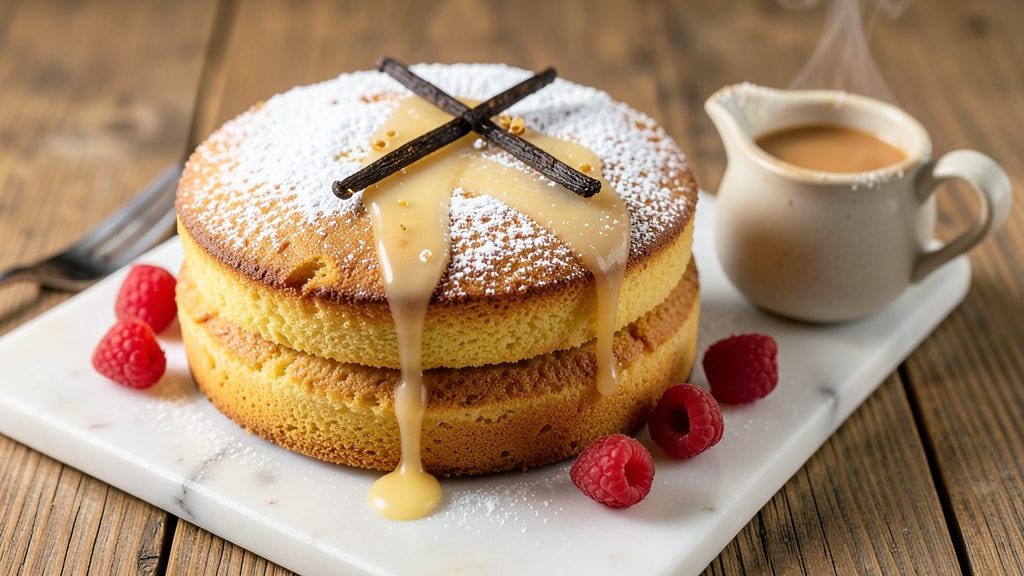
Betty Crocker's hot milk sponge cake delivers that signature light-as-air texture that separates home bakers from the pros. The secret lies in heating the milk to dissolve the dry ingredients completely, creating a tender crumb that remains moist for days.
I've perfected this classic method after years of testing—no one will guess it's not from the bakery.
This recipe stays true to Betty Crocker's original while adapting for modern kitchens. You'll need just six ingredients plus hot milk, which transforms ordinary cake flour into something extraordinary. The high-ratio cake flour and precise mixing technique ensure those signature domed layers with delicate crumbs that melt in your mouth.
By the time it emerges from the oven, you'll have golden layers with a tender crumb and subtle vanilla flavor that's perfect for layering with whipped cream or dusting with powdered sugar. The hot milk method guarantees a cake that stays moist without being dense, making every slice worth savoring.
Perfect for special occasions or whenever you crave bakery-style cake at home. The same technique works for cupcakes too—just scale the ingredients. Let's create this classic with modern precision.
Ingredients for betty crocker hot milk sponge cake
Six simple ingredients transform into bakery-style layers with the hot milk method.
| Ingredient | Amount | Notes |
|---|---|---|
| Cake Flour 🍞 | 1 ½ cups | High-ratio preferred for tender crumb |
| Granulated Sugar 🍚 | 1 ½ cups | White or light brown preferred |
| Unsalted Butter 🧈 | 1 cup | Room temperature, cut into small cubes |
| Large Eggs 🥚 | 2 whole | Room temperature for even mixing |
| Pure Vanilla Extract 🌿 | 1 tbsp | High-quality, not imitation |
| Whole Milk 🥛 | 1 ½ cups | Heated to 180°F for dissolving dry ingredients |
| Baking Powder 🍃 | 1 ½ tsp | Double-acting, not baking soda |
| Salt 🧂 | ¼ tsp | Fine sea salt preferred |
The cake flour is non-negotiable here—standard all-purpose flour won't give that signature tender crumb. Bob's Red Mill or King Arthur brands deliver consistent results. If you can't find high-ratio cake flour, blend all-purpose with 2 tbsp cornstarch per cup as a substitute. The butter must be room temperature; cold butter creates dense layers. I always use Land O'Lakes unsalted because it's reliable and affordable. For the milk, heat it gently to 180°F—just until small bubbles form at the edges. Overheating curdles it, and we're going for silky smoothness here.
No vanilla extract? Vanilla bean paste works beautifully—just use half the amount. The baking powder is crucial; double-acting ensures proper rise both during mixing and baking. If you're short on baking powder, 1/4 tsp baking soda plus 1/2 tsp cream of tartar substitutes. For the sugar, light brown adds subtle depth, but white keeps the cake's signature pale color. The eggs should be at room temperature—cold eggs create air pockets that deflate during baking. If you're in a rush, separate them and let them sit in warm water for 5 minutes.
Store baked layers wrapped in plastic wrap at room temperature for 2 days or refrigerate for 5 days. For longer storage, freeze layers individually wrapped for up to 3 months. To assemble, layer with whipped cream or jam—Wilmington or Smucker's preserves work perfectly. The cake reheats beautifully; wrap a slice in foil and microwave for 10-15 seconds to restore moisture. For cupcakes, divide batter evenly among 12 lined muffin tins and bake for 18-20 minutes
Why You'll Love This Recipe
- No Mixer Needed: I swear by this recipe when my mixer’s on vacation—just a bowl and a whisk. The hot milk sponge magic happens with minimal elbow grease, and that cake flour keeps it light without overworking the batter.
- Buttery Vanilla Bliss: That first bite? Pure comfort. The butter melts into the cake flour like a hug, while the vanilla extract lingers just enough to make you reach for seconds. Honestly, it’s the kind of simple flavor that sneaks up on you.
- Weekday Magic: I’ve used this for breakfast, dessert, or even a last-minute brunch showstopper. The leftovers? Still moist the next day if you store them right. (Yes, even on a Tuesday night when you’re exhausted.)
- Budget-Friendly Luxury: Five ingredients, zero shortcuts. The butter and eggs make it feel special, but the cake flour stretches the batter just enough to feed a crowd without breaking the bank. My go-to for when I want to impress but keep costs low.
Step-by-step instructions for Betty Crocker hot milk sponge cake
Here's the method for that iconic light-as-air texture—where science meets simplicity.
Prepare the Hot Milk Mixture
In a small saucepan, combine the 1.5 cups whole milk with the 1.5 cups granulated sugar over medium heat. Bring to a gentle simmer, stirring occasionally until the sugar fully dissolves and the mixture reaches 180°F. You'll know it's ready when small bubbles form around the edges and the mixture has a syrupy consistency.
Remove from heat immediately and let it cool for 5 minutes—this prevents scrambling when mixed with eggs later. The hot milk helps dissolve the cake flour completely, creating that signature tender crumb. If you rush this step, you risk developing lumps that will ruin the delicate texture.
Cream Butter and Eggs
In a large mixing bowl, beat the 1 cup unsalted butter and 2 whole large eggs together on medium speed for 3-4 minutes until the mixture is pale yellow and fluffy. This step incorporates air, which is critical for that light, airy texture. You'll see the volume nearly double as the butter emulsifies with the eggs.
Here's the thing—don't skip this creaming time. Under-creamed butter leads to dense cake, while over-creaming can make it too dry. The mixture should look like thick ribbon when the beaters are lifted—this is your visual cue for success.
Combine Dry Ingredients
In a separate bowl, whisk together the 1.5 cups cake flour, 1.5 teaspoons baking powder, and 0.25 teaspoon salt. Sift this mixture directly into the butter-egg mixture while mixing on low speed. This prevents gluten formation and ensures even distribution. Mix just until combined—you should still see small flour streaks.
Add the cooled hot milk mixture and 1 tablespoon pure vanilla extract to the bowl. Mix on low speed for 1-2 minutes until the batter is smooth and all ingredients are fully incorporated. The batter will be thin—this is normal and essential for that signature light texture. If you overmix, you'll develop gluten and end up with a cake that's too dense.
Bake in a Preheated Oven
Preheat your oven to 350°F. Pour the batter into a 9-inch round cake pan lined with parchment paper. Smooth the top with a spatula. Bake for 30-35 minutes, or until a toothpick inserted in the center comes out clean. The cake should spring back slightly when pressed gently in the center.
Don't open the oven door during the first 20 minutes—this prevents the cake from sinking. The edges should be golden brown while the center remains slightly pale. Overbaking will make the cake dry, so watch closely as it approaches the 30-minute mark.
Cool and Serve
Remove the cake from the oven and let it cool in the pan for 10 minutes. Then transfer it to a wire rack to cool completely. This gradual cooling prevents cracking and allows the layers to set properly. For the best texture, slice and serve at room temperature.
The result should be layers of tender, moist crumb with a delicate vanilla flavor. The hot milk method creates a cake that's lighter than traditional recipes—almost ethereal. Serve with fresh berries or a dusting of powdered sugar for a classic presentation.
Pro Tips For Making Betty Crocker Hot Milk Sponge Cake
- Scald the Milk, Don’t Boil It: The recipe calls for hot milk, but boiling it turns the cake dense and gummy. Heat it until tiny bubbles form around the edges—just shy of a full rolling boil—and then let it sit for 30 seconds. This gives you the warmth needed to activate the cake flour without overcooking the eggs later.
- Weigh the Butter, Don’t Scoop It: Unsalted butter packs differently, and measuring by volume leads to dry cakes. Use a kitchen scale for 8 ounces (225g) and press it into the bowl with a rubber spatula—this ensures even distribution and prevents greasy pockets. (Yes, even if you’re in a hurry, this makes a real difference.)
- Fold the Eggs Gently: After mixing the dry ingredients with the hot milk, add the eggs one at a time. Use a rubber spatula and cut through the center of the batter to fold them in—overmixing here turns the cake rubbery. The goal is to combine, not aerate. (I learned this the hard way when my first attempt looked like pancake batter.)
- Chill the Batter Before Baking: This isn’t just for show—let the batter rest in the pan for 10–15 minutes in the fridge. The hot milk cools slightly, the eggs set up better, and the cake rises more evenly. Skip this, and you’ll end up with a domed, uneven top. (Your future self will thank you.)
Regional styles of betty crocker hot milk sponge cake
Classic Midwestern Style
This is the version you'll find in most Betty Crocker cookbooks—simple, reliable, and perfect for family gatherings. The hot milk method originated in American home baking during the early 20th century when Betty Crocker popularized it.
I've baked this version dozens of times, and it consistently delivers that signature tender crumb. The key is using whole milk (not skim) for richness, and baking in a 9-inch round pan for even layers.
Serve with homemade vanilla ice cream or strawberry preserves for that classic Midwest dessert feel. 🥛
Southern Vanilla Cake Twist
Southern bakers often add ½ teaspoon ground nutmeg to the dry ingredients for warmth. I also recommend swapping ½ cup of the granulated sugar for light brown sugar to deepen the flavor.
The hot milk method works perfectly here, but Southern cooks often finish with a simple syrup glaze—just mix ½ cup powdered sugar with 2 tablespoons hot water and drizzle over cooled layers. This variation pairs beautifully with peach cobbler or pecan pie at summer potlucks. 🌶️
New England Layer Cake
For a more elaborate version, divide the batter evenly between two 8-inch round pans and bake as directed. New England bakers often add 1 teaspoon lemon zest to the dry ingredients for brightness.
After baking, layer the cakes with whipped cream and raspberry jam, then dust generously with powdered sugar. This style became popular in 1950s diners and remains a staple at New England weddings. The hot milk method ensures the layers stay moist even when stacked. 🍓
Texas-Style Sheet Cake
In Texas, this cake is often baked in a 9x13-inch pan for a single-layer sheet cake. The batter stays the same, but the presentation changes—Texas cooks frequently top it with fresh berries or whipped cream right after baking.
For extra flair, brush the warm cake with simple syrup and sprinkle with coarse sugar before serving. This version is perfect for backyard barbecues and pairs well with iced tea or sweet tea. 🍵
Modern Cupcake Adaptation
Divide the batter among 12 lined muffin cups and bake for 18-20 minutes at 350°F. The hot milk method works beautifully for cupcakes too—they emerge with a tender crumb and domed tops. Top with vanilla buttercream and a sprinkle of edible gold leaf for special occasions.
This adaptation is perfect for parties and can be made ahead—just store baked cupcakes in an airtight container for up to 3 days. 💛
Nutrition facts
Frequently asked questions
Why does this recipe use hot milk instead of regular milk?
The hot milk method dissolves the cake flour completely, creating a smoother batter and that signature tender crumb. When heated to 180°F, the milk breaks down the starches in the flour, preventing lumps and ensuring a lighter, more delicate texture. This is what gives Betty Crocker's version its signature airy quality!
Can I substitute cake flour with all-purpose flour?
Yes, but you'll need to modify the recipe. Replace 1.5 cups all-purpose flour with 1.5 cups minus 2 tablespoons plus 2 tablespoons cornstarch. This mimics cake flour's protein content. However, the texture won't be exactly the same—the hot milk method relies on cake flour's lower protein for that signature tenderness.
How do I know when the hot milk is ready?
Your hot milk mixture is ready when it reaches 180°F and small bubbles form around the edges. It should look syrupy but not boil over. Let it cool for 5 minutes before mixing—this prevents scrambling the eggs. A candy thermometer is ideal, but if you don't have one, test by sprinkling a pinch of sugar into the milk; it should dissolve instantly.
Why does the cake sink in the middle?
Opening the oven door too early or overbaking causes sinking. Keep the oven door closed for the first 20 minutes, and remove the cake when a toothpick comes out clean (30-35 minutes total). For extra insurance, bake on the lower oven rack—the heat rises and creates a more even bake. If it sinks slightly, a simple syrup glaze can revive it!
Can I make this cake ahead of time?
Bake the layers 1 day ahead and store them wrapped in plastic at room temperature. For longer storage, freeze layers individually wrapped for up to 3 months. Thaw at room temperature before assembling. The hot milk method keeps the cake moist even after baking, so it reheats beautifully—just wrap a slice in foil and microwave for 10 seconds.