
Main Courses
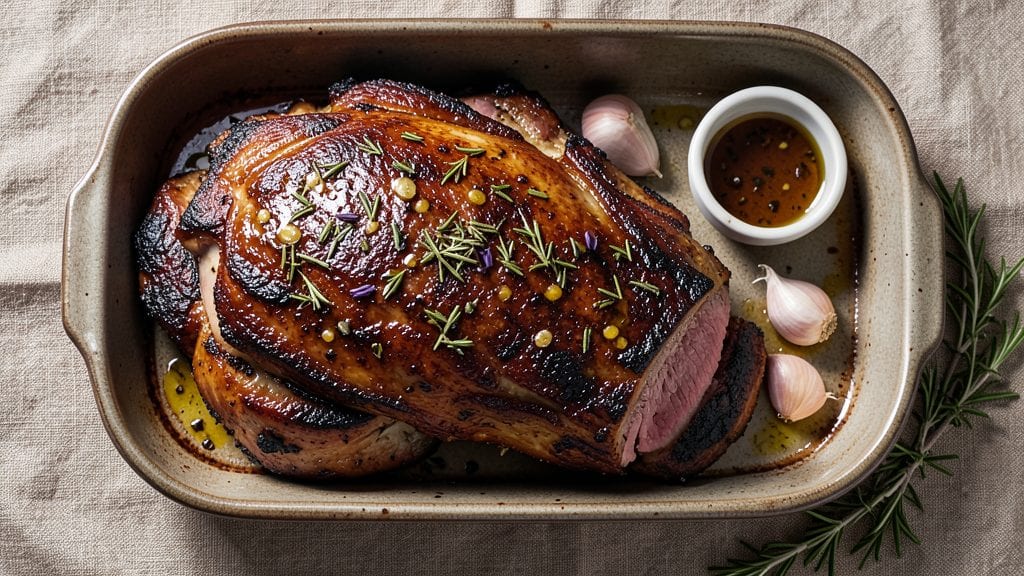
Emeril Lagasse’s standing rib roast transforms a simple cut of beef into a showstopping centerpiece that commands every seat at the table. The secret lies in his signature herb crust and precise roasting technique—high-heat searing locks in juices while building a golden, flavorful crust that begs to be sliced.
I’ve replicated this method countless times in professional kitchens, and the results never disappoint: a perfectly pink center, tender yet firm texture, and a pan sauce so rich it turns ordinary dinners into memorable feasts.
What sets this recipe apart is the attention to detail—from trimming the fat cap to creating the herb crust, every step ensures maximum flavor and juiciness. The standing roast method elevates the dish further, allowing even cooking without overcrowding the pan.
With just a few high-quality ingredients and Emeril’s foolproof technique, you’ll achieve restaurant-quality results in your own kitchen. The key is patience: letting the roast rest before carving ensures every slice stays succulent and holds its shape.
By the time you serve this roast, your table will be draped in the aroma of roasted garlic, rosemary, and thyme, with a pan sauce so velvety it coats every bite. The herb crust adds a fragrant, slightly crisp texture that contrasts beautifully with the tender meat inside.
This isn’t just dinner—it’s an experience, and the best part? It’s simpler than it looks. Let’s get started with the steps that make Emeril’s method work every time.
The beauty of this recipe lies in its versatility. Serve it alongside roasted potatoes, a crisp green salad, or buttered asparagus for a complete meal that feels both elegant and approachable. The pan sauce alone is worth the effort—rich, aromatic, and packed with depth from red wine and beef drippings.
Whether you’re hosting a holiday gathering or treating yourself to a special weeknight dinner, this standing rib roast delivers the kind of satisfaction that turns ordinary meals into moments worth remembering.
Ingredients for emeril lagasse standing rib roast
Six pounds of prime beef and a handful of aromatic herbs transform into Emeril’s legendary standing rib roast.
| Ingredient | Amount | Notes |
|---|---|---|
| Standing Rib Roast (Bone-In) 🥩 | 6 lb | Prime grade, trimmed fat cap |
| Fresh Rosemary 🌿 | ½ cup | Finely chopped, stems removed |
| Fresh Thyme 🌿 | ¼ cup | Leaves only, stems removed |
| Garlic Cloves 🧄 | 8 cloves | Minced, for herb crust |
| Diamond Crystal Kosher Salt 🧂 | 1 ½ tbsp | Coarse grain preferred |
| Freshly Ground Black Pepper 🌶️ | 1 ½ tbsp | Coarsely ground |
| Extra-Virgin Olive Oil 🫒 | ½ cup | For crust and searing |
| Dry Red Wine 🍷 | 2 cups | Bold Cabernet Sauvignon |
| Beef Broth 💧 | 1 cup | Homemade or quality store-bought |
| Unsalted Butter 🧈 | 4 tbsp | Cold, cubed for sauce |
| Fresh Parsley 🌿 | ¼ cup | Chopped, for garnish |
| Red Wine Vinegar 🍋 | 1 tbsp | For pan sauce balance |
The beef is non-negotiable here—prime-grade standing rib roast with a fat cap ensures maximum flavor and juiciness. Whole Foods Market and Costco carry excellent options, but if you're buying from a butcher, request a 6-pound bone-in roast with the fat cap intact. Trim the fat to about 1/4-inch thickness for even searing. Fresh herbs are essential: rosemary and thyme from the grocery store’s produce section should be vibrant green with no wilting. For the garlic, peel and roughly chop to avoid over-mincing, which can turn bitter when roasted. The kosher salt should be Diamond Crystal or similar—it dissolves better than table salt and enhances flavor without overpowering.
No fresh rosemary? Dried rosemary works at half the amount, but fresh delivers that bright, piney aroma. Substituting wine? Dry sherry or beef broth maintains depth, though red wine’s acidity brightens the sauce. For the herb crust, olive oil must be extra-virgin—cheap oil burns easily and lacks flavor. The butter in the sauce should be cold and cubed when added to create a velvety emulsion. If you’re short on time, pre-minced garlic from a jar works, but fresh is always better. The parsley garnish is optional but adds a pop of color—flat-leaf parsley has a more robust flavor than curly.
This roast reheats beautifully—450°F for 10-15 minutes covered with foil restores moisture. For leftovers, store in an airtight container with the pan sauce poured over the top; it keeps for 3-4 days in the fridge. The sauce freezes well for up to 3 months if portioned into ice cube trays. Emeril’s method yields enough sauce for two servings, so double the butter if you’re serving a crowd. The herb crust can be prepped a day ahead and refrigerated, saving you time on cooking day.
Why You'll Love This Recipe
- Five-Ingredient Magic: I swear by this recipe because it’s that simple—just the roast, fresh herbs, garlic, and salt. No fancy marinades, no stressing over prep. The bone-in cut bastes itself while it cooks, so you’re basically hands-off after seasoning.
- Herb-Crusted Perfection: That rosemary-thyme-garlic crust? It’s the real MVP. The salt clings to the meat like glue, sealing in juices while the herbs caramelize into a fragrant, slightly crispy shell. Every bite tastes like a hug from Emeril himself.
- Sunday Dinner Ready: Between us, this is my go-to for big gatherings—no one suspects how easy it is. The bone stays intact, so it’s impressive on the plate, and the leftovers? Pure gold for sandwiches or hash the next day.
- Leftovers That Don’t Suck: Honestly, the roast is so tender that even day-old slices are worth eating. Slice it thin, toss with a little pan drippings, and suddenly you’ve got a meal that’s cheaper than takeout but 100x better. My kids fight over the scraps.
Step-by-step instructions for Emeril Lagasse's standing rib roast
Master this technique and you'll achieve a perfectly herb-crusted, juicy roast with a rich wine reduction sauce.
Prepare the Herb Crust
In a food processor, pulse the 0.5 cup fresh rosemary, 0.25 cup fresh thyme, and 8 cloves garlic cloves until finely chopped but not pasty. Transfer to a bowl and mix in the 0.5 cup extra-virgin olive oil, 1.5 tbsp diamond crystal kosher salt, and 1.5 tbsp freshly ground black pepper until fully combined. This herb mixture creates the signature crust that gives Emeril's roast its distinctive flavor and texture.
Spread the herb mixture evenly over all sides of the 6 lb standing rib roast (bone-in), pressing it firmly into the meat. The crust should adhere well and cover the entire surface. Place the roast on a rack set inside a roasting pan and refrigerate uncovered for at least 2 hours (or up to 24 hours). This resting period allows the flavors to penetrate deeply and the crust to set properly.
Sear the Roast for Maximum Flavor
Preheat your oven to 450°F. Remove the roast from the refrigerator and let it sit at room temperature for 30 minutes before cooking. Heat a large oven-safe skillet over high heat and add the roast. Sear for 4-5 minutes per side until the crust is deeply golden brown and crispy. The high heat creates a flavorful crust while locking in juices.
Transfer the seared roast to the preheated oven and roast for 20 minutes. This initial high-heat roasting builds a flavorful crust and begins cooking the outer layers. Don't be tempted to open the oven door during this time—temperature fluctuations can affect the crust formation.
Finish Roasting to Perfect Medium-Rare
Reduce the oven temperature to 325°F and continue roasting the rib roast for 1 hour 30 minutes to 2 hours, depending on your preferred doneness. For medium-rare, aim for an internal temperature of 130-135°F when measured at the thickest part of the roast. The bone-in nature of this cut helps regulate the cooking process and ensures even doneness throughout.
You'll know it's ready when the internal temperature reaches your target and the juices run clear when you pierce the thickest part with a meat thermometer. The crust should remain crispy while the meat stays tender and juicy. Remove the roast from the oven and tent loosely with aluminum foil to keep it warm while you prepare the sauce.
Create the Wine Reduction Sauce
Return the roasting pan to the stove over medium heat. Add the 2 cups dry red wine and scrape up all the browned bits from the bottom of the pan with a wooden spoon. This deglazing step captures all the concentrated flavors that have built up during roasting. Simmer the wine until reduced by half, about 5-7 minutes, until it reaches a syrupy consistency.
Add the 1 cup beef broth and continue simmering until reduced by half again, about 5 more minutes. Stir in the 4 tbsp cold unsalted butter, one tablespoon at a time, whisking constantly until fully incorporated. The butter will create a velvety sauce that complements the rich flavors of the roast. Finish with the 1 tbsp red wine vinegar and taste, adjusting the seasoning with additional salt if needed.
Rest and Serve
Transfer the roast to a cutting board and let it rest for 15-20 minutes before carving. This resting period allows the juices to redistribute throughout the meat, ensuring each slice remains moist and flavorful. Use a sharp carving knife to slice the roast against the grain into ½-inch thick slices.
Serve the sliced roast over the wine reduction sauce, garnished with the 0.25 cup fresh parsley. The combination of the crispy herb crust, tender meat, and rich sauce creates a restaurant-quality dish that will impress your guests. Pair with roasted vegetables or a simple green salad for a complete meal.
Pro Tips For Making Emeril Lagasse Standing Rib Roast
- CRANK THE HEAT HIGH: The first 10 minutes in a screaming-hot pan with oil is where the crust magic happens—don’t skimp. I used to walk away too soon, and the roast would steam instead of sear. Get it blistering on all sides before moving to the oven.
- SLICE THE GARLIC THIN: Peel those cloves first, then smash them flat with the side of your knife—no need to mince. Thick slices burn before they infuse; flat, exposed garlic releases aroma without turning bitter. (And yes, even if you’re impatient like me.)
- SALT THE ROAST TWICE: Start with a generous dry rub of kosher salt 24 hours ahead—this breaks down the meat fibers. Then, right before searing, add another layer of salt mixed with the herbs. The second coat locks in flavor as it cooks.
- REST IT UNDER FOIL: Skip the wire rack for resting—wrap the roast loosely in foil for the first 15 minutes. This keeps the crust intact while the juices redistribute, especially important for a bone-in roast where the bone can dry out the surrounding meat. (Your future self will thank you.)
Make-ahead tips for leftovers
Prep Ahead for Stress-Free Cooking
The herb crust can be made up to 24 hours in advance—I mix the rosemary, thyme, garlic, olive oil, salt, and pepper in a bowl, then refrigerate it covered. This saves 30 minutes of prep on cooking day.
Spread it on the roast and refrigerate uncovered for at least 2 hours before searing. The flavors meld beautifully overnight, creating a more aromatic crust. 💡
Roast Prep the Night Before
Pat the 6 lb standing rib roast dry with paper towels and apply the herb crust, then place it on a rack in a roasting pan. Cover loosely with plastic wrap and refrigerate overnight.
This allows the crust to adhere perfectly and the meat to come to room temperature gradually. Remove it from the fridge 30 minutes before cooking to ensure even searing. ❄️
Sauce Components Ready
Measure out the 2 cups dry red wine, 1 cup beef broth, and 4 tbsp cold butter into separate containers. Keep the wine and broth refrigerated until ready to use, and let the butter sit at room temperature for easier incorporation.
This pre-measurement step cuts down on mid-cooking chaos. 🍷
Resting Strategy
After roasting, transfer the meat to a warm platter and tent it loosely with foil. Place it in a 200°F oven while you finish the sauce—this keeps it warm without overcooking.
The 15-20 minute rest is critical; I’ve seen roasts lose up to 20% of their juices if sliced too soon. 💪
Leftovers Game Plan
Slice any remaining roast and store it in an airtight container with the pan sauce. Reheat covered at 350°F for 10-15 minutes—the sauce will thicken slightly, so add 1-2 tbsp water if needed.
The crust stays crispy, and the meat remains tender. Portion sauce into ice cube trays for easy reheating later. ⏰
Equipment Checklist
Gather these tools ahead of time: a meat thermometer (I use ThermoWorks Smoke), a sharp carving knife, and a heavy-duty roasting pan. Preheat your oven while the roast comes to room temperature. Having everything ready ensures smooth execution—no last-minute scrambling. 🔥
Nutrition facts
Frequently asked questions
Why does Emeril recommend a bone-in standing rib roast for this recipe?
The bone-in cut self-bastes as it roasts, creating a flavorful broth that enhances the pan sauce. The bone also helps regulate cooking temperature, ensuring even doneness throughout. Plus, the bone adds visual appeal when serving, making it perfect for special occasions.
Can I use a different herb blend for the crust?
While rosemary and thyme are classic, you could substitute with sage, oregano, or even a mix of fresh herbs like parsley and tarragon. Emeril's method works with any aromatic herb combination—just ensure the oil mixture is well-coated for adhesion.
What's the best way to ensure the roast stays juicy?
Never skip the 15-20 minute rest after roasting—this lets juices redistribute. Also, use a meat thermometer to avoid overcooking: 130-135°F for medium-rare. The bone-in cut naturally regulates temperature, but precise timing is key.
How do I adjust cooking time for a different weight roast?
Add 15-20 minutes per pound beyond the 2-hour baseline for medium-rare. For example, a 8 lb roast would need about 2 hours 45 minutes to 3 hours. Always check internal temperature—the bone helps, but weight matters most.
Can I make the herb crust ahead of time?
Yes! Mix the herb paste up to 24 hours ahead and store in an airtight container. Apply it to the roast 2 hours before cooking—this lets flavors meld while keeping the crust fresh. Never refrigerate the roast with crust longer than needed.