
Breakfast & Brunch
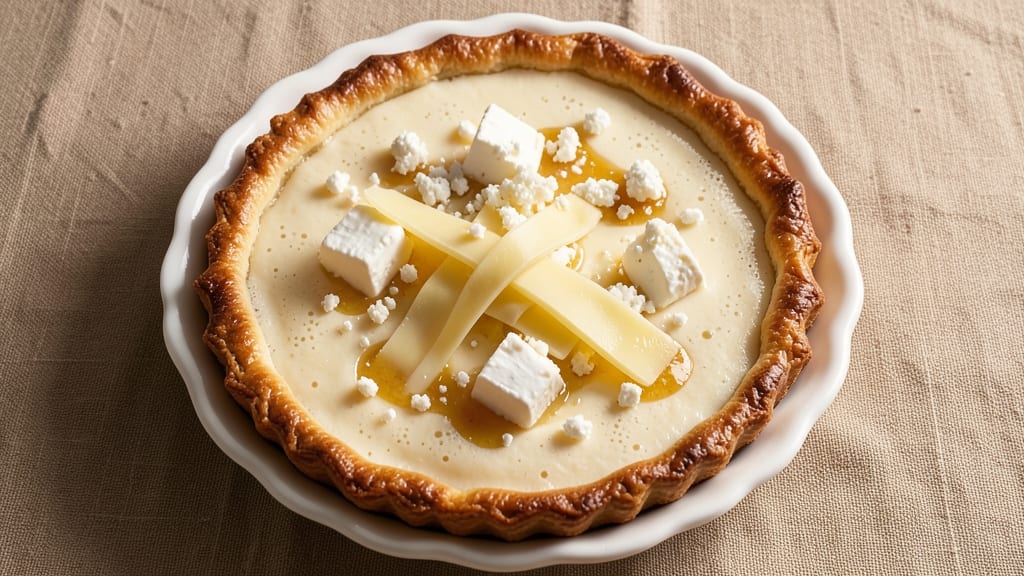
This Magnolia Three Cheese Quiche delivers the perfect balance of a flaky crust and rich, melty cheese filling that's become a breakfast staple in Southern kitchens. The secret lies in layering sharp cheddar, Gruyère, and cream cheese for a texture that's impossibly creamy yet still holds its shape when sliced.
I've perfected this recipe over years of weekend brunch hosting, and it never fails to impress—even picky eaters reach for seconds.
The beauty of this quiche is its versatility—whether you prefer a buttery store-bought crust or want to go all-in with homemade pie dough, both methods yield that signature flaky texture.
The filling comes together in just 15 minutes of prep, then bakes to golden perfection while you enjoy your morning coffee. The combination of sharp cheddar for tang, Gruyère for nutty depth, and cream cheese for creaminess creates a flavor profile that's hard to resist.
What you'll end up with is a quiche that's crisp at the edges, tender in the center, and packed with that irresistible pull-apart cheese goodness. Each slice reveals a creamy custard that's just set enough to hold together, making it ideal for brunch gatherings or a satisfying solo meal.
The aroma alone will have everyone gathering around the table—this is comfort food at its finest.
Serve it warm with a side of fresh fruit or a crisp green salad for a balanced meal, or enjoy it cold the next day when leftovers are just as delicious. Here's how to make it from start to finish—no shortcuts, just restaurant-quality results you can recreate at home.
Ingredients for magnolia three cheese quiche
Six ingredients for the crust, nine for the filling—simple but spectacular Southern comfort.
| Ingredient | Amount | Notes |
|---|---|---|
| All-Purpose Flour 🌾 | 2 ½ cups | For pie crust, sifted |
| Unsalted Butter 🧈 | 1 cup | Cold, cubed, full-fat |
| Ice Water 💧 | ½ cup | Chilled for crust |
| Large Eggs 🥚 | 4 whole | Room temperature |
| Heavy Cream 🥛 | 1 cup | Full-fat for richness |
| Whole Milk 🥛 | ½ cup | Warmed slightly |
| Sharp White Cheddar Cheese 🧀 | 1 ½ cups | Shredded, block preferred |
| Gruyère Cheese 🧀 | 1 cup | Shredded, aged 12+ months |
| Cream Cheese 🧈 | 8 oz | Full-fat, room temperature |
| Salt 🧂 | 1 ½ tsp | Kosher or sea salt |
| Black Pepper 🌶️ | ½ tsp | Freshly ground preferred |
| Fresh Nutmeg 🌿 | ¼ tsp | Finely grated, optional |
| All-Purpose Flour 🌾 | ¼ cup | For dusting crust |
The cheeses make or break this quiche. Gruyère is non-negotiable—it's what gives that signature nutty depth. Whole Foods or specialty cheese shops carry the good stuff (look for 12+ month aged labels). Sharp white cheddar adds the tang, and full-fat cream cheese ensures that melt you crave. I always buy a block of cheddar and shred it myself—pre-shredded gets clumpy. For Gruyère, Cowgirl Creamery is my go-to, but any quality European-style cheese works. The crust? Store-bought is fine (like Pepperidge Farm), but homemade pie dough makes it feel special—just keep everything cold.
No Gruyère? Parmesan or Emmental can stand in, but the flavor won't be identical. Short on sharp cheddar? Pepper Jack adds a kick. The crust can be made ahead—wrap it in plastic and chill for up to 2 days. For extra flakiness, freeze the dough for 30 minutes before rolling. The filling only needs 15 minutes of prep, but don't rush the cheese shredding. A microplane works best for Gruyère. And if you're feeling fancy, add a pinch of cayenne to the filling for heat.
This quiche is best served warm, straight from the oven—350°F for 40-45 minutes until the center is just set. Leftovers keep well in the fridge for 4 days, but reheat gently (microwave or oven) to avoid drying out. For make-ahead brunch hosting, assemble the quiche the night before, cover tightly, and bake in the morning. The crust stays crisp, and the filling holds together perfectly. Slice with a hot knife for clean cuts—trust me on this.
Why You'll Love This Recipe
- No-Fuss Crust: I swear by that cold butter cut into flour—no food processor, no overworking. The ice water keeps it flaky without the fuss, and honestly? It’s foolproof even when I’m distracted.
- Creamy Yet Crisp: That heavy cream and egg combo gives it a velvety bite, but the edges? Golden and crispy. It’s the kind of quiche where every forkful has texture—no sad, soggy middle here.
- Weeknight Workhorse: Make it for breakfast, brunch, or a lazy Sunday lunch. Slice it up for lunchboxes, or serve it warm with a side salad. My kids beg for it after school—yes, even on a Tuesday night.
- Leftovers That Win: Slice the next day, reheat, and it’s just as good. No sad, dried-out quiche here—the cream keeps it rich, and the cheeses melt perfectly. Budget-friendly too—uses pantry staples without breaking the bank.
Step-by-step instructions for magnolia three cheese quiche
Here's how to create a golden, flaky crust filled with creamy, triple-cheese goodness every time.
Make the Perfect Flaky Crust
In a large bowl, combine the 2.5 cups all-purpose flour and 1.5 teaspoons salt. Cut in the 1 cup cold unsalted butter using a pastry cutter or your fingers until the mixture resembles coarse crumbs with pea-sized butter pieces. This texture is crucial for flaky layers.
Add the 0.5 cup ice water gradually, mixing gently with a fork until the dough just comes together. Avoid overmixing—you want a soft, slightly sticky dough that holds its shape when pressed. Shape it into a disk, wrap in plastic, and chill for at least 1 hour. This resting time relaxes the gluten, ensuring crispy, not tough, crust.
Preheat your oven to 375°F. Roll out the chilled dough between two sheets of parchment paper to 12 inches in diameter. Transfer it to a 9-inch pie dish, gently pressing it into the bottom and up the sides. Trim any excess dough and crimp the edges with a fork. Dust the bottom with 0.25 cup all-purpose flour to prevent sticking.
Prepare the Triple-Cheese Filling
In a medium bowl, whisk together the 4 large eggs, 1 cup heavy cream, 0.5 cup whole milk, 0.5 teaspoon black pepper, and 0.25 teaspoon fresh nutmeg until fully combined. This mixture should be smooth—no lumps allowed, as they'll show up in your quiche.
In a separate bowl, combine the 1.5 cups sharp white cheddar cheese, 1 cup Gruyère cheese, and 8 oz cream cheese. Cut the cream cheese into small cubes first to help it melt smoothly. Grate the cheddar and Gruyère if they're not already shredded—freshly grated cheese melts better and creates a creamier texture.
Gently fold the cheese mixture into the egg mixture until just combined. The filling should be thick but pourable. Pour it into the prepared crust, spreading it evenly to the edges. The filling should come about halfway up the crust's sides—don't overfill, or it'll spill during baking.
Bake to Golden Perfection
Place the quiche on a baking sheet to catch any potential drips, then bake at 375°F for 45-50 minutes. The quiche is done when the crust is deep golden brown and the filling is just set—it should still have a slight wobble in the center, as it'll continue cooking slightly as it cools.
I like to check for doneness by inserting a knife near the center. It should come out clean, but the filling should still feel slightly custardy. If the edges brown too quickly, cover them loosely with aluminum foil after 30 minutes to prevent over-browning while the center finishes cooking.
Remove the quiche from the oven and let it rest for 10 minutes before slicing. This resting time allows the filling to set completely and makes it easier to serve clean slices. The crust should be crispy, the cheese melted and bubbly, and each bite should deliver that perfect combination of flaky, creamy, and cheesy goodness.
Pro Tips For Making Magnolia Three Cheese Quiche
- Chill the Dough: Roll out your crust, wrap it in plastic, and stick it in the fridge for at least 30 minutes before baking. I learned this the hard way—skipping it makes the crust puff up unevenly and burn faster. Trust me, that golden edge you want? It starts with a cold dough.
- Whisk Eggs Cold: Crack your eggs straight from the fridge into a bowl with the heavy cream, then whisk vigorously. Warm eggs create a gummy filling, and this step guarantees a silky, set-but-still-tender texture. (Yes, even if you’re impatient like me.)
- Blind-Bake the Crust: Line your crust with parchment, fill it halfway with pie weights or dried beans, and bake at 375°F for 15 minutes before adding the cheese filling. This prevents a soggy bottom—my grandmother swore by this, and she was right.
- Salt the Heavy Cream: Add a pinch of salt (about ¼ teaspoon) to the heavy cream before whisking it with the eggs. The cheese in this recipe is already salty, and this small tweak balances the flavor without overpowering it. (Your future self will notice the difference.)
Troubleshooting great magnolia three cheese quiche
Crust Too Tough
Overworking the dough is the #1 cause of tough crusts. I see this when people mix too long or use warm butter—both break down the gluten. Keep everything cold and handle the dough minimally. For extra flakiness, freeze the dough for 30 minutes before rolling.
If your crust still feels dense after baking, try adding 1 tbsp cold water to the flour mixture—this helps create steam during baking for extra lift. 🔥
Filling Too Watery
If your quiche filling looks too thin, it’s usually from overmixing the eggs or using too much milk. The secret is a thick custard base—whisk eggs and cream until just combined, then fold in cheeses gently.
For extra stability, add 1 tbsp cornstarch to the egg mixture. If it’s still too runny, bake at 350°F instead of 375°F to prevent spillage. Let it set longer before slicing.
Cheese Not Melting
Uneven cheese melting happens when the oven isn’t hot enough or the quiche is overbaked. First, ensure your oven reaches 375°F—use an oven thermometer to confirm. If cheese stays clumpy, try shredding it freshly (pre-shredded cheese contains anti-caking agents that prevent melting).
For stubborn spots, broil for 1-2 minutes at the end, watching closely to avoid burning.
Soggy Bottom
A soggy crust means steam got trapped during baking. Prevent this by blind-baking the crust for 10 minutes before adding filling (cover with parchment and pie weights). If it’s already soggy, slice the quiche and place it on a wire rack over a baking sheet.
Broil for 3-5 minutes on low heat to crisp the bottom. For future attempts, chill the filled quiche in the fridge for 15 minutes before baking to slow moisture release.
Undercooked Center
An undercooked center usually means the quiche wasn’t baked long enough or the oven wasn’t hot enough. Check doneness with a knife—it should come out clean but slightly custardy.
If it’s still runny, return to the oven for 5-10 minutes at 350°F. For extra insurance, bake at 325°F for the last 10 minutes to gently set the center without over-browning the crust.
A water bath (placing the dish in a larger pan with hot water) can also help even cooking.
Filling Spills Over
Overfilling is the most common cause of messy edges. The filling should reach only halfway up the crust’s sides. If it’s already overfilled, carefully scoop out excess before baking. For a foolproof method, press aluminum foil against the crust edges to create a slight lip before baking.
If spillage happens, use a serrated knife to trim the edges after baking—just be gentle to avoid crumbling the crust. 💡
Nutrition facts
Frequently asked questions
Can I make this quiche ahead of time?
Assemble the quiche the night before, cover tightly with plastic wrap, and refrigerate. Bake straight from the fridge in the morning—just add 5-10 extra minutes to the baking time. The crust stays crisp, and the filling holds together beautifully. For best results, let it cool completely before slicing. This is perfect for brunch hosting when you want to enjoy your guests without last-minute stress.
What's the best way to reheat leftovers?
Reheat individual slices in a 350°F oven for 10-12 minutes on a baking sheet until warmed through. The microwave works too (cover with a damp paper towel for 20-30 seconds), but oven reheating keeps the crust crispy. Never reheat straight from the fridge—let slices sit at room temperature for 10 minutes first to prevent condensation. Leftovers keep well for 4 days in the fridge.
Can I substitute any of the cheeses?
Gruyère is key for that signature nutty flavor, but you can swap it with Parmesan or Emmental in a pinch. For sharp cheddar, Pepper Jack adds a nice kick. Skip the cream cheese? Use an extra ½ cup of Gruyère or sharp cheddar—the filling will still be rich but slightly less creamy. Always grate your own cheese for best melting results.
Why does my crust get soggy?
A soggy crust happens when steam gets trapped during baking. Prevent it by blind-baking the crust for 10 minutes before adding filling (cover with parchment and pie weights). If it's already soggy, slice the quiche and broil for 3-5 minutes on low heat to crisp the bottom. For future attempts, chill the filled quiche for 15 minutes before baking. A water bath (placing the dish in a larger pan with hot water) also helps even cooking.
How do I make this vegetarian?
Skip the ham and add ½ cup sautéed mushrooms or spinach to the filling for extra flavor. For a heartier version, stir in ¼ cup cooked quinoa or roasted vegetables before baking. The cheese trio still shines—just make sure to drain any excess liquid from veggies first to keep the filling thick. This vegetarian version works perfectly for veggie-loving brunch guests.