Beverages
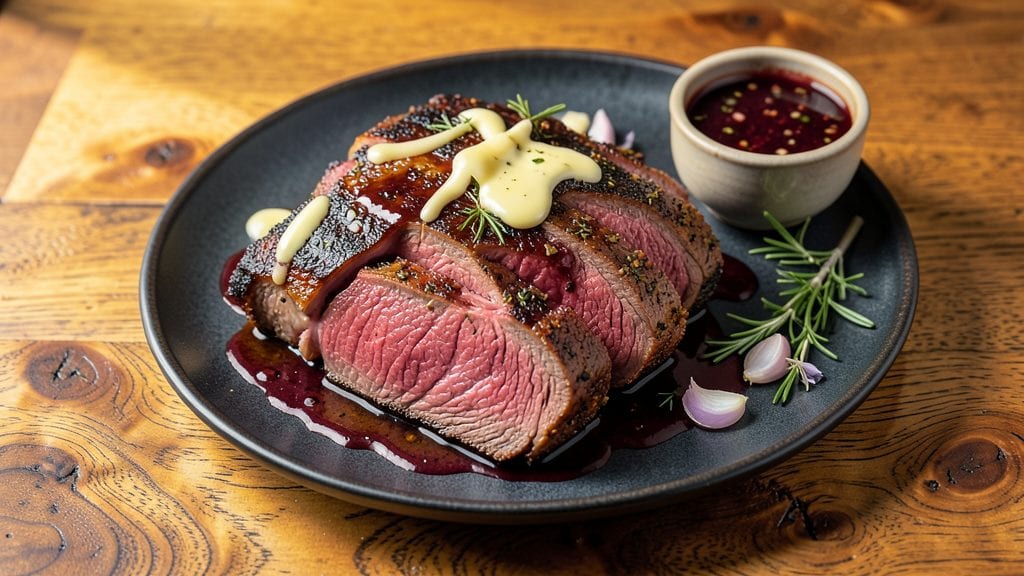
This perfect prime rib with red wine jus recipe delivers restaurant-quality results that'll have your guests begging for seconds. The secret lies in slow-roasting the meat to tender perfection while building a rich, velvety jus that's so decadent it practically stains the plate.
I've been perfecting this technique for years, and trust me—once you try it, you'll never buy pre-made au jus again.
The magic happens in three key steps: a proper sear to lock in juices, a slow roast at 325°F until the internal temp hits 125°F, and a precise rest before carving.
Meanwhile, the red wine jus transforms simple pan drippings into a luxurious sauce with just a splash of red wine, beef stock, and a touch of Dijon mustard. It's the kind of dish that makes weeknight dinners feel like a special occasion.
By the time you're done, you'll have a juicy, melt-in-your-mouth prime rib that practically falls apart at the touch of a fork, all swimming in a glossy red wine reduction that's rich enough to coat every bite.
The aroma alone will have everyone gathering around the table, and the first slice will disappear faster than you can say "compliments." This is the kind of meal that turns ordinary Sundays into something memorable.
Pair it with classic sides like creamy mashed potatoes, roasted root vegetables, or a crisp baguette for soaking up every last drop of that luxurious jus. Let's get cooking—your taste buds (and your dinner guests) will thank you.
Ingredients for perfect prime rib with red wine jus
Prime rib, red wine, and patience—this trio delivers restaurant-worthy results at home.
| Ingredient | Amount | Notes |
|---|---|---|
| Prime Rib Roast 🥩 | 4 lb | Bone-in, center-cut for tenderness |
| Kosher Salt 🧂 | 1 ½ tbsp | Coarse grain for seasoning |
| Freshly Ground Black Pepper 🌶️ | 1 tbsp | Coarse grind for texture |
| Unsalted Butter 🧈 | ½ cup | Cold, cut into 1-inch pieces |
| Red Wine 🍷 | 1 cup | Bold dry like Cabernet Sauvignon |
| Beef Stock 🥫 | 2 cups | Homemade or high-quality store-bought |
| Dijon Mustard 🍯 | 1 tbsp | For depth of flavor |
| Garlic Cloves 🧄 | 4 cloves | Smashed for infusion |
| Fresh Rosemary 🌿 | ¼ cup | Chopped, stems removed |
| Fresh Thyme 🌿 | ¼ cup | Leaves only, stems removed |
| Olive Oil 🫒 | 2 tbsp | High smoke point for searing |
| Baguette 🥖 | 1 whole | Fresh, sliced for serving |
The prime rib is non-negotiable here. Center-cut, bone-in is key—it stays juicier and carves beautifully. I always grab mine from Costco or Whole Foods because their cuts are consistently high-quality, with good marbling that melts into flavor. If you're buying from a butcher, ask for the ribeye or sirloin tip section of the primal—it's leaner but still tender. The roast should be cold when you start so it cooks evenly. Trust me on this: room temperature meat sears unevenly and can dry out. For the herbs, fresh is best—dried works in a pinch, but the aroma difference is night and day.
No red wine? Dry sherry or beef broth with a splash of balsamic works, but you'll lose some depth. The beef stock should be rich and homemade if possible—canned is fine, but avoid anything with preservatives. Dijon mustard adds that subtle tang—if you're out, whole-grain mustard thinned with a little wine does the trick. The garlic and herbs? Toast the garlic cloves lightly in the butter before adding them to the pan—it deepens the flavor. And if you're feeling fancy, add a sprig of fresh parsley to the jus at the end for color (and garnish points).
This roast reheats beautifully—3-4 days in the fridge if stored properly. Wrap it tightly in plastic and foil, then refrigerate. For leftovers, slice it thin and reheat in the jus on low heat. The jus itself? Freezes for up to 3 months—just reheat gently and reduce if it's too thin. I always make extra jus—it's perfect for dipping bread or drizzling over mashed potatoes. And that baguette? Toast it lightly before serving so it soaks up the jus like a dream.
Why You'll Love This Recipe
- One-Pan Magic: I swear by this method—just season the prime rib with kosher salt and pepper, sear it in the pan, then let it roast while the red wine reduces into that rich, velvety jus. No extra pots, no mess, no stress. The butter basting? That’s where the real flavor happens, and it takes less time than waiting for takeout.
- Rich Wine Kiss: That red wine jus isn’t just sauce—it’s the star. The acidity cuts through the fat, while the butter makes it silky, and the crust? Chef’s kiss. Honestly, the first time I tasted it, I nearly spilled my glass of wine (and that’s saying something).
- Holiday or Tuesday: Between us, this is my go-to for Thanksgiving, but it’s also the dish I pull out when my in-laws drop by unannounced. The prime rib feels special, but the jus makes it effortless enough for a weeknight—just serve with crusty bread and call it a win.
- Leftovers That Don’t Suck: Most people dread prime rib leftovers, but this recipe changes that. The jus keeps it moist, and you can slice it thin for sandwiches or reheat it in the oven with a splash of wine. I’ve fed my family for days with just one roast—no sad, dry meat here.
Step-by-step instructions for perfect prime rib with red wine jus
Here's how to transform a simple roast into showstopping prime rib with a velvety red wine reduction.
Season and Sear the Prime Rib for Maximum Flavor
Take the 4 lb prime rib roast out of the refrigerator and let it sit at room temperature for 30 minutes. While it warms, generously rub all sides with the 1.5 tbsp kosher salt and 1 tbsp freshly ground black pepper, pressing the seasoning into the meat so it adheres. This dry-brining step ensures the crust will be perfectly crisp while keeping the interior juicy.
Preheat your oven to 450°F. Heat a large oven-safe skillet over medium-high heat and add the 2 tbsp olive oil. Once shimmering, carefully place the seasoned prime rib fat-side down in the pan. Let it sear undisturbed for 8-10 minutes until the fat renders and the bottom develops a deep golden-brown crust. This initial sear locks in juices and creates that coveted crust we're after.
Roast to Perfect Medium-Rare Doneness
Transfer the skillet with the prime rib to the preheated oven. Roast for 20-25 minutes until the internal temperature reaches 120-125°F on a meat thermometer inserted into the thickest part of the roast. This is the perfect medium-rare stage where the meat remains tender and juicy. The roast should have a beautiful pink center with a deep mahogany crust.
Here's the thing—don't overcook! The meat will continue rising in temperature as it rests, so pull it out when you hit the lower end of this range. If you're unsure, err on the side of slightly underdone. You can always cook it longer, but you can't undo overcooking.
Prepare the Red Wine Jus While Roasting
While the prime rib roasts, prepare your jus ingredients. In a separate saucepan, melt the 0.5 cup unsalted butter over medium heat. Add the 4 smashed garlic cloves, 0.25 cup chopped fresh rosemary, and 0.25 cup fresh thyme leaves, cooking for 2 minutes until fragrant. Pour in the 1 cup red wine and let it reduce by half, about 5-7 minutes, until slightly syrupy.
Strain the mixture through a fine-mesh sieve into a clean saucepan, pressing on the solids to extract maximum flavor. Add the 2 cups beef stock and 1 tbsp Dijon mustard, then simmer gently for 10-12 minutes until reduced by about one-third. The sauce should coat the back of a spoon and be rich enough to stain your plate—this is what we're aiming for.
Rest the Meat and Finish the Sauce
Remove the prime rib from the oven and transfer it to a cutting board. Let it rest for 15-20 minutes before slicing. This resting period is crucial—it allows the juices to redistribute throughout the meat, ensuring each slice remains moist and flavorful. Tent loosely with foil to keep it warm during this time.
While the meat rests, skim any fat from the surface of your jus and return it to a gentle simmer. If the sauce has thickened too much, whisk in 1-2 tablespoons of the beef stock to reach your desired consistency. Taste and adjust seasoning with additional kosher salt and freshly ground black pepper as needed. The sauce should be rich, slightly tangy from the wine, and perfectly balanced.
Slice and Serve with Warm Baguette
Slice the prime rib against the grain into ½-inch thick portions. Arrange the slices on a warm platter and ladle the finished red wine jus generously over the top. The jus should pool slightly on the plate—this is the mark of a truly perfect sauce. Serve immediately with slices of the whole baguette on the side for soaking up every last drop.
Each bite should deliver tender, perfectly cooked meat with a crisp crust, complemented by the rich, wine-infused sauce. The combination of the rosemary-thyme butter base and the bold red wine creates a sauce that's both elegant and deeply flavorful—exactly what makes this prime rib recipe truly special.
Pro Tips For Making Perfect Prime Rib With Red Wine Jus
- SEAR FIRST, REST LATER: Get that pan screaming hot—cast iron or stainless steel—and sear the prime rib for 3-4 minutes per side before touching it with anything else. I learned this the hard way: rushing the sear means a dull crust and a jus that won’t gel properly. Let it rest 10 minutes after roasting (yes, even if you’re starving)—this keeps the juices locked in while you reduce the wine.
- SALT THE MEAT EARLY: Pat the prime rib completely dry with paper towels, then season it generously with kosher salt at least 4 hours ahead. I used to salt it right before cooking, and the crust never formed right. The salt draws out moisture, which evaporates, leaving you with a perfect crust when you sear. Trust me, it’s worth the wait.
- DEGLAZE WITH PATIENCE: After removing the prime rib, don’t rush the wine deglaze—let the pan sit for 2 full minutes so all the browned bits dissolve. Then, add the wine slowly, scraping up every last bit with a wooden spoon. I used to pour it all at once, and half the flavor ended up in the sink. This is where the jus gets its depth.
- USE COLD BUTTER: Toss in 2 tablespoons of cold unsalted butter at the very end of reducing the jus—it’ll melt instantly and add richness without breaking the sauce. I was skeptical until I tried it: the butter coats the back of the spoon like a silky glaze, and the wine doesn’t turn into a thin, sad liquid. Works every time.
Flavor customization for perfect prime rib with red wine jus
Herb Variations
Swap the rosemary and thyme for fresh sage and parsley for an Italian-inspired twist. Use 1 tbsp chopped sage and 0.25 cup parsley leaves in the jus—sage adds a peppery depth while parsley brightens the wine's acidity.
For a French bistro vibe, try tarragon and chervil instead; their anise-like notes pair beautifully with red wine. 🌿
Spice Infusions
Add ½ tsp smoked paprika to the butter when melting for a subtle smokiness that complements the wine. For heat, stir in ¼ tsp cayenne pepper with the mustard—just enough to warm up the sauce without overpowering.
If you love earthy flavors, toast 1 tsp coriander seeds in a dry pan until fragrant, then grind and mix into the jus. These spices deepen the sauce's complexity without altering the dish's elegance.
Wine Alternatives
Replace the red wine with 1 cup dry port for a richer, fruitier jus with caramel notes. For a lighter option, use ½ cup red wine + ½ cup beef broth and add 1 tsp balsamic vinegar to mimic acidity.
If you prefer white wine, Chardonnay works surprisingly well—its buttery profile balances the beef's richness. Always deglaze with the same wine you'll drink, for perfect harmony.
Umami Boosters
Stir in 1 tbsp soy sauce or 1 tsp fish sauce during the final jus reduction for an extra umami punch. For depth, add 1 tsp Worcestershire sauce along with the mustard.
If you love mushrooms, sauté 4 oz sliced cremini mushrooms in the butter before adding wine—their earthy flavor enhances the wine's fruitiness. These additions elevate the sauce from good to restaurant-worthy. 💫
Sweet-Savory Balance
Finish the jus with 1 tsp honey or 1 tsp maple syrup to balance the wine's acidity and beef's richness. For a classic touch, add ½ tsp vanilla bean paste** when straining the herbs—it adds warmth without overpowering.
These sweet elements create a luxurious contrast that makes the sauce sing. Trust me, a hint of sweetness transforms this dish into something truly special.
Nutrition facts
Frequently asked questions
How do I know when my prime rib is perfectly cooked?
Use a meat thermometer inserted into the thickest part of the roast. For medium-rare, aim for 120-125°F—this ensures a juicy pink center. The meat will rise 5°F while resting, so pull it out slightly underdone. Never rely on time alone; color alone isn't reliable either.
Can I make the red wine jus ahead of time?
The jus freezes beautifully for up to 3 months. Store it in an airtight container, leaving room for expansion. When ready to use, thaw overnight in the fridge and reheat gently on the stove, reducing with a splash of beef stock if needed. This is perfect for busy weeknight dinners.
What's the best way to reheat leftover prime rib?
Slice the prime rib into thin portions and reheat in the oven at 300°F for 10-15 minutes, covered with foil. For extra moisture, place the slices in a baking dish with a little jus and cover tightly. Never microwave—it turns the meat tough. Reheated slices make fantastic sandwiches too!
Why does my jus turn out too thin or too thick?
Thin jus? Simmer longer to reduce. Too thick? Whisk in 1-2 tablespoons of beef stock or a splash of red wine. The ideal consistency coats the back of a spoon but remains pourable. If using store-bought stock, choose a richer variety—homemade always yields better results.
Can I substitute a different cut of beef?
For best results, stick with prime rib (ribeye or sirloin tip sections). If you must substitute, use a well-marbled cut like chuck roast or top round, but expect slightly less tenderness. Never use lean cuts—they won't deliver the same luxurious texture. The wine jus works beautifully with other roasts too!