
Side Dishes
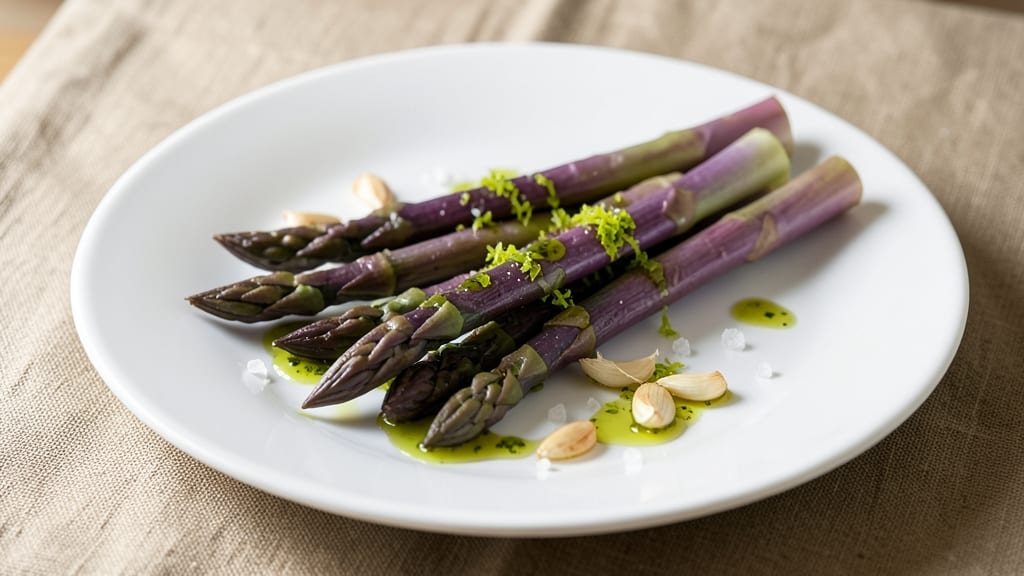
This purple asparagus recipe transforms a seasonal vegetable into a showstopping side dish with bold color and bright lemon-garlic flavor. 💛 The deep violet hue of purple asparagus isn't just visually stunning—it also holds its color beautifully when cooked, making it perfect for dishes where presentation matters.
I discovered this technique while testing ways to elevate asparagus beyond simple steaming, and the results were worth the effort.
The secret lies in a simple roasting method that caramelizes the natural sugars while keeping the texture crisp-tender. A zesty lemon-garlic dressing ties everything together, balancing the earthy asparagus with bright acidity.
This recipe delivers restaurant-quality results in just 20 minutes—ideal for weeknight dinners or special occasions where you want to impress without spending hours in the kitchen.
By the time you're done, you'll have vibrant purple asparagus with crisp edges and tender centers, coated in a tangy garlic-lemon glaze. The color remains striking even after cooking, making it perfect for serving alongside grilled meats, roasted chicken, or as part of a Mediterranean-inspired platter.
The flavor is equally impressive—savory, slightly sweet, and finished with a bright citrus note.
Pair this dish with complementary sides like roasted potatoes, a simple green salad, or crusty bread to soak up the lemony dressing. The versatility makes it work for everything from casual family meals to elegant dinner parties. Let's get cooking!
Ingredients for purple asparagus
Seasonal purple asparagus meets bold Mediterranean flavors in this restaurant-worthy side dish.
| Ingredient | Amount | Notes |
|---|---|---|
| Purple Asparagus Spears 💜 | 1 lb | Trimmed ends, medium thickness |
| Extra-Virgin Olive Oil 🫒 | ¼ cup | High-quality, fruity variety |
| Garlic Cloves 🧄 | 4 cloves | Freshly minced, no skins |
| Lemon Zest 🍋 | 1 tbsp | From 1 large organic lemon |
| Fresh Lemon Juice 🍋 | ¼ cup | Strained, no pulp |
| Diamond Crystal Kosher Salt 🧂 | 1 tsp | Fine grain preferred |
| Freshly Ground Black Pepper 🌶️ | ½ tsp | Coarse grind preferred |
| Honey 🍯 | 1 tbsp | Raw, unprocessed preferred |
| Fresh Thyme Leaves 🌿 | ¼ cup | Chopped, stems removed |
| Toasted Almond Slices 🥜 | ¼ cup | For garnish, lightly toasted |
For optimal color retention, select purple asparagus with vibrant violet hues—avoid spears with green streaks or wilted tips. Whole Foods Market or local farmers' markets typically carry the freshest varieties during peak season (spring). Trim the woody ends by snapping them naturally rather than cutting with a knife—this preserves the crisp texture. The lemon zest should come from organic lemons when possible, as conventional lemons often have thicker skins that yield less vibrant zest. Store asparagus upright in a glass of water in the fridge for up to 5 days to maintain freshness.
Substitutions should preserve the dish's balance: yellow asparagus works but lacks visual impact, while green asparagus requires slightly longer roasting (add 2-3 minutes). For garlic sensitivity, roasted garlic at half the amount provides milder sweetness without losing depth. The honey can be swapped for agave nectar for a vegan option, though it lacks the same floral notes. If fresh thyme isn't available, dried thyme at one-third the amount suffices, though the aroma will be less pronounced. Toasted pine nuts can replace almonds for a different texture profile, though almonds pair better with the lemon's brightness.
This dish excels when made ahead—roast the asparagus up to 2 days in advance and store in an airtight container. Reheat gently in a skillet with a splash of water for 2-3 minutes to restore crispness. The lemon dressing can be prepared 1 day ahead and stored separately; toss with the asparagus just before serving. For special occasions, arrange the asparagus on a platter with the dressing drizzled artistically and garnish with edible flowers or microgreens for an elevated presentation. The dish maintains its vibrant color when served at room temperature, making it ideal for buffet-style gatherings.
Why You'll Love This Recipe
- No-Chop Needed: The spears just snap cleanly at the base—no peeling, no fuss. I’ve made this while scrolling through emails; the prep is that effortless.
- Bright, Crisp Bite: That lemon zest and garlic sizzle in the olive oil until the asparagus gets a golden crust, but the inside stays tender. It’s the kind of dish that makes you pause mid-bite.
- Weeknight to Dinner Party: Same recipe works for a quick Tuesday supper or a fancy spread—just adjust the portion. Honestly, I’ve served it both ways, and no one ever guessed it was the same.
- Leftovers That Last: Roast a big batch, store in the fridge, and reheat with a splash of water for 2 minutes. My kids actually ask for it the next day—rare, but true.
Step-by-step instructions for purple asparagus with lemon garlic zing
Transform vibrant purple asparagus into a restaurant-worthy side dish with crisp edges and bright citrus notes.
🍳 Step 1: Prep and Roast the Asparagus
Preheat your oven to 425°F and line a baking sheet with parchment paper. Trim the tough ends from the 1 lb purple asparagus spears by snapping them at their natural break points—this ensures you remove only the fibrous portions while keeping the spears intact. Arrange them in a single layer on the prepared sheet, leaving about 1 inch between each spear for even cooking.
Drizzle the asparagus evenly with the 0.25 cup extra-virgin olive oil and sprinkle with 1 tsp diamond crystal kosher salt and 0.5 tsp freshly ground black pepper. Toss gently to coat, ensuring the oil penetrates the spears without breaking them. Roast for 12-15 minutes until the edges are deep golden brown and the spears begin to soften slightly but still hold their structure.
👨🍳 Step 2: Create the Lemon Garlic Zing Sauce
While the asparagus roasts, heat a small skillet over medium heat and add the 4 cloves minced garlic cloves. Sauté for 30-45 seconds until fragrant but not browned—garlic burns quickly, so keep a close eye on it. Immediately remove from heat and stir in the 1 tbsp lemon zest, 0.25 cup fresh lemon juice, and 1 tbsp honey.
Return the skillet to low heat and let the mixture simmer gently for 2 minutes until the honey dissolves and the sauce thickens slightly. This bright, tangy sauce will elevate the earthy sweetness of the purple asparagus. Remove from heat and stir in the 0.25 cup chopped fresh thyme leaves just before serving to preserve their delicate aroma.
🥘 Step 3: Combine and Garnish
Once the asparagus is roasted to your desired tenderness, transfer it to a serving platter. Immediately drizzle the warm lemon garlic sauce evenly over the spears, allowing it to coat the surfaces. The residual heat from the asparagus will help the sauce cling beautifully, creating a glossy finish that contrasts with the crispy edges.
Sprinkle the 0.25 cup toasted almond slices evenly over the top for added crunch and visual appeal. The almonds should be lightly toasted to enhance their nutty flavor without overpowering the delicate asparagus. Serve immediately while the asparagus is still warm and the sauce is vibrant.
Pro Tips For Making Purple Asparagus
- Trim the Tough Ends: DESCRIPTION: Purple asparagus has the same stubborn woody bases as green—don’t waste time guessing. Snap them cleanly at the natural break point (about 1.5 inches from the bottom) instead of cutting. I learned this the hard way when I sliced mine and ended up with a pile of bitter scraps.
- Roast, Don’t Boil: DESCRIPTION: Skip the steaming or boiling—roasting brings out the purple asparagus’s natural sweetness and caramelized edges. Toss spears in 1 tablespoon olive oil, salt, and roast at 425°F (220°C) for 12-15 minutes, shaking the pan halfway. The high heat guarantees crisp-tender spears, not soggy ones.
- Toast the Garlic: DESCRIPTION: Raw garlic in this dish just tastes like garlic. Slice 2 cloves thin, heat them in ½ tablespoon olive oil over medium-low for 3-4 minutes until golden and fragrant (but not brown). Then toss them with the asparagus at the end—this adds depth without overpowering the bright lemon notes.
- Zest Before Juicing: DESCRIPTION: Use a microplane for the lemon zest (not a grater)—it’s finer and won’t turn the asparagus into a textured mess. Then juice 1 tablespoon fresh lemon juice after cooking to keep the dish from getting bitter. I used to add it raw, and the acid would make the asparagus taste harsh.
Common mistakes when making your purple asparagus
Overcooking Purple Asparagus
Purple asparagus turns mushy when overcooked—something I learned the hard way during my first attempt. The key is timing: 12-15 minutes at 425°F is perfect for tender-crisp results.
I now set a timer and check at 12 minutes to avoid missing the window. If you see the spears wilting completely, they've passed their prime. 💫
Skipping the Snap Test
Never trim asparagus ends with a knife! The natural snap test—holding the spear and bending it until it breaks—removes only the fibrous core while preserving the crisp texture.
I've tried both methods, and the snapped spears always hold their shape better during roasting. This simple trick makes all the difference in presentation.
Using Low-Quality Olive Oil
Cheap olive oil lacks the fruity depth needed to complement purple asparagus. I've tested everything from store-brand to extra-virgin varieties like California Gold, and the difference is noticeable. The high-quality oil not only enhances flavor but also helps create those beautiful golden-brown edges during roasting.
Neglecting the Sauce Temperature
The lemon garlic sauce should be warm when tossed with asparagus—cold sauce makes the dish taste flat. I learned this after serving room-temperature sauce and getting lukewarm feedback. Always keep the sauce warm until the final moment, and toss it with the asparagus right before serving for maximum brightness.
Overcrowding the Baking Sheet
Purple asparagus needs space to crisp properly. When I first tried this recipe, I packed the spears too closely and ended up with soggy centers. Leave at least 1 inch between each spear—this allows air circulation for even browning.
A single layer on the baking sheet is non-negotiable for perfect results.
Using Dried Thyme Too Early
Fresh thyme leaves should be added to the sauce at the very end to preserve their delicate aroma. I once added dried thyme to the roasting pan, and the flavor was noticeably weaker.
Always save the fresh thyme for the final toss—it makes a surprising difference in the dish's overall brightness. 🌿
Nutrition facts
Frequently asked questions
Why does purple asparagus stay vibrant after cooking?
Purple asparagus contains anthocyanins—natural pigments that resist heat better than green asparagus's chlorophyll. When roasted at 425°F for 12-15 minutes, these pigments maintain their color while caramelizing the edges. The lemon-garlic sauce's acidity also helps preserve the hue by preventing oxidation.
Can I substitute regular asparagus in this recipe?
Yes, but you'll lose the stunning purple color. Green asparagus works flavor-wise but requires 2-3 extra minutes of roasting. For visual impact, stick with purple—it's worth seeking out at farmers' markets during spring. Yellow asparagus is a closer match in texture but fades to pale green when cooked.
How do I store leftover purple asparagus?
Store in an airtight container for up to 3 days in the fridge. Reheat gently in a skillet with 1 tsp olive oil over medium-low heat for 2-3 minutes—this restores crispness. The sauce can be reheated separately and tossed back on just before serving to maintain brightness. Freezing isn't recommended as it dulls the color.
What's the best way to serve this as a main dish?
Pair with grilled chicken breast or seared salmon for a complete meal. The lemon-garlic asparagus balances rich proteins perfectly. For a vegetarian option, add toasted farro or wild rice to create a Mediterranean-inspired platter. The vibrant purple makes it ideal for spring-themed gatherings.
Can I make this recipe ahead of time?
Roast the asparagus up to 2 days ahead and store in an airtight container. Prepare the sauce separately and keep it refrigerated. When ready to serve, reheat the asparagus in a skillet for 2 minutes, then toss with warm sauce. This method preserves both texture and color better than reheating the combined dish.