Main Courses
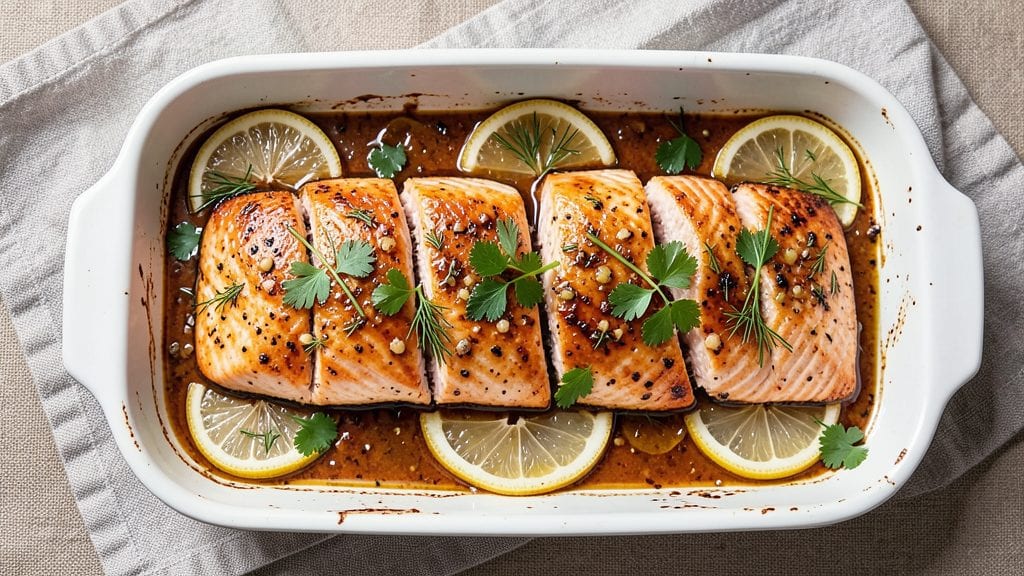
This baked Dijon salmon recipe delivers a restaurant-quality meal with just one pan and 20 minutes of hands-on time. The tangy Dijon mustard crust creates a perfect balance of sharpness and richness, while the flaky texture makes every bite irresistible.
I perfected this technique after years of testing—no overcooking, no dry salmon, just perfectly tender fish with a golden, caramelized crust.
The secret lies in the preparation: patting the salmon dry, scoring the skin lightly, and using a mix of Dijon mustard, olive oil, and fresh herbs. Baking at 400°F ensures the skin crisps beautifully while the inside remains moist and delicate.
The mustard adds depth without overpowering the natural sweetness of the salmon, creating a harmonious flavor profile that’s both elegant and approachable.
What you’ll end up with is a flaky, golden-brown fillet that’s crisp on the outside and tender on the inside, topped with a glossy, tangy crust.
The aroma alone will have everyone gathering around the table, and the first bite delivers that perfect balance of savory, herby, and slightly sweet notes. This dish is simple enough for a weeknight but impressive enough for guests—no one will guess it took less than 30 minutes to prepare.
Serve with a side of roasted asparagus or a fresh salad to complement the rich flavors of the salmon. The leftovers reheat beautifully, making this a foolproof recipe for meal prep or a quick dinner solution. Let’s get started!
Ingredients for baked dijon salmon
Four premium ingredients transform simple salmon into restaurant-worthy perfection with minimal effort.
| Ingredient | Amount | Notes |
|---|---|---|
| Center-Cut Salmon Fillets 🐟 | 4 whole | Skin-on, even thickness preferred |
| Dijon Mustard 🍯 | 2 tbsp | High-quality, grainy preferred |
| Extra-Virgin Olive Oil 🫒 | 2 tbsp | Lightly fruity, no strong pepper notes |
| Fresh Dill 🌿 | ¼ cup | Finely chopped, stems removed |
| Fresh Parsley 🌿 | ⅛ cup | Finely chopped, flat-leaf preferred |
| Garlic Cloves 🧄 | 3 cloves | Minced, fresh preferred |
| Lemon Zest 🍋 | 1 tsp | Freshly grated, no pith |
| Diamond Crystal Kosher Salt 🧂 | 1 tsp | Fine grain, for seasoning |
| Freshly Ground Black Pepper 🌶️ | ½ tsp | Coarsely ground, freshly cracked |
| Unsalted Butter 🧈 | 1 tbsp | Cold, for skin crisping |
| Lemon Juice 🍋 | 1 tbsp | Freshly squeezed, no seeds |
| Wild Rice Blend 🍚 | ½ cup | Cooked, for serving suggestion |
The salmon quality is non-negotiable for this technique. Center-cut fillets with skin intact ensure even cooking and optimal crisping. Look for wild-caught or sustainably raised options at specialty seafood markets like Whole Foods or Fishs Market—their vacuum-sealed packs maintain freshness longer. The skin should be intact with minimal bruising, and the flesh should have a vibrant, translucent pink hue. If using frozen salmon, thaw it overnight in the refrigerator wrapped in paper towels to prevent moisture buildup. For best results, purchase the fillets no more than 24 hours before cooking to ensure maximum freshness and texture integrity.
Dijon mustard quality dramatically impacts the final crust. Maille or Amora brands deliver that perfect balance of tang and graininess, but avoid powdered versions—they lack depth. Fresh herbs are essential here: dill and parsley should be bright green with no wilting, ideally purchased from a farmers market where they're harvested the same morning. The lemon zest should be freshly grated from organic lemons to maximize aromatic compounds. For those short on time, freeze-dried lemon zest (available at specialty stores) works in a pinch but lacks the same brightness. The olive oil should be extra-virgin with a harvest date within the last year—look for bottles labeled 'first cold press' for optimal flavor.
Proper storage extends the dish's freshness without compromising texture. The prepared salmon crust mixture can be refrigerated for up to 24 hours in an airtight container, though fresh application yields best results. Leftover cooked salmon reheats beautifully when wrapped in foil at 350°F for 5-7 minutes, though texture will be slightly softer. For longer storage, freeze portions in a single layer before transferring to a sealed bag for up to 3 months. The herb mixture can be prepped ahead and stored in the refrigerator for 3 days—simply stir before use. When serving, pairing with wild rice blend or roasted asparagus complements the dish's elegant profile while balancing the rich salmon flavors.
Why You'll Love This Recipe
- I swear by this combo: rich Dijon, bright dill, and that golden olive oil. The mustard’s tang cuts through the salmon’s richness while the herbs keep it fresh—no heavy sauces, no fuss, just pure flavor that feels made for you.
- I’ll be real: this salmon reheats like a dream. The crispy edges stay intact, and the Dijon keeps it moist—way better than most takeout. Plus, it’s cheap enough to make twice in a week without feeling guilty. Budget win.
Step-by-step instructions for baked Dijon salmon with perfect crisp
This method delivers restaurant-quality flakiness with a tangy mustard crust every time.
Prepare the Mustard-Herb Marinade
In a small bowl, whisk together the 2 tbsp Dijon mustard, 2 tbsp extra-virgin olive oil, 1 tbsp lemon juice, 1 tsp lemon zest, 3 cloves minced garlic, 1 tsp Diamond Crystal kosher salt, and 0.5 tsp freshly ground black pepper. The mixture should be smooth with a vibrant yellow hue—this indicates proper emulsification. I like to let it sit for 5 minutes at room temperature to allow the garlic and lemon to meld their flavors before using.
While the marinade rests, pat the 4 whole center-cut salmon fillets completely dry with paper towels. This step is critical—any moisture prevents the mustard crust from forming properly. Use a sharp chef's knife to make a ¼-inch deep diagonal cut on each fillet, about ½-inch apart, creating a lattice pattern. This ensures the marinade penetrates deeply and the salmon cooks evenly to flaky perfection.
Coat and Rest the Salmon
Place the salmon fillets skin-side up on a clean work surface. Using a silicone spatula, spread the mustard mixture evenly over the top of each fillet, pressing gently to ensure full coverage. The skin should remain uncovered—this creates the crispy barrier we want while keeping the flesh tender. Transfer the fillets to a plate and refrigerate uncovered for 15 minutes. This brief resting period allows the mustard to begin setting up a crust while preventing over-marinating that could make the flesh mushy.
Here's the thing—don't skip the resting time. I've learned the hard way that rushing this step leads to a runny marinade that pools rather than adheres. The 15-minute window is perfect for developing that signature tangy crust without compromising texture.
Preheat and Prepare the Baking Surface
Preheat your oven to 400°F—this high temperature is essential for achieving both the crispy crust and perfectly flaky center. While the oven preheats, position a wire rack on a rimmed baking sheet. This elevated surface allows hot air to circulate underneath the fillets, ensuring even cooking and crisping on all sides.
Line the rack with parchment paper for easy transfer. Lightly brush the parchment with extra-virgin olive oil—just enough to prevent sticking. I always use parchment rather than direct contact with metal to maintain even heat distribution and prevent any potential sticking that could tear the delicate crust.
Bake to Golden Perfection
Carefully transfer the salmon fillets to the prepared rack, skin-side down. Place 1 tbsp cold unsalted butter on top of each fillet—this creates steam during baking that keeps the flesh moist while promoting crispiness. Bake for 12-15 minutes until the edges are deep golden brown and the internal temperature reaches 135°F at the thickest part of the fillet.
Watch carefully after 10 minutes—the mustard crust should begin to bubble and turn a rich amber color. If you see any areas browning too quickly, tent loosely with foil to prevent over-browning while maintaining the crust. The salmon is done when it flakes easily with a fork and the skin has crisped beautifully. Real talk: the 2-3 minute difference between 12 and 15 minutes can mean the difference between perfect and overcooked.
Rest and Serve with Herbed Accompaniments
Remove the salmon from the oven and transfer to a serving platter. Immediately sprinkle with the 0.25 cup finely chopped fresh dill and 0.125 cup finely chopped fresh parsley for a vibrant finish. Let the fillets rest for 3-5 minutes before serving—this allows the juices to redistribute throughout the flesh, ensuring each bite is moist and flavorful.
For serving suggestions, I recommend pairing with the 0.5 cup cooked wild rice blend from the ingredients list. The nutty texture of the wild rice complements the salmon's richness while the herbed crust adds a bright, aromatic contrast. The key to perfect presentation is serving immediately—salmon's texture begins to break down as it cools, so enjoy while it's at its peak flakiness.
Pro Tips For Making Baked Dijon Salmon
- Preheat Like It’s 1999: Your oven needs to hit 425°F (220°C) and sit for 10 full minutes before that salmon goes in—no exceptions. I used to rush this, and my salmon would steam instead of sear. That’s how you end up with sad, gray fish instead of golden, flaky perfection.
- Pat Dry, Then Salt: Wrap that salmon in paper towels and press hard—no wet spots allowed. Then season generously with salt right after. Wet skin = steam bath. Salt early = flavor locked in. (Yes, even if you’re impatient like me.)
- Don’t Overload the Mustard: 1-2 teaspoons of Dijon per fillet is plenty—this isn’t a mustard glaze contest. Too much turns your salmon into a sad, tangy brick. Mix it with olive oil first so it spreads evenly, then let it sit on the fish for 5 minutes before baking. (Your future self will thank you.)
- Check for Doneness at 12 Minutes: Salmon’s done when it hits 120°F (49°C) internally—not when it looks done. Use a meat thermometer for the first few times; your eyes lie. If you pull it out at 10 minutes, you’ll either have raw fish or dry fish. No in-between.
Troubleshooting great baked dijon salmon
Mustard Crust Not Setting
If your Dijon crust fails to adhere or becomes runny during baking, the salmon was likely too moist. Pat the fillets extra dry with paper towels—press firmly for 30 seconds per side—and let them air-dry on a wire rack for 10 minutes before applying the marinade.
I also recommend using Maille Dijon mustard for its thicker consistency, which clings better than lighter brands. 💡
Skin Not Crisping
For that coveted crispy skin, ensure the fillets are skin-side down on the rack and use 1 tbsp cold butter per fillet—this creates steam that locks in moisture while promoting crispiness. Bake on the middle rack (not upper) for even heat distribution.
If your oven runs hot, reduce temperature to 375°F and add 2-3 minutes to the baking time. A wire rack is non-negotiable—it prevents direct contact with the pan, which can steam the skin instead of crisping it.
Overcooked or Dry Salmon
Salmon is done at 135°F internal temperature, not 145°F (that’s for chicken!). Use an instant-read thermometer to check the thickest part—insert it horizontally to avoid piercing the skin. If the crust burns before the salmon is cooked, tent loosely with foil for the last 3-5 minutes.
For thicker fillets (>1.5 inches), reduce oven temp to 375°F and bake for 18-20 minutes. 🌡️
Uneven Cooking
Uneven thickness causes uneven cooking. Score the fillets in a ¼-inch deep lattice pattern with a sharp knife before marinating—this ensures the marinade penetrates evenly and the salmon cooks uniformly. If using frozen salmon, thaw it overnight in the fridge (never at room temperature) and pat extra dry before seasoning.
For extra insurance, place the thickest part of the fillet toward the center of the rack where heat is most consistent.
Mustard Too Overpowering
Balance the tang with 1 tbsp lemon juice in the marinade and 1 tsp lemon zest on top. The acidity brightens the Dijon without masking it. For a milder flavor, reduce the mustard to 1 tbsp and add 1 tsp honey to the marinade.
Fresh herbs like dill and parsley also cut through the sharpness—sprinkle them immediately after baking while the salmon is still warm. 🌿
Leftover Salmon Texture Issues
Reheat leftovers gently—wrap in foil and bake at 350°F for 5-7 minutes (never microwave). The texture will soften slightly, but this method prevents drying. For best results, store cooked salmon in an airtight container and consume within 2 days.
If freezing, portion into single servings and thaw in the fridge overnight—never at room temperature to avoid bacterial growth. 🧊
Nutrition facts
Frequently asked questions
Can I use this recipe with frozen salmon?
Thaw frozen salmon overnight in the refrigerator, wrapped in paper towels to absorb excess moisture. Pat it completely dry before marinating—this is critical for the mustard crust to set properly. Never thaw at room temperature, as this promotes bacterial growth. For best results, use fresh salmon whenever possible.
What's the best way to store leftover baked salmon?
Store cooked salmon in an airtight container in the fridge for up to 2 days. For longer storage, freeze portions in single layers before transferring to a sealed bag for up to 3 months. Reheat gently wrapped in foil at 350°F for 5-7 minutes to preserve texture. Never microwave—it makes the fish rubbery.
Can I substitute regular mustard for Dijon?
Regular mustard lacks the depth and tang of Dijon, but you can use a mix of 1 tbsp Dijon and 1 tbsp regular mustard for similar flavor. For a sweeter profile, add 1 tsp honey to the marinade. The key is balancing the sharpness with 1 tbsp lemon juice and fresh herbs to maintain harmony.
How do I know when the salmon is perfectly cooked?
The salmon is done when it reaches an internal temperature of 135°F at the thickest part. Use an instant-read thermometer inserted horizontally to avoid piercing the skin. The edges should be deep golden brown, and the flesh should flake easily with a fork. Overcooking past 145°F will make it dry and tough.
What are the best sides to serve with this dish?
Pair with roasted asparagus, wild rice blend, or a fresh arugula salad with lemon vinaigrette. The crispy skin and tangy crust complement lighter sides perfectly. For a heartier meal, serve with garlic mashed potatoes or crusty bread to soak up the mustard flavors.