
Sauces & Condiments
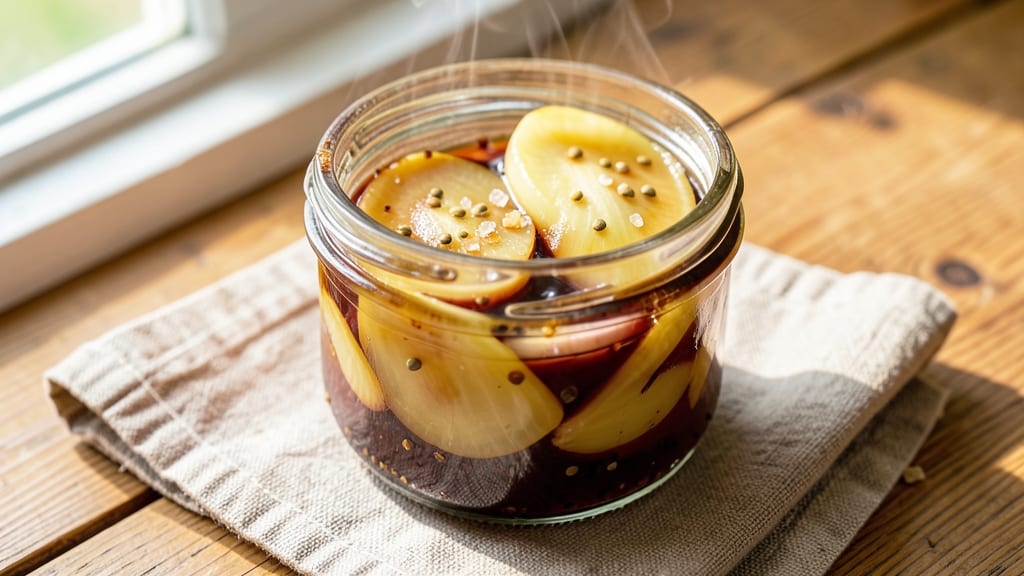
This balsamic pickled onions recipe transforms simple onions into a versatile condiment that elevates everything from pasta to burgers with its tangy-sweet crunch. The secret lies in balancing vinegar, balsamic reduction, and aromatic herbs for a depth of flavor that store-bought versions can't match.
I developed this after years of testing—each batch gets better, and the results are worth the 15-minute prep.
The beauty of this recipe is its scalability—double or triple the ingredients for holiday gatherings without sacrificing quality. Thinly sliced onions soak in a bright vinegar base infused with garlic, mustard seeds, and fresh herbs, while balsamic reduction adds a rich, caramelized sweetness that cuts through richness.
The texture remains delightfully crisp even after weeks in the fridge.
What you'll end up with is a jar of golden, tangy onions that add instant sophistication to any dish. Use them as a garnish for steak, a topping for charcuterie boards, or stir them into salads and pasta for a burst of flavor.
The onions keep for months, making this a pantry staple that's easier to make than you'd think.
Perfect for meal prep, this recipe delivers restaurant-quality results with minimal effort. The balance of acidity and sweetness makes it addictive—once you try homemade, store-bought pickled onions won't compare. Let's get started on this game-changing condiment.
Ingredients for best balsamic pickled onions
Nine ingredients transform humble onions into a sophisticated condiment with restaurant-quality depth.
| Ingredient | Amount | Notes |
|---|---|---|
| Yellow Onions 🧅 | 2 large | Thinly sliced, uniform thickness |
| White Vinegar 💧 | 2 cups | Distilled or white vinegar preferred |
| Balsamic Vinegar 🍷 | ½ cup | High-quality aged balsamic |
| Balsamic Reduction 🍯 | ¼ cup | Store-bought or homemade |
| Granulated Sugar 🍚 | ½ cup | White or raw sugar |
| Mustard Seeds 🌿 | 1 tsp | Yellow mustard seeds preferred |
| Garlic Cloves 🧄 | 4 cloves | Thinly sliced, not minced |
| Fresh Dill 🌿 | ¼ cup | Chopped, stems removed |
| Fresh Thyme 🌿 | 1 tbsp | Leaves only, finely chopped |
| Diamond Crystal Kosher Salt 🧂 | 1 ½ tsp | Fine grain preferred |
The quality of your onions and vinegars determines the final product. Sweet yellow onions develop the best texture, while white vinegar provides the bright acidity needed. For balsamic reduction, look for aged varieties at specialty stores—the deeper the color, the richer the flavor. Mustard seeds add subtle complexity; yellow mustard seeds are traditional but black seeds work too. Fresh herbs like dill and thyme should be vibrant and aromatic—avoid wilted stems. I source my onions from Whole Foods or local farmers' markets for optimal freshness, but any quality yellow onion will work if sliced uniformly.
No balsamic reduction? Simmer 1 cup balsamic vinegar until reduced by half—it takes about 10 minutes. Substitute white vinegar with apple cider vinegar for a milder tang. Fresh herbs unavailable? Dried dill at one-third the amount works, though texture will differ slightly. For a sweeter balance, honey or maple syrup can replace sugar. The garlic cloves should be thinly sliced—not minced—to maintain texture. If you're scaling up for gatherings, double the herbs to maintain flavor intensity without bitterness.
Store the pickled onions in an airtight glass jar in the refrigerator for up to 6 months. The onions develop more depth of flavor over time, so they taste even better after a few weeks. For meal prep, portion into small jars—perfect for lunches or quick garnishes. The vinegar mixture will keep indefinitely if stored separately, allowing you to rejuvenate onions as needed. Freeze the reduction in ice cube trays for convenient use in dressings or marinades.
Why You'll Love This Recipe
- These onions work everywhere: tossed on burgers, stirred into pasta, or even as a topping for grilled cheese. I keep a jar in my fridge for when I’m too tired to think, and it never lets me down.
- Five-Ingredient Magic: I swear by this recipe because it’s that simple—just slice, simmer, and wait. No fancy tools, no stress, and honestly, I’ve made it in a mason jar, a saucepan, or even a slow cooker on busy days.
- Sweet-Tart Obsession: The balsamic reduction turns these onions into little bursts of complexity—sweet at first, then tangy, with that deep, caramelized finish. It’s the kind of flavor that makes you want to eat them straight from the jar.
- Pantry Superstar: These onions work everywhere: tossed on burgers, stirred into pasta, or even as a topping for grilled cheese. I keep a jar in my fridge for when I’m too tired to think, and it never lets me down.
Step-by-step instructions for perfect balsamic pickled onions
Master this technique and you'll achieve restaurant-quality pickled onions with ideal crunch and depth.
Prepare the Onions with Precision
Begin by peeling the 2 large yellow onions and slicing them into thin, even rounds using a sharp mandoline or knife. I aim for slices about 1/8-inch thick—this ensures consistent texture throughout. The slices should be uniform in size so they pickle evenly without some pieces becoming too soft or others remaining crunchy.
Transfer the sliced onions to a large mixing bowl. Add the 1.5 teaspoons of diamond crystal kosher salt and toss gently with your hands until the salt adheres completely to each slice. Let the onions sit for 10 minutes while you prepare the remaining ingredients. This salting step draws out moisture and helps the onions absorb the pickling liquid more effectively, resulting in better flavor penetration.
Combine Vinegars and Sugar for the Base
In a medium saucepan, combine the 2 cups of white vinegar, 0.5 cup of balsamic vinegar, and 0.5 cup of granulated sugar. Bring the mixture to a gentle boil over medium-high heat, stirring occasionally until the sugar completely dissolves. The solution should be clear with no visible sugar crystals remaining.
Once boiling, reduce the heat to maintain a simmer and cook for 5 minutes. This step helps sterilize the liquid and creates a stronger flavor base. Remove the pan from heat and let it cool slightly for 2-3 minutes while you prepare the aromatics. The liquid should be warm but not scalding when you combine it with the onions.
Infuse with Aromatics and Herbs
While the vinegar mixture cools, add the 1 teaspoon of mustard seeds, 4 thinly sliced garlic cloves, 0.25 cup of chopped fresh dill, and 1 tablespoon of finely chopped fresh thyme to the saucepan. Stir gently to combine. The mustard seeds will add subtle heat, while the garlic and herbs provide depth and complexity that elevate the simple vinegar base.
Let this aromatic mixture steep for 5 minutes. You'll notice the liquid begins to take on a golden hue and the fragrance becomes more pronounced. This infusion step is crucial for developing the rich, layered flavor profile that distinguishes these pickled onions from basic vinegar versions. The herbs should be fully submerged in the liquid.
Assemble and Sterilize the Pickling Jars
Transfer the salted onions to a clean, sterilized quart-sized mason jar or airtight container. Pour the warm vinegar mixture and herb infusion over the onions, pressing down gently to ensure all slices are fully submerged. The liquid should cover the onions by at least 1 inch to prevent surface mold growth and ensure proper preservation.
Seal the jar tightly and let it cool to room temperature. This cooling process allows the onions to begin absorbing the pickling liquid immediately. I recommend processing the jar in a water bath for 10 minutes to ensure complete sterilization, though this step is optional if you plan to consume the onions within 1 week. The sealed jar should sit at room temperature for 24 hours before refrigeration.
Develop Flavor Through Proper Aging
After the initial 24-hour period, transfer the jar to the refrigerator where the onions will continue to develop flavor. For optimal results, allow them to pickle for at least 3 days before using. The longer they sit, the more intense the flavors become—up to 2 weeks in the refrigerator for maximum depth.
When ready to use, drain the onions briefly before serving to remove excess liquid. The pickled onions should have a satisfying crunch with tender edges, and the flavor should balance sweet, tangy, and herbal notes. Use them as a topping for burgers, pasta dishes, or salads where their complex flavor can shine. The remaining pickling liquid makes an excellent salad dressing when thinned with water.
Pro Tips For Making Best Balsamic Pickled Onions
- Slice Thin, Even Strips: Grab a sharp knife and cut the onions into paper-thin slices—no thicker than 1/8-inch. I used to eyeball it and end up with uneven batches where some parts stayed crunchy while others turned mushy. A mandoline makes this foolproof, but a steady hand and a ruler work too. Stack and fan the slices for even cooking.
- Boil the Vinegar First: Heat the white vinegar and sugar together until the sugar fully dissolves before adding onions. I learned this the hard way—adding cold sugar just makes it clump and settle at the bottom. A quick simmer for 30 seconds ensures everything blends smoothly, so the onions soak up the flavor evenly.
- Skip the Crowding: Pack the onions into the jar loosely—they’ll shrink as they pickle. After burning three batches where onions floated in their own juice, I realized overcrowding traps moisture and turns them soggy. Leave about an inch of space at the top, then press down gently to remove air bubbles.
- Use Aged Balsamic: Splurge on aged balsamic vinegar (or reduction) if you can—it’s sweeter and deeper, cutting through the sharpness of white vinegar. I was skeptical until I tried it; the flavor develops over time, and the onions taste richer without extra sugar. If you’re pinched for cash, simmer store-bought balsamic reduction with a pinch of cinnamon for complexity.
Regional styles of this best balsamic pickled onions
Italian Rustic Style
In Italy, these pickled onions take on a rustic charm with a focus on simplicity and freshness. I often see them served as a condiment with pizza bianca or bruschetta, where the bright acidity cuts through the richness of olive oil and cheese.
Italians typically use red wine vinegar instead of white, and they add a pinch of red pepper flakes for subtle heat. The key is to keep the herbs minimal—just fresh basil and garlic—to let the onions shine.
For an authentic touch, I like to add a splash of grappa to the pickling liquid before sealing the jar. 🍷
Southern French Twist
Southern France brings a bold, herby profile to balsamic pickled onions, often using tarragon and fennel seeds alongside traditional dill and thyme. The French version tends to be slightly sweeter, with a touch of honey replacing some of the sugar.
I’ve found that white balsamic vinegar works beautifully here, adding a milder sweetness that pairs perfectly with duck confit or goat cheese salads. The onions are often left slightly thicker—about ¼-inch slices—to maintain a firmer texture.
A splash of pastis (anise-flavored liqueur) in the pickling liquid adds a unique licorice note. 🌿
German Sauer Style
German-style pickled onions, or Sauerkraut-inspired onions, lean into a tangier profile with apple cider vinegar and juniper berries. The Germans often add a bay leaf and a few cloves for warmth, creating a flavor that’s both sweet and earthy.
These onions work wonderfully with sausage platters or potato salads, where their bold tang holds up to hearty flavors. For a true German touch, I like to add a strip of orange peel to the pickling liquid for a citrusy brightness.
The onions are typically left to pickle for at least 2 weeks to develop a deeper, more complex flavor. ❄️
Middle Eastern Spiced
Middle Eastern variations infuse the onions with warm spices like cumin, coriander, and cardamom, transforming them into a vibrant topping for shawarma, hummus, or grilled lamb. The pickling liquid often includes lemon juice alongside vinegar for a brighter acidity.
I love adding a pinch of smoked paprika for depth and a few mint leaves for freshness. These onions are usually left to pickle for at least 5 days to let the spices meld together.
The result is a sweet, tangy, and slightly spicy condiment that’s perfect for adding a pop of color and flavor to any dish. 🌶️
American BBQ Favorite
In the U.S., balsamic pickled onions are a staple on burgers and sliders, where their sweet-tangy crunch contrasts perfectly with smoky meats. The American version often includes a splash of bourbon or maple syrup in the pickling liquid for extra depth.
I like to add a dash of smoked salt and a few black peppercorns for a subtle kick. These onions are usually left to pickle for at least 3 days but can be used immediately for a brighter flavor.
They’re also fantastic on pulled pork sandwiches or loaded fries. 🍔
Nutrition facts
Frequently asked questions
Can I use this recipe with red onions instead of yellow?
Red onions work beautifully and add a lovely purple hue to your pickled onions. They'll develop a slightly sweeter flavor during pickling, but the texture and tangy-sweet balance will remain excellent. Just be aware the color may bleed into your dish when using them as a garnish.
How do I know when the onions are perfectly pickled?
Perfectly pickled onions should have a satisfying crisp texture with just a hint of tenderness at the edges. The flavor should balance sweet, tangy, and herbal notes. For best results, wait at least 3 days before using - they'll continue improving in flavor for up to 2 weeks in the fridge.
Can I make this recipe without balsamic reduction?
Yes! Simply reduce 1 cup of balsamic vinegar in a saucepan until it's halved (about 10 minutes on medium heat). This homemade reduction will give you the same rich sweetness. For extra depth, add 1 teaspoon of honey to the reduction while simmering.
What's the best way to store these pickled onions?
Keep them in an airtight glass jar in the refrigerator where they'll last up to 6 months. The onions develop more flavor over time, so they taste even better after a few weeks. For meal prep, portion into small jars - perfect for lunches or quick garnishes. The pickling liquid keeps indefinitely if stored separately.
Why did my onions turn mushy?
Mushy onions usually mean they weren't fully submerged in liquid or weren't thinly sliced enough. Always ensure the liquid covers onions by at least 1 inch and use 1/8-inch thick slices for ideal texture. Also check that your vinegar mixture was properly sterilized by bringing it to a boil before cooling.