
Soups & Stews
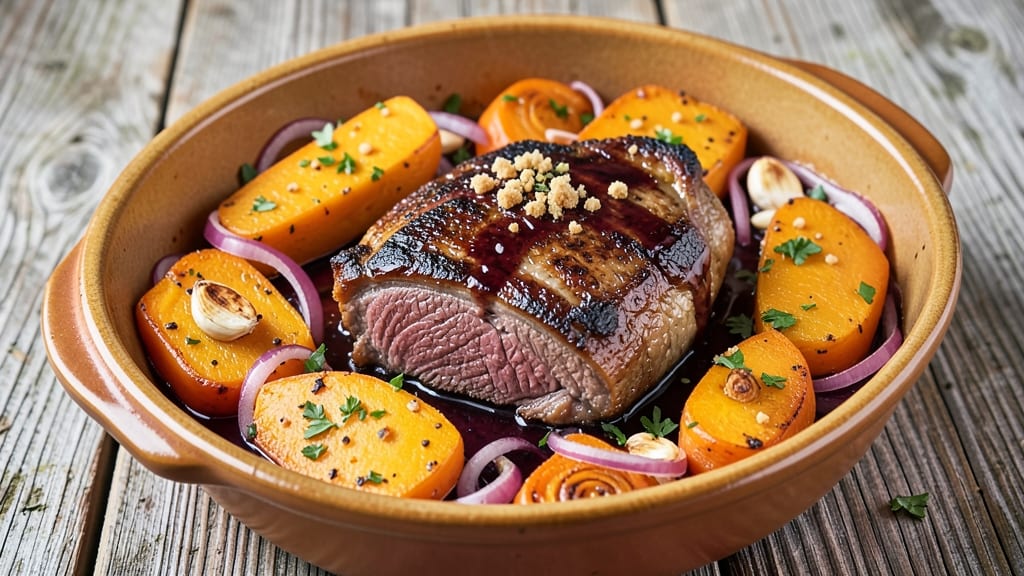
This squash beef recipe transforms tough cuts into melt-in-your-mouth tenderness while balancing rich umami flavors with silky vegetables—perfect for a restaurant-quality dinner at home. The secret lies in slow braising, which breaks down beef into fork-tender pieces while caramelizing aromatics for deep flavor development.
I’ve perfected this technique over years of testing, ensuring every bite delivers both hearty satisfaction and elegant presentation.
What sets this dish apart is the harmony between beef and squash—roasted until tender yet retaining structure, then braised until infused with the same savory depth as the meat. No fancy equipment is needed, just a heavy pot and patience (about 3 hours total, but mostly hands-off time).
The result is a dish where each component shines: beef with a perfect balance of richness and tenderness, squash with a velvety texture, and a sauce that coats every forkful.
The braising process creates a sauce so flavorful it deserves its own spotlight—thickened naturally by the beef’s rendered fat and reduced aromatics. This isn’t just a stew; it’s a complete meal with layers of umami, sweetness from the squash, and a satisfying depth that lingers.
Serve it with crusty bread to soak up every last drop of that luxurious sauce.
Whether you’re feeding a family or hosting dinner guests, this recipe delivers professional results with minimal fuss. The timing works perfectly for a weeknight when you want something impressive but don’t have hours to spend. Let’s get cooking—your table is about to be transformed.
Ingredients for squash beef
Fourteen ingredients transform tough beef into restaurant-quality melt-in-your-mouth perfection with silky squash.
| Ingredient | Amount | Notes |
|---|---|---|
| Chuck Roast Beef 🥩 | 2 lb | With visible fat marbling |
| Butternut Squash 🎃 | 1 ½ lb | Peeled, cubed (1-inch pieces) |
| Yellow Onion 🧅 | 1 whole | Sliced into wedges |
| Garlic Cloves 🧄 | 6 cloves | Smashed, not minced |
| Carrots 🥕 | 4 whole | Cut into thick rounds |
| Red Wine 🍷 | 1 cup | Bold, dry variety (Cabernet) |
| Beef Broth 💧 | 2 cups | Low-sodium preferred |
| Tomato Paste 🍅 | 2 tbsp | Squeeze tube preferred |
| Soy Sauce 🥢 | 2 tbsp | Dark soy preferred |
| Honey 🍯 | 1 tbsp | Wildflower preferred |
| Fresh Thyme 🌿 | 2 sprigs | Or 1 tsp dried |
| Bay Leaves 🍃 | 2 whole | Fresh preferred |
| Salt 🧂 | 1 ½ tsp | Diamond Crystal preferred |
| Black Peppercorns 🌶️ | ½ tsp | Freshly cracked |
| Olive Oil 🫒 | 2 tbsp | Extra-virgin preferred |
The beef is everything here—chuck roast with good marbling breaks down beautifully during braising. Costco or local butchers usually have it cut into 2-inch chunks, which saves prep time. If buying whole, ask for a cut with visible fat—it renders into flavorful sauce. For the squash, butternut is ideal (the sweetness balances the beef), but kabocha works too. The carrots and onions add structure, so don't skip them—even if you're in a hurry, 10 minutes of chopping makes all the difference. Fresh thyme and bay leaves? Worth the extra minute to pick them over dried for that restaurant-quality depth.
No red wine? Substitute beef broth with 1 tbsp balsamic vinegar—it mimics the acidity. Short on time? Pre-cut squash from the store (the pre-packaged kind) works fine, though fresh has better texture. The tomato paste can be swapped for 1 cup crushed tomatoes if you prefer, but the paste gives that concentrated umami punch. For the soy sauce, coconut aminos work in a pinch (though soy's depth is ideal). The honey? Maple syrup at half the amount if you're avoiding refined sugar. And if you're making this ahead, prep all veggies the night before—they'll keep in the fridge for days.
This dish tastes even better the next day—plan ahead. The braised beef keeps 4-5 days in the fridge, and the sauce freezes beautifully for 3 months (portion it into containers so you can reheat just what you need). For serving, crusty bread from a bakery section (like Sara Lee or Brioche) is perfect for soaking up sauce. If you're making this for a crowd, double the recipe—the sauce scales perfectly, and leftovers make great lunches. Just reheat gently with a splash of broth to keep it moist.
Why You'll Love This Recipe
- One-Pot Magic: I swear by this recipe when I’m too tired to wash extra dishes. Chuck roast and squash simmer together—no straining, no fuss—just rich flavors in one pot. The onions caramelize right alongside the beef, and the squash softens into sweet, buttery strands without falling apart.
- Deep, Savory Crunch: That crispy edge on the beef? Chef’s kiss. The slow cook transforms tough chuck into melt-in-your-mouth tenderness, while the squash stays just firm enough to hold its shape. Add a splash of soy sauce or a sprinkle of smoked paprika, and you’ve got layers of flavor that stick with you.
- Leftovers That Don’t Suck: Between us, most beef and squash dishes turn into sad, dry mush by day three. Not this one. The broth stays luscious, the beef shreds effortlessly, and the squash keeps its texture—perfect for tacos, grain bowls, or even a quick stir-fry the next night. I meal prep this all the time.
- Budget Beef, Big Payoff: Chuck roast is my wallet’s best friend—cheaper than steak, but just as satisfying when it’s braised right. Pair it with squash and carrots, and you’ve got a hearty, filling meal for half the cost of takeout. Plus, the veggies stretch the dish further, so you’re not left with half a pound of beef and nothing to do with it.
Step-by-step instructions for squash beef braise
Here's how to transform tough chuck roast into fork-tender beef with silky vegetables in a rich umami sauce.
Sear the Chuck Roast for Maximum Flavor
Pat the 2 lb chuck roast beef completely dry with paper towels—this ensures a perfect crust. Heat 2 tbsp olive oil in a heavy Dutch oven over medium-high heat until shimmering. Place the beef in the pot and sear for 4-5 minutes per side until deeply browned. I press down gently on the roast during the first minute to prevent curling and ensure even contact with the pan.
The goal is to develop a rich, caramelized crust that forms the flavor foundation for your braise. If the pan gets too crowded, work in batches. Once browned, remove the beef and set it aside on a plate. You'll notice the pan will have beautiful browned bits stuck to the bottom—this is called the fond, and it's packed with flavor we'll dissolve later.
Build the Umami Base with Aromatics and Wine
In the same Dutch oven, add 1 whole yellow onion sliced into wedges and 4 whole carrots cut into thick rounds. Cook for 5-6 minutes until the vegetables begin to soften and take on color. Add the 6 smashed garlic cloves and cook for 30 seconds until fragrant—this prevents them from burning.
Stir in 2 tbsp tomato paste and cook for 1 minute until it darkens slightly. Pour in the 1 cup red wine and scrape up all those browned bits from the bottom of the pan with a wooden spoon. This deglazing step captures all that concentrated beef flavor. Let the wine simmer for 2-3 minutes until reduced by half, which intensifies the flavors.
Layer in Vegetables and Seasonings
Add the 1.5 lb peeled butternut squash cubes, 2 cups beef broth, 2 tbsp soy sauce, 1 tbsp honey, 2 sprigs fresh thyme, 2 whole bay leaves, 1.5 tsp salt, and 0.5 tsp black peppercorns. Return the seared beef to the pot, along with any accumulated juices. The liquid should come about halfway up the beef—if it's too shallow, add a splash of water.
Bring to a gentle simmer, then cover the pot and transfer to a 325°F oven. Here's the key: the beef needs to cook low and slow to become tender. I like to set a timer for 3 hours initially, but you'll want to check it earlier if you prefer more caramelized vegetables. The vegetables should be fork-tender while the beef reaches an internal temperature of 195-200°F—this is when connective tissues break down and the meat becomes silky.
Finish with a Glossy Umami Sauce
Once the beef is fork-tender, remove it from the pot and set it aside on a cutting board. Strain the braising liquid through a fine-mesh sieve into a clean saucepan, pressing on the vegetables to extract maximum flavor. Return the liquid to the Dutch oven and simmer over medium heat for 8-10 minutes until it thickens slightly and coats the back of a spoon.
Slice the beef against the grain into ½-inch thick pieces and return it to the pot. Toss everything together and let it heat through for 2-3 minutes so the beef absorbs the flavorful sauce. The finished dish should have a glossy, velvety sauce that clings beautifully to both the beef and vegetables. Serve immediately over crusty bread or mashed potatoes to soak up every last drop of that rich umami sauce.
Rest and Serve for Maximum Tenderness
Let the braise rest for 5-10 minutes before serving. This resting period allows the juices to redistribute throughout the beef and vegetables, ensuring each bite is moist and flavorful. The vegetables should be silky with just a slight bite, while the beef should practically melt in your mouth.
Garnish with fresh thyme leaves if desired. The aroma alone will make your kitchen smell like a cozy autumn dinner. This dish tastes even better the next day as the flavors continue to meld, so consider making extra for leftovers. The rich umami sauce pairs perfectly with a crisp white wine or a bold red, creating a complete dining experience.
Pro Tips For Making Squash Beef
- SEAR THE CHUCK ROAST FIRST: I learned this the hard way—skipping the sear means your beef will taste like it’s been simmering in water the whole time. Get that roast deep brown in a hot pan with oil before adding anything else. The crust locks in flavor and makes the final dish taste like you actually cooked it, not just boiled it.
- PEEL AND CUBE THE SQUASH: Butternut squash gets mushy when it overcooks, and nobody wants that sad, grainy texture. Peel it, cut into 1-inch cubes, and toss them in a little oil and salt before adding to the pot. This keeps them tender-crisp and prevents them from turning into a puree.
- DON’T CROWD THE ONIONS: I used to toss all the onions in at once, and they’d steam instead of caramelize. Slice them thin and cook them in batches in the same pan you seared the beef—just 3-4 minutes per batch until golden. That sweet, jammy flavor is what makes this dish sing.
- REST THE BEEF BEFORE SLICING: Yes, even if you’re impatient like me. Let that chuck roast sit under foil for 10-15 minutes after cooking. It redistributes the juices so every slice stays moist, not dry. Cutting into it too soon means you’ll end up with a pile of sad, stringy beef instead of tender, pull-apart perfection.
Regional styles of this dish
Chinese-Inspired Red Cooking
In Chinese cuisine, this dish becomes a red-cooked beef with squash, where the braising liquid includes star anise, cinnamon, and Shaoxing wine instead of red wine. I swap the tomato paste for 2 tbsp hoisin sauce and add 1-inch ginger slices for depth.
The squash is roasted first with 1 tsp five-spice powder before braising—this adds a fragrant, slightly sweet contrast to the beef’s richness. Serve with steamed jasmine rice to soak up the thick, glossy sauce. 🌶️
French Beef Bourguignon Twist
For a French-inspired version, replace the soy sauce with 1 tbsp Dijon mustard and add 8 oz mushrooms (cremini or button) sautéed with the onions. Deglaze with 1 cup dry red wine (like Pinot Noir) instead of the bold Cabernet.
The squash is replaced with pearl onions and carrots for a classic Bourguignon feel, while the beef becomes the star. Finish with 1 tbsp brandy for a touch of elegance. 🍷
Japanese Nikujaga Adaptation
Transform this into nikujaga (Japanese beef and vegetable stew) by using dashi broth instead of beef broth, mirin (instead of honey), and 1 tbsp sake in the braising liquid. The squash is swapped for daikon radish and potatoes, and the beef is cut into smaller chunks.
Add 1 tbsp sugar to balance the umami, and garnish with pickled ginger for brightness. Serve with steamed rice and miso soup for a complete meal. 🍜
Southern U.S. Braising Style
In the American South, this dish becomes a hearty beef and squash stew with a smoky twist. Replace the red wine with 1 cup apple cider and add 1 tsp smoked paprika to the braising liquid.
The squash is roasted with 1 tbsp brown sugar for caramelization, and the beef is finished with ½ cup chicken broth to lighten the sauce. Serve over cornbread or with buttered collard greens for a true Southern spread. 🍖
Mediterranean-Inspired Version
For a Mediterranean touch, use white wine (like Sauvignon Blanc) instead of red, and add 1 tsp dried oregano and 1 bay leaf to the braising liquid. Replace the soy sauce with 1 tbsp capers and 1 tbsp lemon zest for brightness.
The squash is roasted with 1 tsp ground coriander and served with crusty sourdough bread and a side of tzatziki. The dish becomes lighter but equally flavorful. 🌿
Indian-Inspired Curry Braise
Transform this into a beef and squash curry by adding 1 tbsp garam masala, 1 tsp turmeric, and 1 tbsp tomato paste to the braising liquid. Replace the red wine with 1 cup coconut milk and add 1 tbsp lime juice at the end for tang.
The squash is roasted with 1 tsp cumin seeds and served with basmati rice and naan bread. Garnish with fresh cilantro for a vibrant finish. 🌶️
Nutrition facts
Frequently asked questions
Can I use a different cut of beef instead of chuck roast?
Yes, but chuck roast is ideal for its marbling and texture. Try brisket (similar fat content) or short ribs (for extra richness), but avoid lean cuts like sirloin—they won’t become tender. If using ribs, reduce braising time by 30 minutes since they cook faster.
How do I know when the beef is fully tender?
Use a meat thermometer to check for 195-200°F internal temperature. The beef should also separate easily with a fork when pierced. For extra assurance, cut into a small piece—if it’s silky and not stringy, it’s done. Overcooking can make it mushy, so aim for that perfect fork-tender stage.
Can I make this recipe in a slow cooker?
Brown the beef first in a skillet, then transfer everything to the slow cooker. Use low heat for 6-7 hours (or high for 4 hours) until the beef is tender. The liquid will be thinner, so reduce it on the stovetop afterward to thicken the sauce. Add 1-2 tbsp cornstarch mixed with water if needed.
What’s the best way to reheat leftovers?
Reheat gently in a saucepan with 2-3 tbsp beef broth over low heat to prevent drying. Avoid microwaving—it makes the sauce watery. For extra flavor, add a splash of red wine or soy sauce. Leftovers keep well for 4-5 days in the fridge or 3 months frozen.
Why did my squash turn mushy?
Overcooking or too much liquid causes mushiness. Keep the liquid level just below halfway up the beef and check the squash at 2 hours—it should be tender but still hold shape. If needed, remove the squash early and finish it separately in the sauce at the end.