
Main Courses
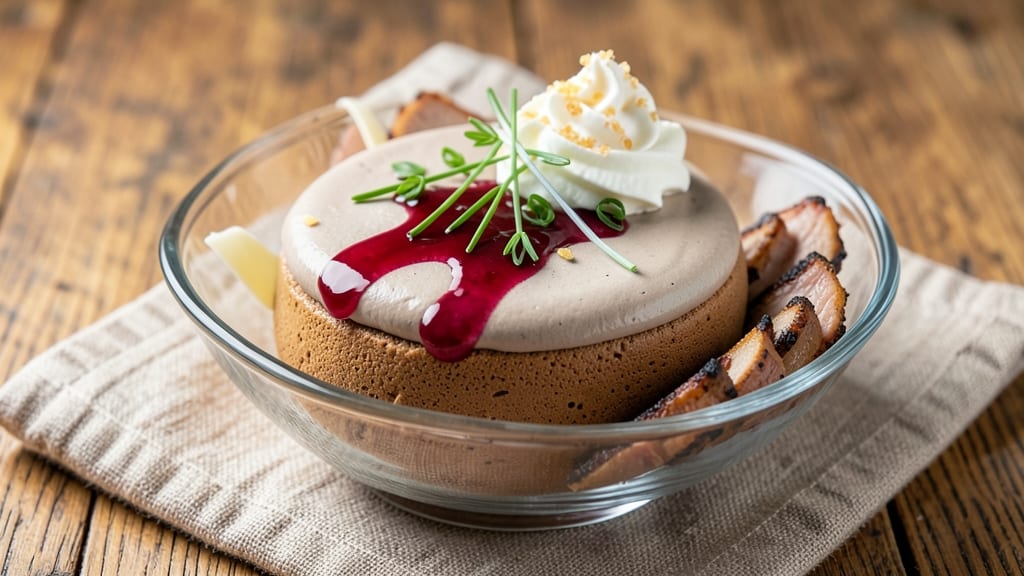
Creating duck liver mousse reveals why French cuisine elevates simple ingredients into extraordinary dishes. The velvety texture and deep umami flavor make it a showstopper for special occasions, though the process requires precision—something I perfected after years of testing.
This recipe transforms raw duck livers into a silky, herbed mousse infused with port wine, delivering restaurant-quality results at home.
The secret lies in proper preparation: searing the livers first removes any bitterness while concentrating their natural richness. After blending with cream, herbs, and a touch of port, the mixture chills until perfectly set.
This isn't a recipe for beginners, but the technique becomes intuitive with practice—especially when you taste the difference between rushed and carefully crafted mousse.
What you'll achieve is a dish so luxurious it feels decadent yet balanced—each bite offering a harmony of earthy liver, bright herbs, and the subtle sweetness of port. The presentation matters too: serve it on chilled plates with a drizzle of reduced port or fresh herbs for an elegant finish.
This is the kind of recipe that transforms an ordinary dinner into a memorable experience.
For those new to duck liver, start with high-quality livers and follow the searing step exactly—it's the foundation of success. The mousse keeps well for up to 3 days in the refrigerator, making it perfect for gatherings where you want to impress without stressing. Let's create something truly special together.
Ingredients for duck liver mousse
Sixteen ingredients transform raw duck livers into silky, restaurant-quality mousse infused with port wine and fresh herbs.
| Ingredient | Amount | Notes |
|---|---|---|
| Fresh Duck Livers 🦆 | 1 ½ lb | High-quality, trimmed of connective tissue |
| Heavy Whipping Cream 🥛 | 2 cups | Full-fat, cold from refrigerator |
| Ruby Port Wine 🍷 | ½ cup | Dry, aged 10 years minimum |
| Fresh Chives 🌿 | ¼ cup | Finely chopped, stems removed |
| Fresh Tarragon Leaves 🌿 | ¼ cup | Finely chopped, stems removed |
| Unsalted Butter 🧈 | 4 oz | Cold, cubed for searing |
| Diamond Crystal Kosher Salt 🧂 | 1 tsp | Fine grain, for seasoning |
| Freshly Ground Black Pepper 🌶️ | ½ tsp | Coarsely ground, freshly cracked |
| Granulated Sugar 🍬 | 1 tbsp | For balancing acidity |
| Extra-Virgin Olive Oil 🫒 | 2 tbsp | For searing livers |
| Fresh Lemon Juice 🍋 | 1 tbsp | From organic lemons |
The duck livers are the foundation—purchase from a trusted butcher or specialty grocer like Whole Foods, where they're typically sold pre-trimmed. Look for vibrant, deep-red livers without any grayish areas, which indicate age. If you're buying whole, trim away any connective tissue and silver skin meticulously; this step ensures a velvety texture. Costco often carries high-quality duck livers in bulk, making them an economical choice for frequent preparation. The port wine should be a Ruby variety aged 10 years or more—you can find excellent options at BevMo or Total Wine—as younger ports lack the depth needed to complement the liver's richness. Fresh herbs are non-negotiable; tarragon and chives from the market's herb section will provide the bright, aromatic notes essential to this dish.
No Ruby port? Tawny port or a high-quality Cabernet Sauvignon can substitute, though the flavor profile will differ slightly. The heavy whipping cream must be full-fat and cold—never use reduced-fat or warm cream, as it won't emulsify properly. For the herbs, dried tarragon at one-third the amount works in a pinch, but fresh is ideal. If you're short on time, pre-chopped frozen herbs (thawed and drained) can be used, though texture will be slightly less refined. The butter should be unsalted and cold—cut it into small cubes to ensure even searing. For the sugar, honey or maple syrup can substitute, but granulated sugar provides the precise balance needed to temper the port's acidity.
This mousse requires precise timing—prepare all components in advance to streamline the process. The seared livers should be cooled completely before blending, and the cream must be chilled until just before incorporating. Once assembled, the mousse should be chilled for at least 4 hours, ideally overnight, to allow flavors to meld fully. It keeps for 3 days in the refrigerator, sealed tightly with plastic wrap pressed directly onto the surface to prevent a skin from forming. For serving, garnish with additional fresh herbs and a drizzle of reduced port—simmer 0.25 cup of port with 1 tbsp sugar until reduced by half—to elevate presentation. Portion into individual ramekins for an elegant finish.
Why You'll Love This Recipe
- No Blender Drama: I swear by this method—just a food processor, no straining, no fuss. The duck livers and cream blend into velvety perfection in minutes, and the port wine ties everything together without extra straining. (Yes, even if you’re not a kitchen pro.)
- Rich Without Trying: That first bite of silky duck liver, brightened by ruby port and fresh tarragon? It’s like a hug for your taste buds. The chives add a sharp little kick that keeps it from being too heavy—trust me, it’s dangerously addictive.
- Showstopper for Zero Stress: Slap this in a bowl with a drizzle of port reduction, and suddenly you’ve got a restaurant-worthy appetizer. It’s fancy enough for dinner parties but takes less effort than boiling water. (Between us, I’ve served this at weddings.)
- Leftovers? Better Than Ever: This mousse actually improves overnight—more flavors meld, the texture gets even smoother. Store it in the fridge, and you’ve got a 5-minute breakfast or snack ready to go. Honestly, I’ve eaten it cold straight from the jar.
Step-by-step instructions for duck liver mousse
This refined technique transforms luxurious duck livers into velvety mousse with perfect balance.
Prepare and Sear the Duck Livers
Pat the 1.5 lb fresh duck livers completely dry with paper towels—moisture is the enemy of proper searing. In a cold skillet, heat 2 tablespoons extra-virgin olive oil over medium-low heat. Once the oil shimmers, add the livers in a single layer and cook for 3-4 minutes per side until they reach 130°F internally and develop a golden crust. The livers should be firm to the touch but not rubbery.
Remove the livers and let them cool slightly before peeling away any connective tissue or membrane. This step ensures a silky texture in your final mousse. If any livers begin to brown too quickly, reduce the heat immediately to prevent overcooking.
Poach the Livers in Ruby Port
In the same skillet, increase heat to medium and add 4 oz cold unsalted butter and 0.5 cup ruby port wine. Bring to a gentle simmer, then add the peeled livers and 1 tablespoon granulated sugar. Poach for 8-10 minutes until the livers are just cooked through—135°F internally—and the port has reduced by half. The mixture should have a glossy, syrupy consistency.
Remove the livers and strain the liquid through a fine-mesh sieve into a heatproof bowl, pressing gently to extract all the flavor. Discard the livers—their job was to infuse the liquid. This aromatic base forms the foundation of your mousse.
Whip the Cream and Incorporate Flavors
Chill the strained port-butter mixture in an ice bath for 10 minutes until completely cool. In a separate chilled bowl, whip 2 cups heavy whipping cream to stiff peaks using a mixer fitted with the whisk attachment. With the mixer running on low speed, gradually add the cooled port mixture, 1 tablespoon fresh lemon juice, 1 teaspoon diamond crystal kosher salt, and 0.5 teaspoon freshly ground black pepper. Increase speed to medium-high and whip for 2-3 minutes until fully incorporated.
The mixture should thicken noticeably as the cream and port emulsion forms. This is where the texture transformation happens—your mousse is coming together. If the cream begins to separate, add 1-2 tablespoons cold water and whip briefly to re-emulsify.
Fold in Herbs and Chill
In a separate bowl, combine 0.25 cup finely chopped fresh chives and 0.25 cup finely chopped fresh tarragon leaves. Gently fold these herbs into the mousse mixture using a rubber spatula in a figure-eight motion, being careful not to deflate the air incorporated during whipping. The herbs should be evenly distributed throughout the mousse.
Divide the mousse among 6 chilled serving glasses or ramekins. Cover each with plastic wrap pressed directly onto the surface to prevent a skin from forming. Chill for at least 4 hours or overnight—this allows the flavors to meld and the texture to set properly. The mousse should be firm enough to hold its shape when unmolded but still silky smooth.
Serve with Precision
Just before serving, run a knife around the edges of each ramekin to loosen the mousse. Invert onto serving plates and garnish with an additional sprinkle of chopped chives and tarragon leaves. Serve immediately with crusty bread or roasted vegetables to complement the rich, herbal notes.
The mousse should be velvety yet stable, with a delicate balance of port wine's depth, lemon's brightness, and herbs' freshness. Each bite should deliver a luxurious mouthfeel with layers of flavor—never overpowering, always refined. This technique ensures your duck liver mousse achieves restaurant-quality results at home.
Pro Tips For Making Duck Liver Mousse
- CHILL THE LIVERS FIRST: Skip the thaw if using frozen livers—just run them under cold water while trimming fat. Warm livers release more blood and water, which turns your mousse grainy. I learned this the hard way after making a batch that looked like mud.
- SWEAT DON’T BOIL: Duck livers need a gentle sizzle in butter, not a fry—keep heat medium and stir constantly. High heat burns before the blood renders, leaving a bitter aftertaste. (Yes, even if you’re impatient like me.)
- STRAIN LIKE YOUR LIFE DEPENDS ON IT: Use a fine-mesh sieve, not cheesecloth, and press with a spoon to catch every last bit of fat. That leftover fat is what makes the mousse silky; skimp here, and you’ll get a dry, chalky mess.
- WHIP THE CREAM COLD: Chill your mixing bowl and beaters for 15 minutes before whipping the cream—this cuts prep time and guarantees stiff peaks. Warm cream folds into the liver mixture like sad pudding. (Your future self will thank you.)
Perfect pairings for this recipe
Port Wine Reductions
Elevate your duck liver mousse with a port wine reduction drizzle—simmer ¼ cup ruby port with 1 tbsp granulated sugar until reduced by half. This creates a glossy, slightly syrupy glaze that enhances the mousse's depth.
I like to warm it gently over low heat for 5-7 minutes, stirring constantly to prevent burning. 🍷
For extra elegance, finish the reduction with 1 tsp fresh lemon juice and ½ tsp freshly cracked black pepper. Drizzle just before serving to maintain the mousse's silky texture. This technique is inspired by classic French sauce reductions, but with a touch of Boston-style brightness from the lemon.
Crusty Bread Pairings
A baguette or sourdough is essential for soaking up the mousse's richness. Toast slices until golden and crisp, then serve alongside the mousse. I prefer French-style baguettes from local bakeries—their airy crumb contrasts beautifully with the dense mousse. 🥖
For a gourmet twist, try a rosemary-infused olive oil dip: mix 2 tbsp extra-virgin olive oil with 1 tbsp finely chopped rosemary and a pinch of flaky sea salt. Warm the oil slightly before dipping the bread—this adds another layer of aroma to complement the duck liver's umami.
Herb Garnishes
Fresh tarragon and chives are non-negotiable for garnishing, but don’t stop there. A sprinkle of microgreens or edible flowers adds a pop of color and freshness. I often use nasturtium petals for their peppery bite, which cuts through the mousse's richness. 🌿
For a smoky touch, lightly toast 1 tbsp pumpkin seeds in a dry skillet until fragrant, then sprinkle over the mousse. The nutty crunch balances the silky texture perfectly.
If you’re feeling adventurous, add a thin slice of candied orange peel for a sweet-tart contrast—it’s a trick I picked up from a French chef in Boston.
Roasted Vegetable Accompaniments
Roasted asparagus or carrots add a vibrant, earthy contrast to the mousse. Toss them in 1 tbsp olive oil, ½ tsp salt, and ¼ tsp black pepper, then roast at 400°F for 15-20 minutes until tender-crisp.
The natural sweetness of carrots pairs beautifully with the port wine’s depth. 🥕
For a seasonal twist, try roasted butternut squash in autumn or heirloom tomatoes in summer. Both add a bright, fresh element that keeps the dish from feeling too heavy. I like to finish the vegetables with a sprinkle of fresh thyme and a drizzle of balsamic glaze for extra sophistication.
Cheese Pairings
A sharp aged cheddar or blue cheese crumbles can add a bold contrast to the mousse’s delicate flavors. I recommend Cabot Clothbound Cheddar for its nutty depth or Gorgonzola Dolce for a creamy, tangy bite.
Serve the cheese on the side so guests can add it to their plates as desired. 🧀
For a lighter option, try goat cheese crostini—spread 2 oz softened goat cheese on toasted baguette slices, top with thinly sliced pear, and a drizzle of honey. The creamy goat cheese balances the mousse’s richness while adding a touch of sweetness.
Nutrition facts
Frequently asked questions
Can I substitute chicken livers for duck livers in this recipe?
While chicken livers are more accessible, they lack duck liver's rich, buttery depth. For best results, stick with duck—its higher fat content creates the signature velvety texture. If you must use chicken, reduce the cream by ¼ cup and add 1 extra tablespoon butter to compensate for the lower fat content.
How do I know when duck livers are properly seared?
The livers should reach 130°F internally and develop a golden crust while remaining tender. Test doneness by cutting into one—it should be firm but still moist, not rubbery. Overcooking makes them dry and bitter, so monitor closely. A meat thermometer is your best friend here.
What if my mousse separates after chilling?
This happens when the cream and port mixture aren't properly emulsified. Gently fold in 1 tablespoon cold water and whip briefly to re-combine. For prevention, ensure all ingredients are chilled before mixing and avoid over-whipping the cream. A rubber spatula helps maintain texture when folding in herbs.
Can I make this ahead of time for a dinner party?
This mousse actually tastes better after 24 hours as flavors meld. Assemble it the day before, cover tightly with plastic wrap pressed directly on the surface, and refrigerate. Bring to room temperature for 30 minutes before serving to enhance texture.
What's the best way to serve duck liver mousse?
Use chilled ramekins or glasses for elegant presentation. Serve with crusty baguette or roasted seasonal vegetables to balance richness. For extra flair, drizzle with reduced port sauce or garnish with fresh herbs. The mousse holds its shape well when unmolded onto plates.